LaGuardia runway collision kills two pilots, hospitalizes 41, shuts down Runway 4 until March 27

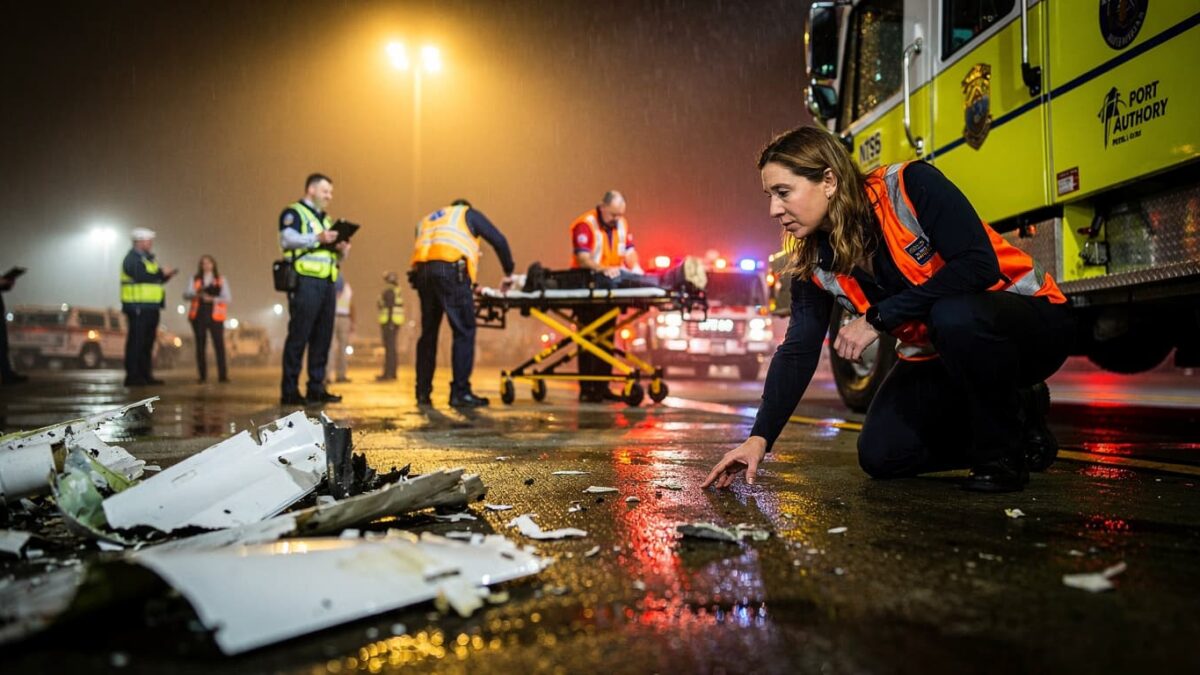
A Jazz Aviation flight attendant survived being ejected from Air Canada Express Flight 8646 while still strapped into her jump seat during a fatal collision with a fire truck at LaGuardia Airport on March 22 at 11:40 p.m. ET. The impact killed both pilots and hospitalized 41 people. Solange Tremblay sustained multiple leg fractures but survived due to the four-point restraint system used in crew jump seats, which are engineered to withstand higher crash loads than passenger seats.
Runway 4 remains closed through March 27, creating cascading delays across all carriers operating LaGuardia. The NTSB is investigating why air traffic control cleared the fire truck to cross an active runway moments before the aircraft landed.
A flight attendant is alive after being thrown from an aircraft — still strapped into her seat — during a runway collision that killed two pilots and shut down a major New York airport for days. Jazz Aviation Flight 8646, a CRJ900 operating as Air Canada Express from Montreal, struck a Port Authority fire truck on Runway 4 at LaGuardia Airport late Sunday night. The cockpit was severed on impact.
Solange Tremblay was ejected from the fuselage while secured in her crew jump seat. She sustained multiple fractures to one leg requiring surgery but survived — a result aviation safety experts attribute to the robust design of flight attendant seating. Jump seats are bolted directly to the fuselage and use four-point restraints engineered to withstand crash forces that would destroy standard passenger seats.
The collision occurred at 11:40 p.m. ET on March 22. Thirty-nine passengers and crew members were hospitalized along with two fire truck occupants. Most were released by Monday morning. The two pilots, both based in Canada, were killed instantly.
LaGuardia partially reopened Monday afternoon, but Runway 4 will remain closed through Friday, March 27. Travelers with bookings on any carrier through that date face delays and cancellations as the airport operates at reduced capacity.
How the fire truck ended up on an active runway
Air traffic control audio reveals the fire truck was cleared to cross Runway 4 at taxiway Delta at 11:37 p.m. — three minutes before the CRJ900 landed. The truck had been dispatched to respond to a separate aircraft reporting an on-board issue. Audio recordings captured the controller instructing the vehicle to stop multiple times immediately after issuing the clearance, followed by the controller stating “I messed up” on the frequency.
The National Transportation Safety Board is examining coordination between air traffic control and ground vehicles as the primary focus of its investigation. Investigators are analyzing whether the separate emergency created distraction in the control tower, whether controller workload was a factor, and why the clearance was issued with an aircraft on short final approach. The NTSB has recovered both flight recorders and expects to release a preliminary report within 30 days.
Runway incursions involving ground vehicles at major US airports are rare. The last fatal incident of this type occurred decades ago, making this collision a significant regulatory trigger. The most comparable event in aviation history is the 1977 Tenerife disaster, where two Boeing 747s collided on a runway due to ATC miscommunication, killing 583 people — though that involved two aircraft, not a ground vehicle.
| Time (ET) | Event | Impact |
|---|---|---|
| 11:37 p.m. | ATC clears fire truck to cross Runway 4 | Truck enters active runway |
| 11:40 p.m. | CRJ900 strikes fire truck on landing | Cockpit severed, 2 pilots killed |
| 11:45 p.m. | Airport closes all runways | All departures/arrivals halted |
| March 23, 2:00 p.m. | Partial reopening (2 runways) | Limited operations resume |
| March 27 (expected) | Runway 4 reopens | Full capacity restored |
Why the flight attendant survived
Jeff Guzzetti, a former federal crash investigator, told the Associated Press that Tremblay’s survival was remarkable given the extent of damage to the front of the aircraft. He attributed her survival to the jump seat’s design. Flight attendant seats are bolted to the fuselage wall — the same structural element that supports the cockpit — and use four-point restraints rather than the lap belts found in passenger seats.
“It’s a very robust seat,” Guzzetti said. “It’s designed to withstand probably more crash loads than passenger seats because you need the flight attendant to help passengers get out of an airplane after a crash.”
Tremblay’s daughter, Sarah Lepine, told Canadian news station TVA Nouvelles that her mother’s survival was a “total miracle.” Tremblay will require surgery for multiple leg fractures but was otherwise stable. “I’m still trying to understand how all this happened,” Lepine said, “but she definitely has a guardian angel watching over her.”
What to do if your flight is affected
LaGuardia’s reduced capacity through March 27 creates a bottleneck affecting all carriers — delays and cancellations will compound as the week progresses.
- Contact your airline immediately if your departure is scheduled before March 28. Airlines are required to rebook you on the next available flight at no cost or provide a full refund. Request rebooking to Newark or JFK if LaGuardia slots are unavailable.
- Document everything — save emails, text alerts, and gate announcements. If your flight is cancelled or delayed more than 3 hours, you may qualify for $400–$800 compensation under US DOT rules, though the runway closure may be classified as an extraordinary circumstance.
- Check alternative airports — Newark and JFK are absorbing displaced LaGuardia traffic. Fares from these airports to Montreal currently range from $280–$420 roundtrip in economy, but expect 15–25% increases through March 27 as demand spikes.
- Monitor the NTSB preliminary report — expected by April 23. If the investigation reveals systemic ATC issues, additional operational changes at LaGuardia could extend disruptions beyond March 27.
Watch: The NTSB’s preliminary findings, due within 30 days, will determine whether this was an isolated controller error or a systemic failure in runway incursion protocols. If systemic, expect FAA-mandated changes to ground vehicle clearance procedures at all major US airports — which could temporarily slow operations nationwide.
Will I get compensation if my LaGuardia flight is cancelled due to the runway closure?
US DOT rules require airlines to rebook you on the next available flight at no cost or provide a full refund. Compensation of $400–$800 applies if your flight is cancelled or delayed more than 3 hours, but airlines may classify the runway closure as an extraordinary circumstance beyond their control, which exempts them from cash compensation. You are still entitled to rebooking or a refund regardless.
How long will LaGuardia delays last?
Runway 4 is scheduled to reopen March 27, but cascading delays will likely persist through the weekend as airlines work through rebooking backlogs. If you have a booking between March 23–29, contact your airline to confirm your flight status and explore alternative departure airports like Newark or JFK.
Why was a fire truck on an active runway during a landing?
Air traffic control cleared the fire truck to cross Runway 4 to respond to a separate aircraft emergency. Audio recordings show the controller issued the clearance at 11:37 p.m., then immediately instructed the truck to stop as the CRJ900 was on final approach three minutes later. The NTSB is investigating whether controller workload, distraction from the separate emergency, or procedural failures contributed to the collision.