

Gulf Air cancels 121 flights after airspace closures, stranding 58,000 pilgrims and tourists

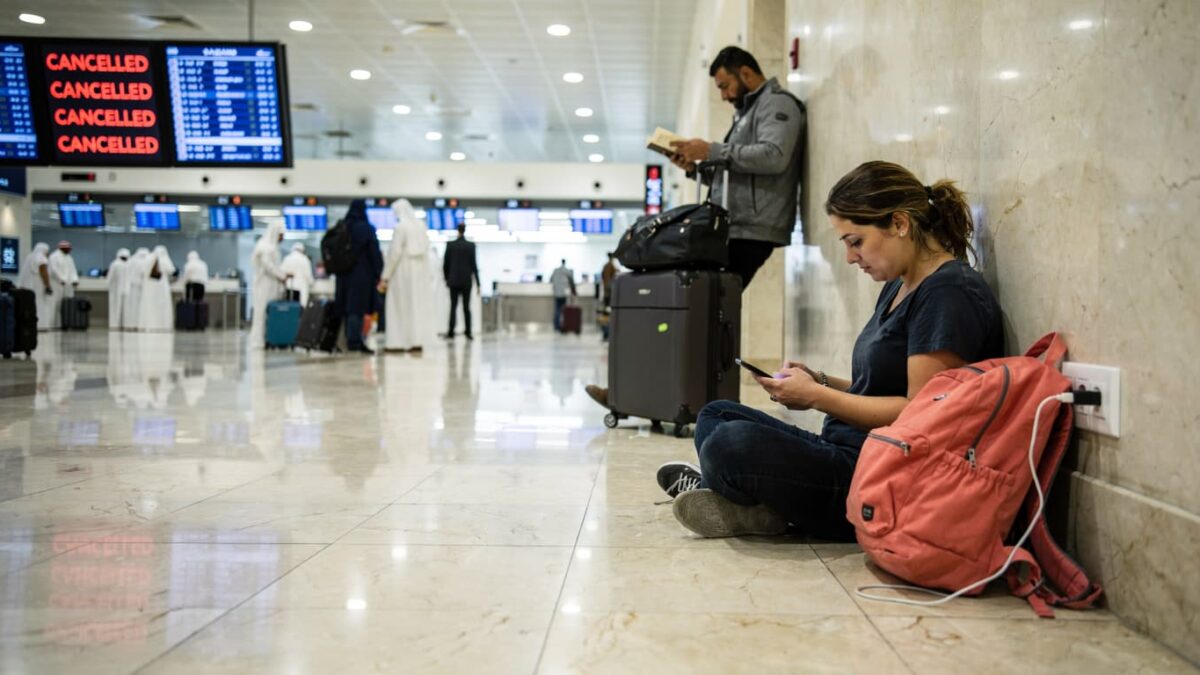
Gulf Air has canceled 121 flights as of March 12, 2026, stranding passengers across Bahrain, Dubai, Istanbul, Jeddah, and Abu Dhabi following airspace closures triggered by US-Israeli strikes on Iran beginning February 28. The disruption affects travelers from North America, Europe, and Australasia connecting through Bahrain to Asia-Pacific destinations, with cascading delays forcing rebooking on Qatar Airways, Emirates, or Etihad.
Qatar Airways and Emirates resumed limited relief flights from March 5, but Gulf Air’s network remains severely constrained. Passengers with bookings through March 15 face 24–72 hour delays and potential loss of connecting flights.
Gulf Air passengers across five Middle Eastern hubs woke to mass cancellations this week as the carrier grapples with airspace closures stemming from military strikes on Iran. 121 flights have been canceled since the crisis began February 28, affecting major connection points in Bahrain, Dubai, Abu Dhabi, Jeddah, and Istanbul.
The disruption hits hardest for travelers using Bahrain as a connection hub to Asia-Pacific destinations. When airspace closes, aircraft cannot depart or land — Gulf Air’s network depends on open corridors through the Gulf, and those corridors have been intermittently shut since the weekend of February 28–March 2.
Competing carriers Qatar Airways and Emirates launched limited relief operations from March 5, with Qatar Airways operating from Muscat to six European cities and Emirates resuming over 100 flights from Dubai by March 5–6. Etihad followed with limited Abu Dhabi service on March 6. Gulf Air has not announced a comparable resumption timeline.
Scale of the disruption and affected routes
The 121 canceled flights represent a significant portion of Gulf Air’s weekly schedule, which typically operates around 300 weekly departures from Bahrain International Airport. Iranian strikes directly targeted Doha, Dubai, and Abu Dhabi airports over the February 28–March 2 weekend, forcing virtual closure of airspace and triggering mass cancellations across all Gulf carriers.
More than 58,000 Indonesian pilgrims were stranded in Saudi Arabia during Umrah, and over 102,000 British nationals registered with the UK government for evacuation assistance — figures that illustrate the scale of passenger impact across multiple regions. Middle East Airlines imposed a $300 no-show fee for economy and $500 for business class to prevent seat hoarding, signaling industry-wide operational strain.
Gulf Air operates a hub-and-spoke network from Bahrain using Airbus A320neo and A321neo aircraft on regional routes and Boeing 787-9 Dreamliners on long-haul services to London, Paris, Frankfurt, and Bangkok. The carrier is not part of a global alliance, limiting rebooking options to bilateral agreements with other carriers.
| Hub affected | Flights canceled | Primary impact |
|---|---|---|
| Bahrain (BAH) | 85 | Asia-Pacific connections severed |
| Dubai (DXB) | 18 | European transit disrupted |
| Abu Dhabi (AUH) | 10 | South Asian routing blocked |
| Jeddah (JED) | 5 | Umrah pilgrims stranded |
| Istanbul (IST) | 3 | Europe-Middle East link cut |
Passenger rights and compensation framework
Airspace closure due to military action qualifies as extraordinary circumstances under most passenger rights frameworks, which limits compensation but does not eliminate airlines’ care obligations. Gulf Air must still provide meals, accommodation, communication, and rebooking on alternative flights.
For EU and UK departures, EU261/2004 applies to flights departing EU or UK airports. Airlines may be exempt from the standard €250–600 compensation for extraordinary circumstances, but they must still provide care and rebooking. Verify with Gulf Air whether force majeure has been declared.
US and Canadian departures fall under US DOT rules and Canada’s APPR, which require airlines to provide rebooking on alternative carriers at no additional cost or full refund. Military action and airspace closure are typically considered extraordinary circumstances, limiting compensation but not eliminating rebooking obligations. Australian and New Zealand departures are covered by Australian Consumer Law and CCCFA, which mandate refunds or rebooking even when extraordinary circumstances apply.
What to do if you have a Gulf Air booking
Gulf Air’s network remains severely constrained through at least March 15, and passengers with bookings in this window face high cancellation risk.
- Contact Gulf Air immediately — call the customer service hotline listed at gulfair.com or email their support team. Request rebooking on Qatar Airways, Emirates, or Etihad on the same route. Ask for written confirmation of the new itinerary and any refund or credit.
- File a compensation claim — if your departure is from the EU, UK, US, Canada, Australia, or New Zealand, file a claim under the applicable passenger rights framework. Document all expenses (hotel, meals, transport) if you are stranded.
- Monitor competing carriers — Qatar Airways resumed limited service from Muscat to London, Berlin, Rome, and Frankfurt on March 5. Emirates resumed over 100 flights from Dubai by March 5–6. Etihad resumed limited Abu Dhabi service on March 6. Check availability on these carriers if Gulf Air cannot rebook you within 24 hours.
- Register with your embassy — US citizens should register with STEP, UK nationals with FCDO, and German nationals with Elefand to receive real-time updates on evacuation assistance and airspace reopening.
Watch: Qatar Airways’ operational update scheduled for March 7 and Emirates’ announcement of return to 100% network capacity. If both resume full schedules by March 10–12, regional airspace is stabilizing and Gulf Air cancellations will likely clear within 48–72 hours. If suspensions extend beyond March 15, expect force majeure declarations and extended compensation disputes.
Can I get a refund if Gulf Air cancels my flight?
Yes. Under EU261, US DOT rules, Canada’s APPR, and Australian Consumer Law, airlines must offer a full refund or rebooking on an alternative carrier at no additional cost when they cancel a flight. Contact Gulf Air directly to request a refund or rebooking — do not wait for automatic processing.
Will Gulf Air pay for my hotel if I’m stranded?
Yes, if your departure is from the EU, UK, US, Canada, Australia, or New Zealand. Airlines must provide care (meals, accommodation, communication) under passenger rights frameworks even when extraordinary circumstances apply. Go to the Gulf Air service desk at the airport and request hotel accommodation and meal vouchers. If the desk cannot assist, document your expenses and file a claim within 30 days.
What if Gulf Air cannot rebook me on another Gulf Air flight?
Request rebooking on Qatar Airways, Emirates, or Etihad on the same route. Gulf Air has bilateral agreements with these carriers and must offer alternative routing at no additional cost. If Gulf Air refuses, file a complaint with your national aviation authority (CAA in the UK, DOT in the US, ACCC in Australia).
How long will the disruption last?
Qatar Airways and Emirates resumed limited service from March 5–6, but Gulf Air has not announced a resumption timeline. Monitor Qatar Airways’ March 7 operational update and Emirates’ announcement of return to 100% network capacity. If both resume full schedules by March 10–12, Gulf Air cancellations will likely clear within 48–72 hours. If suspensions extend beyond March 15, expect extended delays.