

Indian carriers cancel 2,600 international flights as West Asia airspace closures drive fares higher

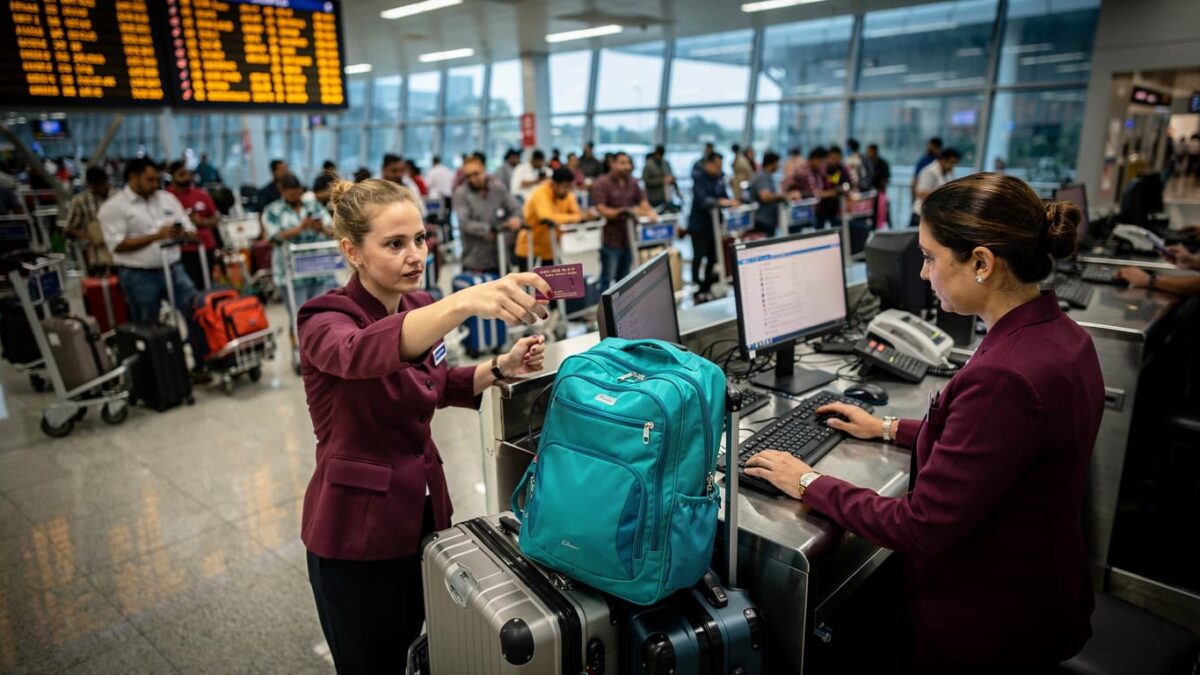
West Asia airspace restrictions forced Indian carriers to cancel 2,600 international flights between February 28 and March 8, 2026 — 45% of their scheduled international operations — driving fares on India-US and India-Europe routes sharply higher as airlines reroute around conflict zones. IndiGo and Air India deploy 15–40% of capacity through Middle East hubs now facing extended detours that add fuel costs and flying time, with 150,457 passengers evacuated from Gulf states as of March 11.
Air India is adding long-haul capacity to offset losses, but rebooking backlogs at Gulf hubs stretch 5–7 days. Fares remain elevated as detours compress seat availability on the most direct routes.
Airspace closures across West Asia have severed the most efficient flight paths between India and the US or Europe, forcing carriers into longer routings that burn more fuel and occupy aircraft for additional hours. The result: fewer seats at higher prices, with passengers who booked via Dubai or Doha now scrambling for alternatives that can cost 30–50% more than pre-crisis fares.
Indian carriers canceled 2,600 international flights in the first 11 days of the crisis — nearly half their scheduled international operations during that window. IndiGo, which routes 15% of its total capacity through Middle East and Africa markets, saw cascading demand drops as Dubai and Doha hubs became bottlenecks. Air India responded by adding frequencies on key long-haul routes, but the new capacity hasn’t closed the gap left by Gulf hub disruptions.
The Indian government is monitoring flight availability and fare levels as 150,457 passengers returned from Gulf states between February 28 and March 11. Airlines are under pressure to maintain reasonable pricing, but operational realities — longer routes, higher fuel burn, reduced utilization — are pushing ticket costs upward across the board.
How detours and cancellations are reshaping fares
The crisis mirrors 2022’s Russia-Ukraine war impacts, when Indian carriers lost market share to European airlines after Pakistani airspace closures forced longer southern routings. This time, the Middle East accounts for 35–40% of IndiGo‘s international capacity, amplifying revenue hits if restrictions persist beyond March. Detours to Europe and the US add flying time and fuel consumption, with limited ability to pass costs through on domestic routes where price sensitivity is high.
ICRA projects Indian airlines will post a net loss of Rs 17,000–18,000 crore for fiscal year 2026, driven by higher aviation turbine fuel costs, rupee depreciation, and the capacity cuts now underway. The New Indian Express reports that IndiGo‘s Middle East exposure leaves it particularly vulnerable if the crisis extends into April, when summer travel demand typically peaks.
Passengers who booked through Gulf hubs face rebooking delays of 5–7 days as Doha and Abu Dhabi struggle with capacity limits — a situation detailed in ATC’s earlier coverage of British Airways and Qatar Airways schedule changes. US and Canadian travelers connecting via India see indirect fare surges as IndiGo and Air India reduce seat inventory on onward legs.
| Metric | Figure | Impact |
|---|---|---|
| Flights canceled | 2,600 | 45% of Indian carriers’ international schedule |
| Passengers evacuated | 150,457 | Gulf states to India, Feb 28–Mar 11 |
| IndiGo capacity exposure | 15% (ASK) | Middle East/Africa routes disrupted |
| Projected FY26 loss | Rs 17,000–18,000 crore | Indian airline industry (ICRA estimate) |
Why this disruption hits harder than 2022
The 2022 Russia-Ukraine war forced Indian carriers to avoid Ukrainian and Russian airspace, but Middle East hubs remained open as alternative connection points. This time, the disruption sits at the center of India’s westbound network — Dubai, Doha, and Abu Dhabi handle the bulk of sixth-freedom traffic between South Asia and Europe or North America. When those hubs constrict, there’s no comparable backup with the same slot availability and bilateral rights.
Lufthansa and other European carriers gained market share in 2022 by offering stable routings when Indian airlines struggled with Pakistani airspace closures. The current crisis could repeat that pattern if restrictions extend into the summer travel season, when demand for India-Europe routes peaks and fare premiums widen further.
Protect your booking and find alternatives
Gulf hub connections are high-risk through mid-March — here is the priority order for protecting your trip.
- Check flight status daily: Use airline sites (Air India, IndiGo) or the DGCA portal to verify your departure hasn’t been canceled. Rebooking backlogs mean 5–7 day delays if you wait for the airline to contact you.
- Consider European alternatives: Lufthansa, KLM, and Air France operate northern routings that avoid West Asia entirely. Fares are higher but schedules are stable — compare via Google Flights or Kayak.
- Monitor Air India’s capacity additions: The carrier is adding frequencies on key long-haul routes to offset Gulf hub losses. New inventory typically appears 7–10 days before departure as schedule filings finalize.
- Avoid tight connections through Doha or Dubai: If your itinerary includes a Gulf hub, build in a 6+ hour buffer or rebook to a single-carrier nonstop. Missed connections during this period face multi-day rebooking waits.
Are airlines required to refund tickets if my Gulf hub connection is canceled?
Indian carriers must offer a full refund or rebooking at no additional cost if they cancel your flight. If you voluntarily cancel due to safety concerns, standard fare rules apply — most economy tickets are non-refundable, though some airlines are waiving change fees during the crisis. Check your fare conditions before canceling.
How long will fares stay elevated on India-US and India-Europe routes?
Fares will remain high as long as detours compress seat availability. If Gulf hubs restore normal operations by early April, expect gradual fare normalization through May. If restrictions extend into summer, fares could stay 20–40% above pre-crisis levels through August as peak season demand collides with reduced capacity.
Should I book now or wait for fares to drop?
If you must travel before mid-April, book now — waiting risks further inventory depletion as airlines cancel more flights. For travel after May, monitor fares weekly but don’t expect significant drops until Gulf hub capacity returns. Set fare alerts on Google Flights to track your specific route.