

115,000 Australians stranded in Gulf region after Iranian missile attacks close airspace

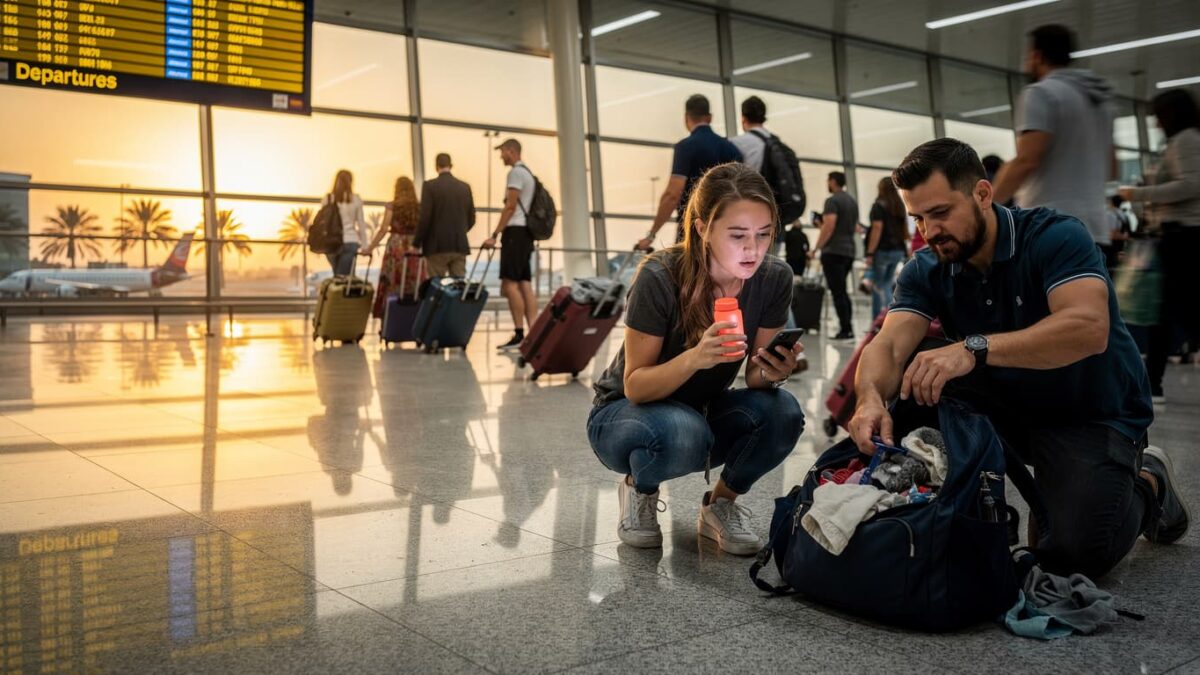
Approximately 115,000 Australians are stranded in the UAE, Qatar, and Gulf region after Iranian missile and drone attacks forced airspace closures across the Middle East on March 2-3, 2026. Commercial flights resumed from Dubai and Abu Dhabi on March 3, but ongoing strikes and depleting air defenses create urgent evacuation windows of 24-48 hours before further disruptions.
Stranded travelers report medication shortages, overnight explosions, and limited embassy assistance despite UAE cost-coverage offers. Australian Foreign Minister Penny Wong called this the largest consular operation in the nation’s history, with conflict potentially lasting 4-5 weeks or longer and affecting ~1 million passengers globally.
Iranian retaliatory strikes on UAE airports have trapped more than 100,000 Australians in the Gulf region, forcing families to shelter in hotels, sleep on airport floors, and scramble for scarce commercial flights home. The attacks hit near Al-Minhad Air Base and shut down airspaces across Dubai, Abu Dhabi, and Doha between March 2-3, 2026.
Travelers must act within 24-48 hours to secure seats on limited commercial flights before further strikes close evacuation routes. The US President warned the conflict could drag on for a month or more, with most Gulf airspaces still vulnerable to closure.
Australian woman Trina Hockley, stranded in Doha without her heart medication, spent the night of March 2 sheltering from explosions. “The medication I need isn’t available here,” she told reporters. “We’re hearing rumors the air defenses are running low — tonight could be really bad.”
How the crisis unfolded
Coordinated Iranian drone and missile attacks struck UAE airports on March 2, forcing immediate airspace closures. All Australian Defence personnel stationed at Al-Minhad Air Base were accounted for, but civilian travelers faced chaos as flights grounded mid-journey.
Families with infants spent nights on Doha Airport floors before hotels opened emergency capacity. Abby Gruszka, another stranded Australian, reported airport alarms and strikes while waiting for rebooking assistance. “The UAE says they’ll cover costs, but we’re not seeing much help on the ground,” she said.
Commercial flights resumed from Dubai and Abu Dhabi on March 3, but Qatar Airways and Emirates face massive rebooking backlogs. Australian Foreign Minister Penny Wong confirmed this is the largest consular operation in Australian history, surpassing the 2020 COVID repatriation effort. DFAT is coordinating priority flights for medical cases and families with young children.
The scale dwarfs prior crises: 115,000 Australians stranded versus tens of thousands during pandemic shutdowns. Dubai and Doha serve as critical transit hubs for Asia-Pacific routes, meaning disruptions ripple across global networks. Approximately 1 million passengers worldwide face delays or cancellations as Gulf airspaces remain partially closed.
Why this matters for Australian travelers
The UAE and Qatar function as primary connection points for Australian flights to Europe, Africa, and the Middle East. Emirates and Qatar Airways operate 90+ weekly flights from Sydney, Melbourne, and Perth through Dubai and Doha. Any extended closure cuts off the most direct routes to half the globe.
Unlike COVID-era disruptions, this crisis involves active combat. Air defenses intercepted most missiles on March 2-3, but reports suggest stockpiles are depleting. If defenses fail, airports could shut for weeks rather than days. Medical evacuations become impossible when airspace closes — a reality Trina Hockley faces without her heart medication.
The conflict also exposes gaps in consular support during wartime. While DFAT registered all stranded Australians via Smart Traveller, on-ground assistance remains limited. The UAE’s cost-coverage pledge hasn’t reached most travelers, leaving families to fund hotel stays and rebooked flights out-of-pocket.
What to do if you’re stranded or planning travel
- Register immediately at smartraveller.gov.au if currently in UAE, Qatar, or Gulf states — DFAT uses this database to prioritize repatriation flights and send real-time alerts.
- Contact your airline via app for rebooking; Qatar Airways and Emirates are processing requests in order of medical need, then families with children under 5, then general passengers.
- Source critical medications through the Australian embassy in Abu Dhabi (+971 2 657 2100) or Doha (+974 4429 1000) if local pharmacies cannot fill prescriptions.
- Avoid new bookings through Dubai, Abu Dhabi, or Doha until DFAT downgrades the travel advisory from “Do Not Travel” — alternative routes via Singapore, Bangkok, or Hong Kong add 4-6 hours but bypass conflict zones.
Historical precedent: The 2006 Lebanon evacuation
Australia’s previous largest consular operation evacuated 5,000 citizens from Lebanon during the 2006 Israel-Hezbollah war, using chartered ships and military aircraft over 12 days. The current Gulf crisis involves 23 times more people across multiple countries with no maritime evacuation option. DFAT is relying entirely on commercial airline capacity, which remains vulnerable to further airspace closures.
Can the Australian government force airlines to add flights?
No. DFAT can only negotiate priority boarding for registered Australians on existing commercial services. If airlines suspend operations due to safety concerns, the government would need to charter aircraft or deploy RAAF assets — a process requiring days of diplomatic clearance.
Will travel insurance cover rebooking costs during a war?
Most policies exclude “acts of war” unless you purchased a specific conflict-zone rider before departure. Standard policies cover natural disasters and airline bankruptcies, not military strikes. Check your policy’s “General Exclusions” section for war/terrorism language.
How long could Gulf airspaces stay closed?
The US President estimated 4-5 weeks of conflict, but airspace closures depend on strike frequency and air defense capacity. During the 1991 Gulf War, Dubai and Abu Dhabi closed for 6 weeks. Qatar remained open but faced severe restrictions. No official timeline exists for the current crisis.
What happens if I run out of medication before getting home?
Contact the Australian embassy immediately with your prescription details. Embassies maintain emergency medical supply networks and can coordinate with local hospitals for short-term fills. For controlled substances like heart medication, you may need a local doctor’s consultation — the embassy can arrange this.