

LaGuardia Runway 4 reopens after fatal Air Canada collision, NTSB probes systemic failures

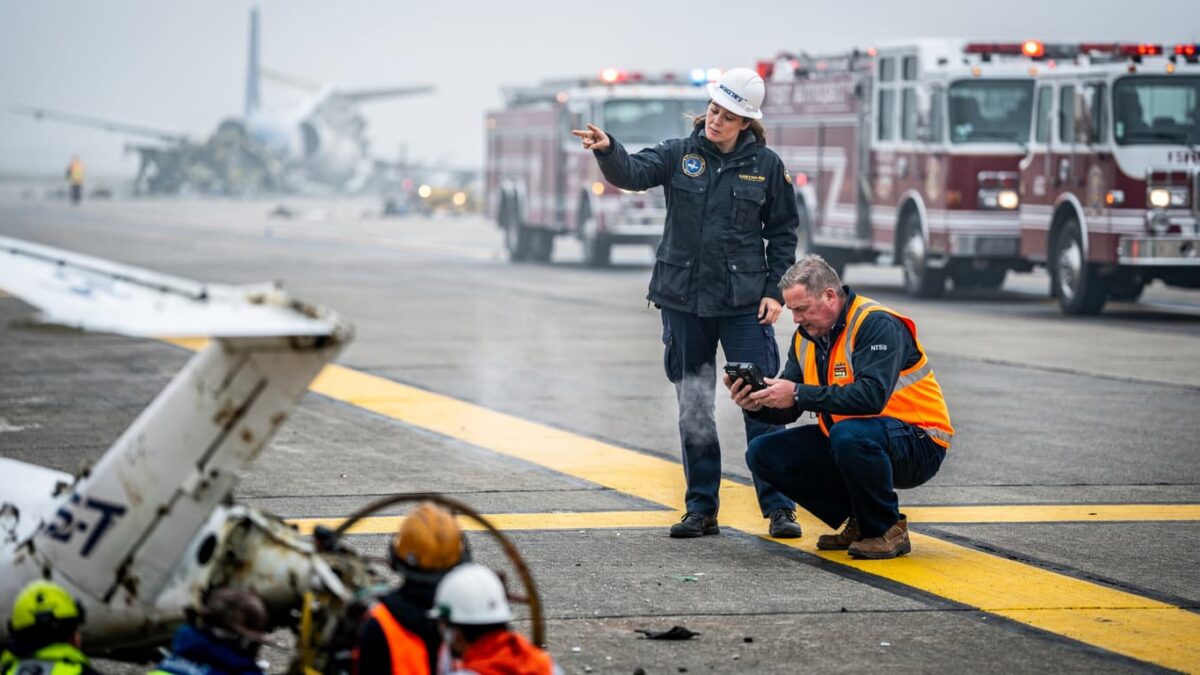
LaGuardia Airport’s Runway 4 reopened on March 25, 2026, three days after an Air Canada Express CRJ-900 struck a Port Authority fire truck during landing, killing both pilots and hospitalizing approximately 40 passengers. The NTSB investigation has identified multiple systemic failures: the fire truck lacked a transponder to alert surface detection equipment, and the runway’s ground collision avoidance system failed to sound an alarm despite an air traffic controller’s warning seconds before impact.
Most injured passengers have been released from hospitals, and Air Canada has absorbed disrupted travelers onto partner flights. However, federal investigators are examining clearance procedures and ground vehicle tracking protocols—findings expected in April 2026 could trigger emergency safety reviews at all major US airports.
The collision occurred at 11:47 p.m. on March 22, 2026, when Air Canada Express Flight 8646 from Montreal touched down on Runway 4 while a fire truck was crossing the same runway. Both pilots died on impact. The fire truck had been dispatched to check on a separate aircraft reporting an odor onboard and was cleared by air traffic control to cross the runway seconds before the CRJ-900 landed—a chain of events that investigators now describe as overlapping procedural and technical failures.
The wreckage was removed by March 25, allowing runway operations to resume. LaGuardia’s capacity had been reduced by 50% during the closure, triggering cascading cancellations across Air Canada’s network and partner carriers. Most rebookings have been completed, with passengers absorbed onto United, American, and Delta flights or rescheduled onto later Air Canada departures.
US and Canadian travelers with existing bookings to or from LaGuardia face minimal ongoing disruption—flight schedules have normalized. The investigation, however, remains active. The NTSB has completed on-site wreckage examination and is now conducting interviews with Port Authority personnel and reviewing clearance procedures.
What the investigation has found so far
The fire truck involved in the collision lacked a transponder device required to alert LaGuardia’s surface detection equipment of its location. This meant the airport’s automated ground collision avoidance system had no way to track the vehicle’s position on the runway. When the system failed to sound an alarm, an air traffic controller issued a frantic radio warning to the truck to stop—but the warning came seconds before impact, too late to prevent the collision.
The NTSB has identified this as a systemic gap rather than isolated human error. LaGuardia is one of the nation’s busiest airports, handling over 30 million passengers annually, yet its ground vehicle tracking protocols appear to have degraded over time. The fire truck was cleared to cross Runway 4 while Flight 8646 was on final approach—a clearance that should have been flagged by automated systems but wasn’t.
Investigators are examining whether staffing shortages, equipment maintenance lapses, or procedural drift contributed to the failure. The NTSB’s preliminary report, expected in April 2026, will determine whether similar vulnerabilities exist at other major US airports. If systemic deficiencies are confirmed, the FAA is expected to mandate emergency procedural reviews nationwide within 30 days.
| Date | Event | Impact |
|---|---|---|
| March 22, 11:47 p.m. | Air Canada Express Flight 8646 strikes fire truck on Runway 4 | Both pilots killed, ~40 hospitalized |
| March 23–24 | Runway 4 closed for wreckage removal | LaGuardia capacity reduced 50%, cascading cancellations |
| March 25 | Runway 4 reopens, NTSB completes on-site examination | Operations resume, investigation shifts to interviews |
| April 2026 (expected) | NTSB preliminary report release | Potential FAA mandate for emergency safety reviews |
The regulatory layer behind ground safety
The FAA mandates that all US airports with commercial service maintain Runway Incursion Reduction Programs (RIRP), which include surface detection equipment, ground collision avoidance systems, and transponder requirements for ground vehicles. LaGuardia operates under these standards, yet the March 22 collision exposed gaps in both equipment functionality and procedural enforcement.
The Port Authority of New York and New Jersey, which operates LaGuardia, is responsible for ensuring all ground vehicles comply with transponder requirements. The fire truck involved in the collision did not have a functioning transponder—a violation of FAA standards that should have been caught during routine audits. The FAA conducts Safety Management System (SMS) audits at major airports every 18–24 months; LaGuardia’s last audit occurred in October 2024, 17 months before the collision.
The NTSB’s investigation will determine whether the Port Authority failed to enforce transponder compliance or whether the FAA’s audit protocols missed the deficiency. If systemic failures are confirmed, the FAA is expected to mandate emergency transponder upgrades on all ground vehicles at major US airports—a retrofit process that could take 2–4 weeks and cause temporary operational disruptions.
What to do if you’re affected
LaGuardia operations have resumed, but the investigation’s findings could trigger temporary procedural changes in the coming weeks.
- Check your booking 24 hours before departure — Air Canada and partner carriers may implement last-minute schedule adjustments if the FAA mandates emergency safety reviews.
- Register for flight status alerts — Use your airline’s app or SMS service to receive real-time updates on gate changes or ground delays.
- Build a buffer for connections — If you’re connecting through LaGuardia to an international flight, allow at least 3 hours between flights. Ground operations may slow temporarily during safety protocol updates.
- Know your rebooking rights — Air Canada’s standard policy covers rebooking on the next available flight at no charge, plus meal/hotel vouchers if an overnight delay results. US DOT rules do not mandate compensation for ground incidents, but you can pursue claims for injury or loss under standard liability law.
Watch: The NTSB’s preliminary report in April 2026 will reveal whether systemic failures exist at other major US airports. If the FAA mandates emergency transponder upgrades, expect temporary ground operation slowdowns at major hubs for 2–4 weeks during implementation.
Will Air Canada suspend flights to LaGuardia after the collision?
No. Air Canada has resumed normal operations at LaGuardia as of March 25, 2026. The airline absorbed disrupted passengers onto partner flights during the runway closure but has not announced route suspensions or schedule reductions.
Can I get compensation if my Air Canada flight was canceled due to the collision?
US DOT rules do not mandate compensation for ground incidents—only in-flight diversions or cancellations. However, Air Canada’s standard policy covers rebooking on the next available flight at no charge, plus meal/hotel vouchers if an overnight delay results. Canadian passengers may pursue claims under Canadian Air Passenger Rights (CAPR) if the airline fails to rebook within 9 hours.
Is LaGuardia safe to fly into right now?
Yes. Runway 4 has reopened and operations have normalized. The NTSB investigation is examining ground safety protocols, not aircraft safety or air traffic control procedures. The collision was caused by a fire truck lacking a transponder and a failed ground collision avoidance system—issues that do not affect in-flight safety.