Federal court blocks TSA from new nationwide screening rules without public input process

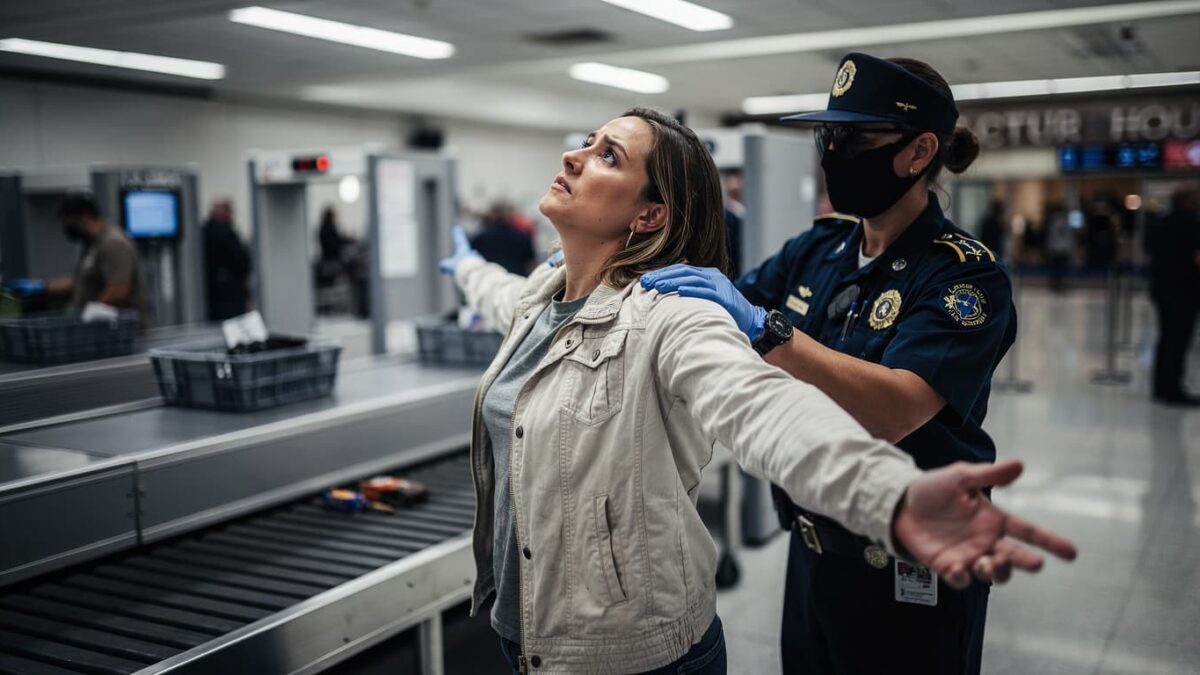
A federal appeals court ruling recently established that the Transportation Security Administration cannot impose nationwide screening changes—such as reinstating shoe removal or mandating facial recognition—without formal public rulemaking. Senator Tammy Duckworth demanded on April 19, 2026 that TSA reverse its shoes-on policy, but the court precedent means any such reversal would require a 6–18 month public comment process, not an internal memo.
The ruling blocks TSA from quietly changing checkpoint procedures through nonpublic directives. Travelers keep current shoes-on policy and voluntary biometric opt-out unless TSA completes formal rulemaking—a process that has not yet begun.
The Transportation Security Administration ended its shoe removal requirement on July 8, 2025, citing advanced screening technology. Nine months later, a Senate Democrat is demanding TSA bring it back—but a court ruling now stands in the way.
Senator Tammy Duckworth called for reinstatement after a Department of Homeland Security Inspector General report identified gaps in shoe-bomb detection. The political fight matters less than the legal constraint: TSA can no longer impose broad screening changes via internal procedures.
The U.S. Court of Appeals for the D.C. Circuit ruled recently in City of Billings v. TSA that nationwide, binding screening rules require formal rulemaking under the Administrative Procedures Act. That means public notice, a 60-day comment period, and agency response to feedback—not a quiet policy memo.
The case involved TSA’s attempt to require airport workers with unescorted access to secured areas to undergo random physical screening. TSA notified only airport operators and gave them 60 days to comment, bypassing the public. Airports challenged the move, arguing it created new legal obligations without proper process.
How the ruling limits TSA’s authority
The court found TSA’s “National Amendment” was plainly a legislative rule because it imposed new obligations, used mandatory terms, and carried civil enforcement penalties. That triggers the requirement for public rulemaking.
TSA argued that broader public notice would add little value because the rule primarily affected airport operators, and security-sensitive details might not be publicly disclosable. The court rejected this—aviation workers who would be searched were directly affected and might have offered meaningful input.
The decision extends a 2011 precedent in EPIC v. DHS, which held that notice-and-comment rulemaking was required before deploying body scanners. In both cases, these were new, binding, generally applicable obligations—not operational details within existing rules.
Checkpoint requirements imposed as binding nationwide obligations through TSA Standard Operating Procedures, security directives, or website guidance will face scrutiny over whether they constitute operational details or new substantive obligations. Senator Duckworth’s demand highlights the political pressure, but the legal framework now requires a formal process.
| Date | Event | Legal process |
|---|---|---|
| December 2001 | Richard Reid shoe bomb attempt fails | None—incident |
| 2006 | Shoe removal becomes standard | Internal directive, no public comment |
| July 8, 2025 | TSA ends shoe removal requirement | DHS Secretary announcement |
| August 2025 | City of Billings v. TSA ruling | Court mandates formal rulemaking for new screening rules |
| April 19, 2026 | Senator Duckworth demands shoe policy reversal | Would require Notice of Proposed Rulemaking |
What the ruling means for facial recognition and future screening changes
TSA’s Credential Authentication Technology with facial recognition is deployed at approximately 65 U.S. airports. Passengers can currently opt out and use physical IDs instead. If TSA wanted to make biometric matching mandatory, the ruling suggests that would require formal rulemaking.
The shoe removal policy originated in 2006 following the 2001 Richard Reid shoe bomber attempt—a plot that failed and has never been repeated. In 2009, the “underwear bomber” attempted to hide explosives in his boxer shorts, yet TSA did not require passengers to remove underwear.
Any new broad checkpoint methods that significantly change the passenger experience but are imposed only through nonpublic procedures would now require formal rulemaking. It is no longer sufficient to say that screening is required and that what constitutes screening is an operational detail left to TSA’s discretion.
New restrictions on what passengers can bring through checkpoints would also fall under the rulemaking requirement. The list of prohibited items is supported by existing regulations and by how TSA interprets “weapons, explosives, and incendiaries.” But if TSA imposed a new, broad, binding restriction, the Billings ruling suggests it would require notice and comment.
The ruling does not prevent TSA from moving quickly in a genuine emergency. In Spokane Airport Board v. TSA this year, the court upheld TSA’s use of emergency amendment authority for airport cybersecurity measures. Billings acknowledged that TSA could, in the right circumstances, establish good cause for emergency action.
There are limits, though, to what TSA can do unilaterally while ignoring established rules for federal agencies. The agency’s recent data-sharing arrangement with ICE has already drawn scrutiny over procedural transparency—this ruling adds another layer of accountability.
ATC view: TSA will not reinstate shoe removal within 12 months—the ruling adds a 12+ month delay amid political division, with Democrats pushing and the Trump administration resisting. A facial recognition mandate faces low odds too; opt-out will stay as privacy backlash grows. Travelers win: the status quo is locked without a formal fight.
What to do before your next flight
Current TSA policy allows shoes to remain on and biometric scanning to be declined—but verify before you travel, as local implementation can vary.
- Check current TSA shoe policy at tsa.gov/travel/security-screening before your next flight to confirm no local exceptions apply at your departure airport.
- Understand your biometric opt-out right. At airports with CAT-2 facial recognition, you can decline the scan and present a physical ID to an agent instead—no penalty, no secondary screening.
- Monitor the Federal Register at federalregister.gov for TSA Notices of Proposed Rulemaking using keywords “TSA shoe” or “biometric.” Any formal proposal will trigger a 60-day public comment period.
- Submit comments if an NPRM appears. Public input during the comment period becomes part of the official record and TSA must address substantive concerns in its final rule.
Watch: TSA’s next move by July 2026—if the agency files a Notice of Proposed Rulemaking on shoe removal or biometrics, it signals a formal push despite the ruling and opens a 60-day public comment window.
Can TSA still change screening procedures in an emergency?
Yes. The court acknowledged TSA retains emergency amendment authority when it can establish good cause for immediate action—such as a credible, imminent threat. Routine policy changes like reinstating shoe removal or mandating facial scans do not qualify as emergencies and require formal rulemaking.
Does this ruling affect international travelers departing from U.S. airports?
Yes. TSA screening applies to all passengers departing U.S. airports regardless of citizenship or destination. The ruling’s procedural protections apply equally—TSA cannot impose new screening requirements on international travelers without public rulemaking.
What happens if I opt out of facial recognition at TSA checkpoints?
You present your physical ID to a TSA agent who manually verifies it against your boarding pass and appearance. This adds approximately 15–30 seconds to the process but does not trigger additional screening, secondary inspection, or any other consequence. Opt-out is a legal right at all airports with biometric systems.
Could TSA reinstate shoe removal at specific airports without a nationwide rule?
Unlikely under this ruling. If TSA imposed shoe removal at multiple airports as a binding requirement with enforcement consequences, courts would likely view it as a de facto nationwide rule requiring formal rulemaking—even if technically limited to certain locations. A single-airport pilot program for testing new technology might survive, but a multi-airport rollout would not.