

Iran conflict cuts Gulf carrier capacity by 77%, stranding Australia-Europe travelers for months

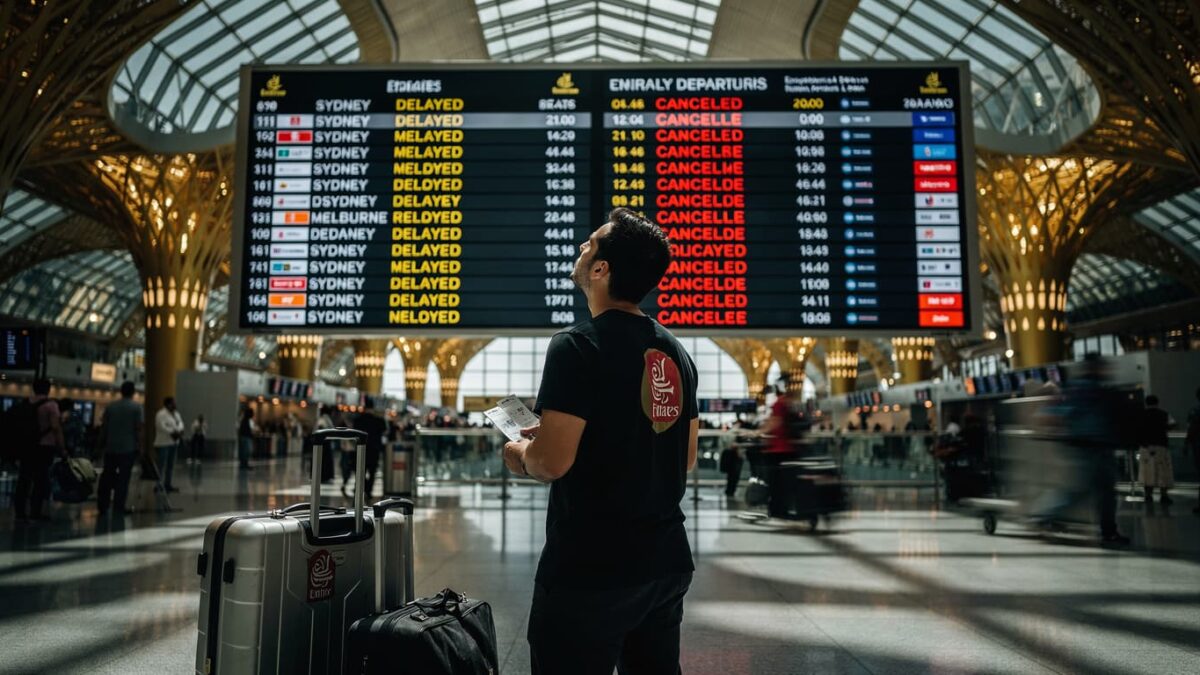
Jet fuel prices rose sharply, driving international airfare increases of 20–80% on Australia-Europe/North America routes and forward seat capacity cuts. Australia-Middle East air traffic has plunged significantly year-on-year due to Iran conflict, with direct Australia-Europe traffic down from rerouting. Gulf carriers like Emirates, Etihad, and Qatar Airways severely cut capacity—Emirates reduced Sydney flights from four daily to one.
The International Air Transport Association warned on April 8, 2026 that jet fuel supply and prices may take months to normalize. European airport fuel reserves will last only three weeks without full reopening of the Strait of Hormuz.
Iran conflict triggers aviation fuel crisis and mass flight cancellations
Iran’s disruption of the Strait of Hormuz—a critical transit route for jet fuel—has created the most severe supply shock to global aviation since the pandemic. Travelers with bookings to or from Middle East hubs face immediate flight cancellations and fare hikes (e.g., 20–80% on affected routes). Airlines, especially Gulf carriers, must rebook passengers amid jet fuel shortages.
The crisis extends beyond the Middle East. Flight volumes in Europe and Asia have declined by more than 8% and 22% respectively since the conflict began, while global jet fuel prices have doubled. The International Monetary Fund reported on April 9, 2026 that the number of daily flights in the region has been cut in half.
Gulf carriers—which together hold around $45 billion in assets and recorded more than $8 billion in net profit last year—are under unprecedented pressure. Emirates slashed Sydney service to one daily flight from four. Etihad and Qatar Airways have imposed similar cuts across Asia and Australia routes.
The Airports Council International Europe cautioned that without the full reopening of the Strait of Hormuz, European airports could face systematic jet fuel shortages. Current reserves at European airports will last only about three weeks—a timeline that puts June operations at severe risk.
How the fuel shortage is reshaping global flight networks
Before the disruption, the United Arab Emirates, Kuwait, and Saudi Arabia together exported about 3.3 million barrels per day of refined petroleum products through the Strait of Hormuz, including around 500,000 barrels per day of jet fuel. That supply line is now severed.
Iran’s repeated attacks on refineries in Gulf Arab states have inflicted significant damage on critical infrastructure. Kuwait’s major Mina Al-Ahmadi and Mina Abdullah refineries have been targeted multiple times. On April 10, French energy company TotalEnergies reported damage to Saudi Arabia’s advanced SATORP refinery during Iranian strikes—one refining unit was damaged, and operations at other units were temporarily halted. The refinery has a daily processing capacity of 465,000 barrels of crude oil, with jet fuel being one of its key products.
Airlines are responding by rerouting flights through Asia—often resulting in longer travel times, higher fuel consumption, and reduced fleet efficiency. Industry data shows Australia-Europe traffic has shifted heavily to Singapore and Kuala Lumpur hubs, with Singapore Airlines operating 14 weekly Sydney-Singapore flights on A350 aircraft to capture displaced demand.
| Route segment | Capacity change | Primary cause | Alternative routing |
|---|---|---|---|
| Australia–Middle East | Down significantly | Gulf carrier cuts | Via Singapore/Kuala Lumpur |
| Australia–Europe direct | Down from rerouting | Airspace closures | Asia hub connections |
| Europe internal | Down 8% | Fuel shortages | Route consolidation |
| Asia regional | Down 22% | Fuel price surge | Reduced frequencies |
| North America–Middle East | Down 30–50% | Gulf carrier suspensions | Via Asia/North Pole |
The geopolitical mechanism behind aviation disruption
The US and Israel campaign against Iran triggered Iranian retaliation targeting the Strait of Hormuz and Arab refineries. Middle Eastern states closed airspace, forcing Gulf carriers to slash capacity by 50–77% with no bilateral overflight agreements in place with Iran or Israel.
Routes shifted dramatically—Australia-Middle East traffic plunged while Australia-Europe connections dropped as airlines rerouted via Asia. Fares rose 20–80% as fuel costs surged 80%. This represents an escalation of 2025 Iran tensions involving proxy conflicts, not an entirely new development. The International Air Transport Association noted on April 8 that conditions may take months to normalize without reopening.
Europe faces systematic shortages according to the Airports Council International, with only three weeks of reserves remaining. No new sanctions have been imposed, but war-risk insurance premiums have increased significantly, forcing diversions and adding to operational costs. European airports are now preparing for potential 30% flight cuts by June if tanker passage through the Strait does not resume.
What to do if you have a booking or are planning travel
Gulf hub connections are high-risk through mid-2026—here is the priority order for protecting your trip.
- Check flight status immediately: Visit emirates.com/flight-status, etihad.com/managemybooking, or qatarairways.com within 24 hours if you have any booking touching Dubai, Abu Dhabi, or Doha. Cancellations are being announced with minimal notice.
- Request Asia hub rerouting: Call airline hotlines (Emirates Australia 1800 777 399, Etihad 1300 532 215) and specifically request rebooking via Singapore or Kuala Lumpur. These hubs have capacity and stable fuel supply.
- Claim compensation where applicable: EU/UK departures qualify for €250–600 under EU261/UK261 for delays over 3 hours or cancellations notified less than 14 days before departure. File at ec.europa.eu/transport.
- Avoid new Gulf bookings: For trips in the next three months, book direct Asia hub connections on Singapore Airlines, Qantas, or Cathay Pacific. Expect 30–50% higher fares than pre-conflict pricing.
- Monitor European fuel reserves: If traveling to or within Europe after mid-May, watch for airline schedule changes as airports approach the three-week reserve threshold.
Watch: The International Air Transport Association’s jet fuel supply update scheduled for April 22, 2026 will reveal whether the Strait of Hormuz remains closed beyond the three-week European reserve window—triggering 20–30% more global rerouting and an additional 15% fare increase.
How long will jet fuel shortages last?
The International Air Transport Association warned on April 8, 2026 that both supply and prices of jet fuel may take months to normalize. European airports have only three weeks of reserves remaining without full reopening of the Strait of Hormuz, according to the Airports Council International Europe.
Which airlines are most affected by the Iran conflict?
Gulf carriers Emirates, Etihad, and Qatar Airways face the most severe impact, with capacity cuts of 50–77%. Emirates reduced Sydney flights from four daily to one. European and Asian carriers are also cutting capacity by 8% and 22% respectively due to fuel price surges and rerouting requirements.
Are there alternatives to Middle East hub connections?
Yes. Singapore Airlines operates 14 weekly Sydney-Singapore flights on A350 aircraft. Qantas has increased Asia and North America services with 5% base fare increases. Kuala Lumpur also serves as a viable alternative hub, though expect 30–50% higher fares than pre-conflict pricing on most routes.
What compensation am I entitled to for cancelled flights?
EU/UK departures qualify for €250–600 under EU261/UK261 regulations for delays over 3 hours or cancellations notified less than 14 days before departure. US passengers can claim refunds for significant schedule changes under DOT rules but receive no cash compensation. Australian travelers can demand rebooking or refund within 72 hours under the Australian Consumer Law.