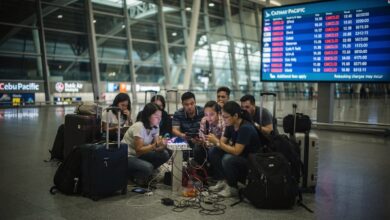
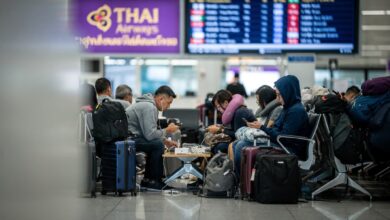
Europe faces jet fuel crisis, risking widespread flight cancellations from mid-May


Europe has six weeks of jet fuel remaining before shortages force flight cancellations, according to the International Energy Agency’s executive director Fatih Birol, who stated on April 16 that disruptions will begin “soon” if Middle East oil supplies blocked by Iran’s closure of the Strait of Hormuz are not restored. KLM has already cut 160 flights through May citing high kerosene costs, while Ryanair and Virgin Atlantic confirmed suppliers have guaranteed fuel only until mid-May.
The timeline puts travelers with bookings after May 15 at immediate risk. Airlines are prioritizing long-haul routes over low-margin intra-Europe flights, meaning regional connections will disappear first.
Europe faces May fuel crunch as Iran blockade drains reserves
The International Energy Agency issued its starkest warning yet on the aviation fuel crisis triggered by Iran’s effective closure of the Strait of Hormuz. Fatih Birol told reporters that Europe will be “at the forefront” of impacts from blocked Middle East oil supplies, with flight cancellations beginning within weeks if tanker passage does not resume.
“I can tell you soon we will hear the news that some of the flights from city A to city B might be cancelled as a result of lack of jet fuel,” Birol said. The agency’s assessment aligns with industry warnings — Airports Council International Europe wrote to the European Commission last week stating shortages could begin at the start of May.
KLM became the first major European carrier to announce cuts, cancelling 160 flights through May on routes including Amsterdam–London and Amsterdam–Düsseldorf. The airline emphasized it faces no kerosene shortage but cannot operate these legs profitably at current fuel prices, which have climbed more than 30% since the US-Israel strikes on Iran in late February.
The Dutch carrier’s decision signals what industry sources describe as a financial tipping point. Airlines typically maintain six weeks of fuel reserves under normal conditions, but those buffers are now depleted. Regulatory filings show Ryanair and Virgin Atlantic have received supplier guarantees only through mid-May, creating a hard deadline for travelers with bookings beyond that date.
| Carrier | Action taken | Routes affected | Fuel guarantee |
|---|---|---|---|
| KLM | 160 flights cancelled | AMS–LHR, AMS–DUS | Through May |
| Ryanair | Monitoring costs | Intra-Europe network | Mid-May only |
| Virgin Atlantic | Warned on supply | Long-haul focus | Mid-May only |
| easyJet | No concerns stated | None announced | Through mid-May |
How the blockade creates a supply chain dead end
The Strait of Hormuz normally carries 21 million barrels per day of crude oil — roughly 20% of global supply and the primary feedstock for European refineries producing jet kerosene. Iran’s retaliation for US-Israel strikes effectively closed the waterway in late February, and the final tanker shipments that departed before the blockade have now reached European ports.
Europe imports 90% of its jet fuel from Middle East refineries, creating what Birol called a “dire strait” with no quick alternative. Other suppliers lack the refining capacity to replace Gulf production on the timeline Europe needs. The situation varies across the continent — some regions face earlier shortages depending on their refinery infrastructure and storage capacity.
Airlines with fuel hedging contracts are partially insulated but still cutting flights. Air France-KLM has hedged 87% of its fuel exposure yet proceeded with cancellations because unhedged costs on low-margin routes exceed revenue. The carrier focused cuts on high-frequency city pairs where passengers can be rebooked onto remaining flights, a strategy that minimizes EU261 compensation obligations when changes are made more than two weeks in advance.
easyJet chief executive Kenton Jarvis stated on April 16 that the carrier has “visibility to the middle of May and we have no concerns,” but that timeline matches the industry-wide guarantee deadline. No European carrier has secured fuel commitments beyond mid-May, according to supplier communications reviewed by industry analysts.
The 2019 drone attacks on Saudi Aramco facilities offer the closest historical parallel — that disruption cut global oil supply by 5.7 million barrels per day temporarily, causing jet fuel prices to spike 10–15% in Europe within days. Lufthansa and other carriers cut unprofitable short-haul flights, but supplies normalized within weeks without widespread cancellations. The current Strait of Hormuz closure represents a larger and more sustained disruption with no clear resolution timeline.
What to do if your flight is at risk
The mid-May fuel guarantee deadline creates a hard cutoff for travelers to act.
- Check your booking status now. Airlines must offer alternatives more than two weeks in advance to avoid EU261 compensation, meaning cancellation notices for late May flights will arrive by early May at the latest. Log into your carrier’s app daily — KLM at klm.com/flight-status, Ryanair at ryanair.com/mytrips — and enable push notifications for schedule changes.
- Request flexible rebooking immediately. Call your airline’s customer service line before automated systems become overwhelmed. KLM at +31-20-649-9123, Ryanair at +353-1-945-1212. Ask specifically about fuel-related waivers and whether your route is under review for cancellation. Document the call with reference numbers.
- Consider US carrier alternatives. American carriers flying transatlantic routes source jet fuel from Western Hemisphere refineries unaffected by the Strait of Hormuz closure. Delta, United, and American Airlines maintain normal operations on routes like New York–London and Los Angeles–Paris, though fares have increased 5–9% as European travelers shift bookings.
- Avoid connecting through regional European airports. Fuel shortages will hit smaller airports first as suppliers prioritize major hubs. If rebooking, choose direct flights or connections through Amsterdam Schiphol, Paris Charles de Gaulle, or Frankfurt — airports with the largest fuel storage capacity and strongest supplier relationships.
- Monitor official channels for emergency measures. The European Commission received Airports Council International Europe’s warning letter last week. Watch for announcements at transport.ec.europa.eu and iea.org/news regarding emergency fuel stockpiling or reserve releases, which would extend the timeline by several weeks.
Watch: The IEA board meets April 22 to consider emergency reserve releases. If triggered, Europe gains 4–6 weeks of additional supply, pushing the crisis into June. If not, expect the first wave of cancellations by May 1.
Will airlines refund tickets if they cancel flights due to fuel shortages?
EU261 and UK261 require full refunds for cancellations, but carriers can offer vouchers first if they classify fuel shortages as “extraordinary circumstances” beyond their control. US Department of Transportation rules mandate cash refunds for cancellations regardless of cause. Insist on cash refunds in writing if offered vouchers — airlines must comply within 7 days under EU law, 20 days under US DOT rules.
Which European routes are most likely to be cancelled first?
Low-margin intra-Europe flights under 90 minutes on high-frequency routes — Amsterdam–London, Paris–Frankfurt, Madrid–Barcelona — face the highest cancellation risk because airlines can rebook passengers onto remaining flights without compensation. Long-haul intercontinental routes generate higher revenue per gallon of fuel and will be protected longest. Regional airports with limited fuel storage will lose service before major hubs.
How long could the fuel shortage last if the Strait of Hormuz remains closed?
Industry sources indicate Europe can stretch existing reserves through early June with aggressive flight cuts, but a full Strait closure lasting beyond May would require 30–40% capacity reductions across the continent. The 1980s Tanker War saw partial closures lasting months, but never a complete blockade. Current US-Iran ceasefire talks offer the only near-term resolution path — failure means shortages extending into summer travel season.
Are flights from North America to Europe affected by the jet fuel shortage?
Transatlantic flights departing North America use Western Hemisphere jet fuel unaffected by the Strait of Hormuz closure, but return legs from Europe face the same fuel constraints as intra-Europe flights. US carriers like Delta and United can source fuel at US airports for outbound legs, giving them operational advantage over European carriers that must fuel both directions in Europe. Expect European carriers to reduce transatlantic frequencies before US carriers do.