Qatar Airways ramps to 139 daily flights, accelerating network rebuild after airspace closures

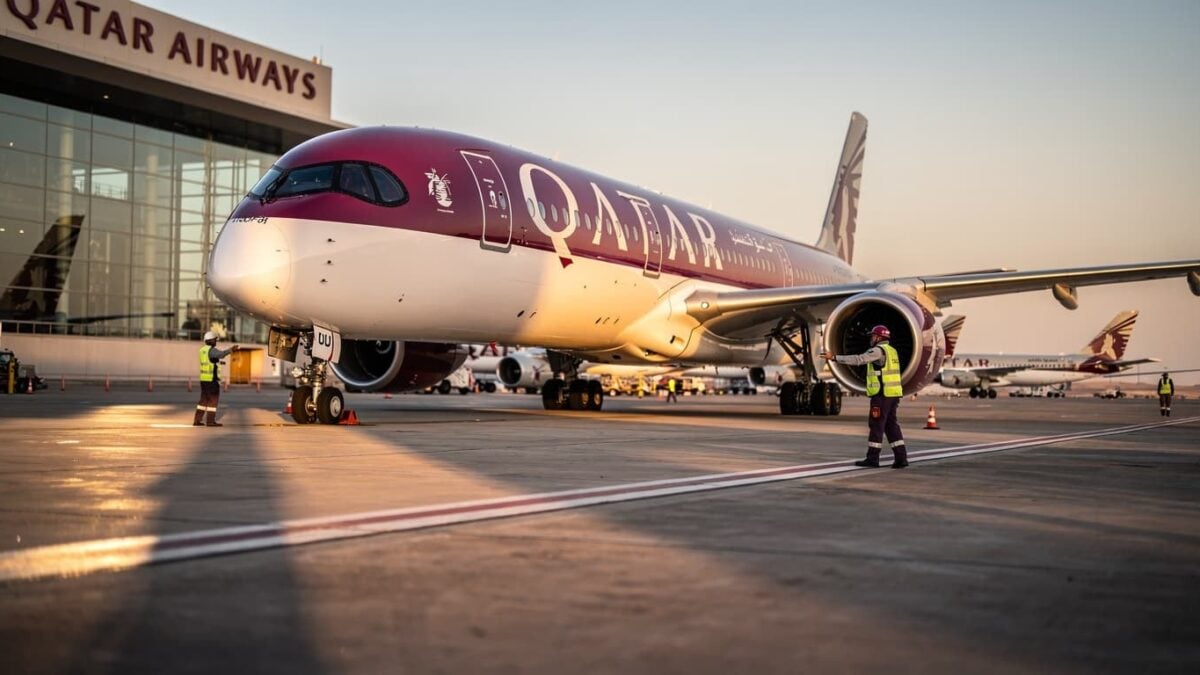
Qatar Airways will operate 139 departing passenger flights from Doha on April 16, 2026, a 25% increase over the prior week’s average of 111 daily departures. The airline has been ramping up service since March 18 following a complete grounding at the start of the Iran War, with resumed routes including Amman and Beirut as of April 14. The carrier now targets over 120 destinations by June 15, though current capacity sits at roughly 60% of pre-war levels.
Privilege Club members with tiers expiring between February 28 and May 31, 2026, received clarification on extensions in a March 29 update. Flexible rebooking and refund policies remain in effect for flights through June 15, 2026.
Qatar Airways ramps to 139 daily flights as network rebuild accelerates
The jump to 139 flights on April 16 marks the steepest single-day increase since Qatar Airways began restoring service in mid-March. Daily departures from Doha had plateaued between 103 and 111 flights from April 7 through April 15, making Wednesday’s 28-flight addition the clearest signal yet that the airline is moving beyond cautious recovery into active network expansion.
The airline grounded all passenger operations in early March when the Iran War closed key airspace corridors. Service resumed March 18 with a skeleton schedule, initially focused on short-haul Gulf routes and select European capitals. The carrier’s limited operations page now lists 139 confirmed departures for April 16, spanning four continents and including newly restored routes to Amman and Beirut.
April 16’s schedule includes 7 daily London Heathrow flights, 3 Bangkok services, and restored connections to Johannesburg, Sydney, and New York JFK. The airline is operating a mix of Boeing 777s and Airbus A350s on long-haul routes, with A320 family aircraft serving regional destinations like Amman, Beirut, and Muscat.
| Date | Departures | Key additions |
|---|---|---|
| April 7 | 79 | Initial ramp-up phase |
| April 8 | 108 | Significant jump |
| April 9-15 | 103-111 | Plateau period |
| April 16 | 139 | Amman, Beirut restored |
How the airspace pause changed Qatar’s recovery timeline
The Iran War’s impact on Gulf carriers has been uneven. Emirates and Etihad reached approximately 70% of pre-war capacity by early April, while Qatar Airways sat at 50% through mid-month. The gap reflects Qatar’s heavier reliance on Iranian and Iraqi airspace for European and Asian routes—closures that forced the airline to reroute via Saudi Arabia and Egypt, adding 1-2 hours to flight times and burning through fuel reserves that limited frequency restoration.
The ceasefire declared in late March allowed partial airspace reopenings, but Qatar Airways has been more conservative than its Dubai and Abu Dhabi competitors in resuming full schedules. Industry sources indicate the airline is prioritizing aircraft utilization efficiency over rapid frequency restoration, a strategy that minimizes crew scheduling disruptions but delays the return of pre-war service levels.
For context: Qatar Airways operated over 230 daily departures from Doha before the war. April 16’s 139 flights represent 60% restoration—a meaningful milestone, but still 40 flights short of where Emirates currently sits relative to its own pre-war baseline. The airline’s earlier April 14 schedule showed 111 departures, making the jump to 139 the largest single-day increase since operations resumed.
What to do if you have a Qatar Airways booking
The airline’s flexible rebooking and refund policy covers all flights through June 15, 2026, regardless of fare class or ticket type.
- Verify flight status: Check qatarairways.com/flight-status or the airline’s mobile app 24-48 hours before departure. April 16’s 139 flights are confirmed, but schedules beyond that date remain subject to change as the network expands.
- Rebook without penalty: If your original route isn’t operating, Qatar Airways will reroute via available connections or offer a full refund. The airline is waiving change fees and fare differences for all rebookings through June 15.
- Check Privilege Club status: Members with tiers expiring between February 28 and May 31, 2026, should review the March 29 clarification on extensions at qatarairways.com/PrivilegeClub. The airline has extended qualification periods to account for reduced flight availability during the grounding.
- Monitor June 15 network expansion: Qatar Airways plans to restore service to over 120 destinations by mid-June, including seasonal European leisure routes and additional Chinese cities. If your destination isn’t operating yet, check back in early May for updated schedules.
Watch: IATA slot conference decisions expected in May 2026 will determine whether Qatar regains peak Doha slots—if approved, expect 200+ daily flights and fare normalization by summer.
Will Qatar Airways reach pre-war capacity by summer 2026?
The airline targets over 120 destinations by June 15, but current daily departures (139 as of April 16) represent 60% of pre-war levels. Full restoration depends on IATA slot approvals expected in May and continued airspace stability—Emirates and Etihad are already at 70% restoration, suggesting Qatar could reach 80-85% by July if ramp-up continues at current pace.
Do Privilege Club tier extensions apply to all members?
Extensions apply only to members with tiers expiring between February 28 and May 31, 2026. The March 29 clarification (third update) specifies that qualification requirements remain unchanged—members must still earn the standard Qpoints and Qmiles, but the earning window is extended to account for reduced flight availability during the grounding period.
Are fares higher on restored routes like Amman and Beirut?
Current pricing is unavailable due to limited operations, but industry sources indicate fares on restored Middle East routes are elevated by 30-50% compared to pre-war levels. This reflects rerouting costs (longer flight times via Saudi/Egyptian airspace) and reduced competition while other carriers remain grounded or operating limited schedules.