
Philippine Airlines seeks DOT approval for first Chicago–Manila nonstop service, cutting connections

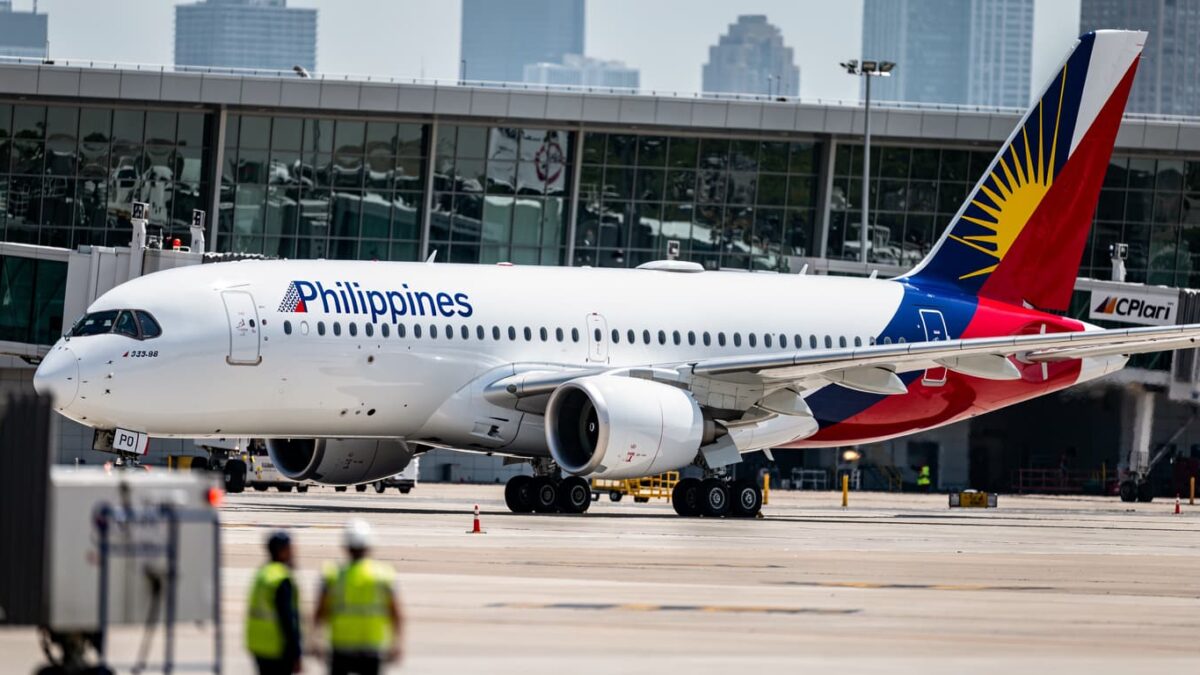
Philippine Airlines filed with the US Department of Transportation on February 24, 2026, seeking approval for the first-ever nonstop service between Chicago O’Hare and Manila, targeting a summer 2026 launch. The route would eliminate connections for 118,200 annual passengers currently traveling Chicago-Philippines via LAX, JFK, or Hong Kong hubs, using Airbus A350 widebody aircraft on the 8,121-mile transpacific sector.
DOT approval is expected by mid-May 2026 under the existing US-Philippines bilateral agreement. If granted, promotional fares could launch in early June, with service potentially beginning as early as late summer—though no confirmed start date has been announced.
Chicago gains first direct Manila link
The Midwest’s largest aviation hub stands to gain its first nonstop connection to the Philippines, pending federal approval of Philippine Airlines’ application filed in late February. The carrier is seeking expedited clearance to launch Chicago O’Hare–Manila service during the summer 2026 IATA season, which runs from late March through October.
No airline has ever operated scheduled nonstop service on this 8,121-mile route. Department of Transportation records confirm zero historical nonstop flights between Chicago and the Philippines, forcing all 118,200 annual passengers on this corridor to connect through Los Angeles, San Francisco, New York JFK, or Asian hubs like Hong Kong and Taipei.
The filing exploits available capacity under the US-Philippines bilateral aviation agreement, which permits four additional US points beyond the carrier’s existing network of Honolulu, Los Angeles, San Francisco, Seattle, New York, Guam, and Saipan. Chicago would become PAL’s eighth US destination and the only Midwest gateway with direct Philippines access.
Philippine Airlines currently operates 44 weekly roundtrips to North America, providing 31,640 weekly seats. According to OAG data, this represents approximately 68.5% of seat capacity on nonstop routes between the Philippines and North America—a market dominance the Chicago route would further cement.
The carrier plans to deploy either an Airbus A350-900 or A350-1000 on the route, both of which have sufficient range for the 16–17 hour westbound sector. The A350 fleet currently serves PAL’s other US routes, including the Seattle service launched in October 2024, which achieved an 82% load factor within six months.
| Routing | Carrier | Weekly frequency | Connection time | Economy RT fare range |
|---|---|---|---|---|
| ORD–HKG–MNL | Cathay Pacific | 5x weekly | 4–6 hours | $1,100–$1,900 |
| ORD–SFO–MNL | United / PAL | 7x weekly | 3–5 hours | $1,200–$1,850 |
| ORD–TPE–MNL | EVA Air | 7x weekly | 2–4 hours | $1,150–$1,800 |
| ORD–MNL (nonstop) | Philippine Airlines | Pending approval | None | Data pending |
How the bilateral agreement enables expansion
The US-Philippines air services agreement, last amended in 2011, permits each country’s carriers to serve unlimited destinations with unlimited frequencies—but only after exhausting a list of initially designated points. Philippine Airlines has now activated seven of its permitted US destinations, leaving four slots available under the agreement’s expansion provisions.
Chicago represents the first use of these remaining slots since the carrier resumed Seattle service in late 2024. The timing aligns with broader transpacific capacity recovery: US-Philippines nonstop seat capacity reached 94% of 2019 levels by March 2026, with PAL accounting for the majority of that restoration.
The DOT filing seeks expedited approval to meet the summer 2026 IATA season, which begins in late March. Standard processing timelines for foreign carrier applications run 60–90 days, placing a decision window around mid-May 2026. If approved, tickets could go on sale in early June with promotional launch fares—a pattern PAL followed for its Seattle route, which offered 25–30% discounts during the first booking window.
Regulatory filings show no competing applications for Chicago–Manila service from other carriers. United Airlines, which operates extensive Philippines service via San Francisco and Guam, has not filed for Chicago–Manila authority despite its O’Hare hub dominance.
What to do
The DOT approval timeline creates a narrow booking window for travelers seeking launch promotional fares, which typically offer 25–35% discounts but sell out within 72 hours of release.
- Monitor the DOT docket: Track approval status at transportation.gov by searching for Philippine Airlines Chicago applications filed February 2026. Approval announcements typically post 2–3 business days before the carrier’s public launch.
- Set fare alerts now: Configure Google Flights or airline-specific alerts for Chicago–Manila routes departing late summer through fall 2026. Launch fares often price $200–400 below typical connecting itineraries.
- Consider alternative routings: If traveling before the nonstop launches, Taipei connections via China Airlines frequently price $400–600 below United’s Guam-routed fares from West Coast cities, with efficient sub-2-hour layovers.
- Check connecting options: PAL’s existing LAX and SFO hubs offer 14 weekly frequencies to Manila with same-day connections from Chicago on United or American Airlines. These routings provide fallback inventory if nonstop seats sell out during launch periods.
Watch: PAL’s summer 2026 schedule filing, due by May 1 under IATA guidelines, will reveal exact launch dates and initial frequency. If the carrier files for daily service instead of three-times-weekly, it signals stronger-than-expected demand projections and likely tighter launch fare availability.
When will tickets go on sale for the Chicago–Manila route?
Ticket sales typically begin 2–4 weeks after DOT approval, which is expected by mid-May 2026. If the pattern from PAL’s Seattle launch holds, promotional fares would open in early June for late summer departures.
How does this route compare to connecting through LAX or SFO?
Nonstop service eliminates 3–6 hours of connection time and removes the risk of misconnections on separate tickets. However, connecting itineraries via LAX or SFO currently offer 14 weekly departure options compared to the nonstop’s initial three-times-weekly frequency, providing more schedule flexibility.
Will the A350 aircraft offer premium economy on this route?
PAL’s A350-900 and A350-1000 variants both feature premium economy cabins on transpacific routes. The exact configuration for Chicago–Manila will be confirmed in the carrier’s schedule filing, but existing US routes operate with 24–28 premium economy seats in a 2-4-2 layout.
What happens if the DOT denies the application?
Denial is unlikely given the existing bilateral agreement’s capacity provisions and the absence of competing applications. However, if denied, PAL would need to refile with additional documentation, delaying launch to winter 2026–2027 at earliest.