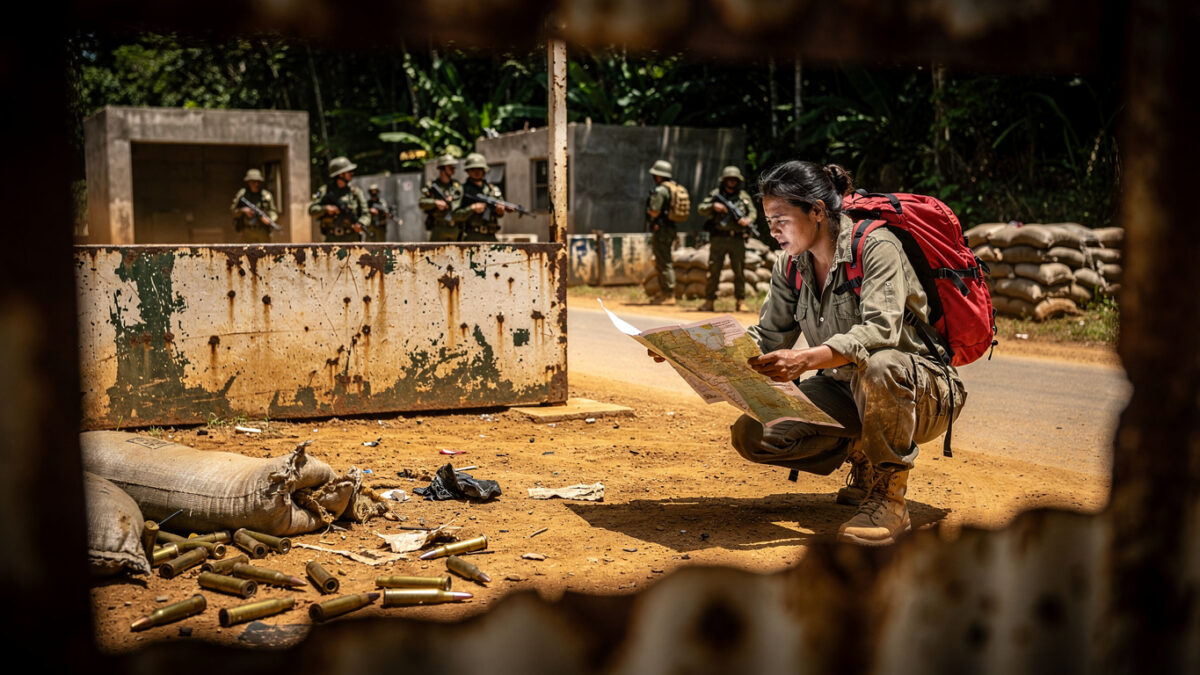
The UK Foreign, Commonwealth & Development Office reissued its travel advisory on April 1, 2026, warning against all travel to western and central Mindanao and the Sulu archipelago due to terrorism and armed clashes. The US State Department maintains a Level 4 “Do Not Travel” designation for the same zones, with security incidents across Mindanao rising 23% since January 2026. Siargao, Dinagat, and Camiguin Islands remain accessible, but overland routes and sea crossings are explicitly discouraged.
Travel insurance typically voids coverage in Level 3 and Level 4 zones, and consular assistance is severely limited. This article explains which parts of Mindanao are restricted, how terrorist groups operate in the region, and the steps travelers must take to avoid uninsurable risk.
The UK government’s April 1, 2026 advisory is not new policy — it’s a formal reiteration of longstanding restrictions driven by persistent terrorism threats in Mindanao. The FCDO no-travel zones cover approximately 60% of Mindanao’s land area, including the Bangsamoro Autonomous Region, where Abu Sayyaf remnants and Daesh-affiliated cells continue to operate.
The US State Department’s parallel advisory designates the Sulu Archipelago — Basilan, Sulu, and Tawi-Tawi provinces — plus Marawi City as Level 4 “Do Not Travel” zones. The remainder of Mindanao sits at Level 3 “Reconsider Travel,” with exceptions for Davao City, Davao del Norte, Siargao Island, and Dinagat Islands.
For travelers connecting through Manila or Cebu en route to Asia-Pacific destinations, the immediate concern is not flight bans but insurance validity and personal safety exposure. Standard travel insurance policies contain exclusions for government-designated high-risk zones — a claim filed after an incident in a Level 4 area will be denied outright.
The Philippine National Police reported a 23% increase in security incidents across Mindanao since January 2026, with weekly armed clashes in the Bangsamoro region. Terrorist groups fund operations through kidnappings, historically targeting Westerners for ransom. The 2019 abduction of two British nationals in the Sulu Sea remains an active case study in how maritime routes expose travelers to cross-province threats.
How terrorist networks operate in Mindanao
The terrorism threat in Mindanao is structural, not opportunistic. Abu Sayyaf and affiliated groups use rural hideouts in the Bangsamoro Autonomous Region, exploiting weak governance and porous maritime borders to conduct kidnappings and bombings. The Sulu Sea — the waterway separating the Sulu archipelago from mainland Mindanao — is a known corridor for sea-based abductions targeting foreigners traveling by boat.
Marawi City, the site of a five-month siege in 2017, remains under restricted access for US government employees without special authorization. Philippine military forces conduct frequent raids against terrorist remnants, but the operational environment is fluid. Attacks spill over into zones classified as “essential travel only,” including areas near Davao.
Terrorists also target public infrastructure nationwide — airports, shopping malls, and tourist sites in Manila and Cebu have been flagged as potential attack vectors. The FCDO notes that multiple groups have both the intent and capability to carry out attacks anywhere in the Philippines, not just in Mindanao.
| Zone | UK FCDO | US State Dept | Primary threat |
|---|---|---|---|
| Sulu Archipelago | All travel | Level 4 | Kidnapping, terrorism |
| Western/Central Mindanao | All travel | Level 3 | Armed clashes, IEDs |
| Marawi City | All travel | Level 4 | Military operations |
| Remainder of Mindanao | Essential only | Level 3 | Spillover attacks |
| Siargao, Dinagat, Camiguin | No restriction | No restriction | Low (air access only) |
| Davao City | Essential only | No restriction | Moderate (protests) |
European travelers connecting through Manila to destinations like Singapore or Tokyo should verify their routing does not involve Mindanao stopovers. Cebu Pacific and Philippine Airlines operate direct flights from Manila to Siargao and Davao, bypassing overland exposure. Flight options to the Philippines from Europe typically route through Hong Kong, Singapore, or Dubai, with Manila as the final leg — check routing details to confirm no Mindanao connections are involved.
Why insurance voids matter more than flight availability
Airlines continue to serve Manila and Cebu without operational restrictions, but the financial risk shifts entirely to the traveler in advisory zones. Standard travel insurance policies from providers like Allianz, AXA, and World Nomads contain explicit exclusions for government-designated high-risk areas. A medical emergency in Davao — classified as “essential travel only” by the FCDO — may not trigger a payout if the insurer determines the trip was discretionary.
Specialized terrorism riders exist, but they require pre-approval and often exclude Level 4 zones outright. Policies that do cover Mindanao typically cost 40-60% more than standard premiums and impose strict conditions: travelers must register with government programs like STEP (US) or LOCATE (UK), avoid overland travel, and fly direct to excepted islands.
The practical consequence: a kidnapping or injury in a restricted zone becomes a self-funded crisis. Ransom negotiations, private security extraction, and medical repatriation fall on the traveler or their family. The 2019 British abduction case involved an estimated £500,000 in private costs before resolution.
Steps to verify routing and coverage
The advisory does not ban flights to the Philippines, but it creates a due diligence requirement that most travelers overlook.
- Check your itinerary for Mindanao connections. If your Manila-to-Singapore flight includes a Davao or Zamboanga stop, reroute through Cebu. Cebu Pacific and Philippine Airlines publish schedules 11 months out — verify aircraft type and intermediate stops before booking.
- Confirm insurance coverage explicitly. Call your provider and ask: “Does this policy cover medical evacuation from Davao City?” If the answer is hedged or refers to “case-by-case review,” the policy is effectively void for Mindanao.
- Register with government travel programs. STEP (US), LOCATE (UK), and Smartraveller (Australia) provide real-time security alerts and facilitate consular contact in emergencies. Registration is free and takes under five minutes.
- Avoid overland and sea routes entirely. The FCDO and US State Department both specify air-only access to excepted islands. A ferry from Cebu to Siargao crosses waters where kidnappings have occurred — the 90-minute flight eliminates that exposure.
- Monitor advisories 48 hours before departure. The March 2026 update to Canada’s advisory expanded protest warnings nationwide. Check gov.uk/foreign-travel-advice/philippines and travel.state.gov for changes that could affect your routing or insurance validity.
Watch: The Philippine government’s quarterly security briefings, typically released in January, April, July, and October, signal whether military operations are escalating or de-escalating in Bangsamoro. A shift from Level 3 to Level 2 for Davao would indicate measurable progress — but no such change has occurred since 2022.
Does this advisory affect flights to Manila or Cebu?
No direct flight bans exist, but terrorists have targeted airports and shopping malls in both cities. The US State Department’s Level 2 advisory for the entire Philippines, reissued March 7, 2026, cites terrorism spillover and protest risks. Add 1-2 hours to your airport arrival buffer to account for heightened security screening at Ninoy Aquino International Airport (MNL) and Mactan-Cebu International Airport (CEB).
What if I’m traveling to Siargao for tourism?
Siargao Island is explicitly excepted from FCDO and US travel restrictions, but you must fly direct from Manila or Cebu. Cebu Pacific operates daily flights from Manila (MNL) to Siargao (IAO) using ATR 72 turboprops, with a flight time of 1 hour 50 minutes. Do not take ferries or boats from mainland Mindanao — the Sulu Sea crossing exposes you to kidnapping networks that insurance will not cover.
How do I verify my insurance covers the Philippines?
Call your provider and ask two specific questions: (1) Does this policy cover medical evacuation from Davao City or Siargao Island? (2) Are claims voided if I travel to a zone designated Level 3 or Level 4 by the US State Department? If the answer to question 2 is yes, you need a specialized terrorism rider or a different policy. World Nomads and Allianz offer Philippines-specific coverage, but premiums run 40-60% higher than standard policies.
Are Australian travel advisories different from UK and US warnings?
Yes. Australia’s Smartraveller rates the entire Mindanao region as “Do Not Travel” (Level 4 equivalent), including Davao City, which the US classifies as Level 2. Australian passport holders face stricter insurance exclusions and should verify their policy explicitly covers Davao before booking. The FCDO and US State Department allow essential travel to Davao, but Australian advisories do not make that distinction.
What happens if a security incident occurs while I’m in Manila?
The Level 2 advisory for the Philippines means consular services remain fully operational, but you are responsible for monitoring local news and following embassy alerts. Register with STEP (US) or LOCATE (UK) to receive SMS warnings about protests, attacks, or airport closures. If an incident occurs near your hotel or transit route, contact your embassy immediately — evacuation assistance is available for Level 2 zones, unlike Level 4 areas where consular reach is limited.