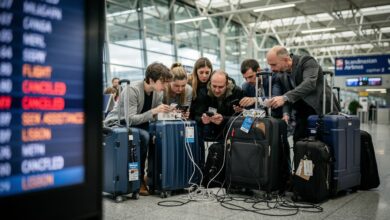
Newark Airport scales overcharged United passengers millions, 27% found inaccurate in inspection

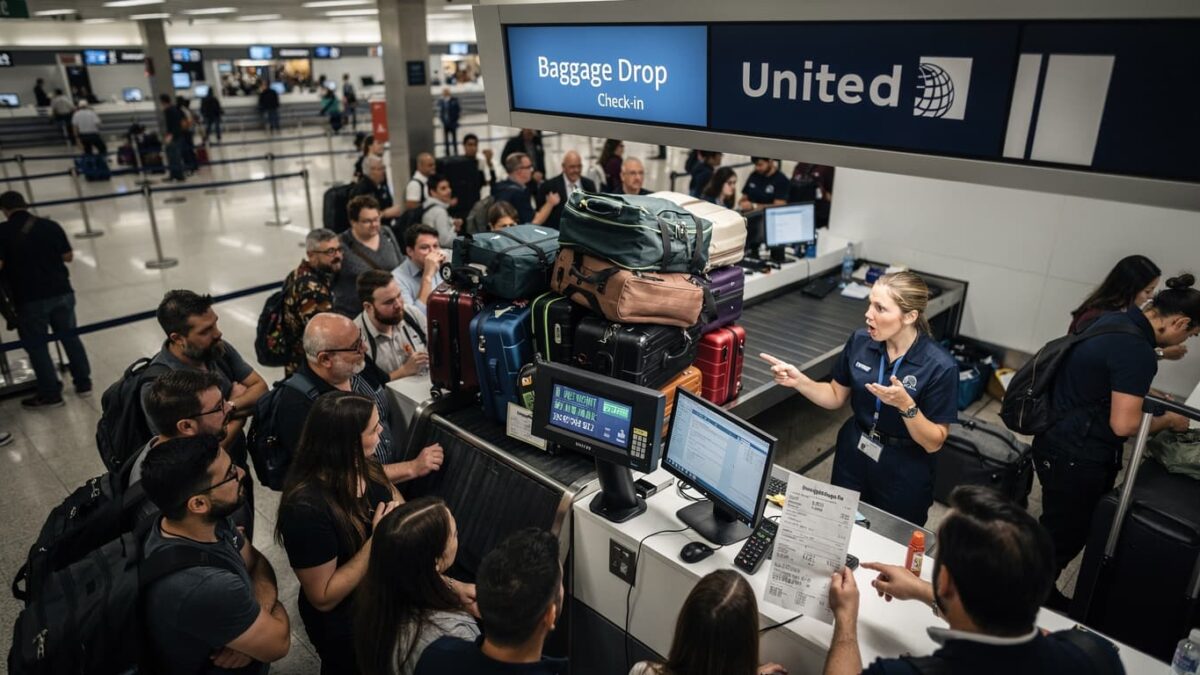
New Jersey inspectors tested 366 baggage scales at Newark Liberty International Airport in late 2023 and found 100 scales (27.3%) inaccurate — 81 condemned and removed from service. One scale registered bags as overweight even when empty; another was off by 35 pounds after repair. With United Airlines charging $100–$200 per overweight bag and Newark processing millions of checked bags annually at its primary hub, passengers likely overpaid millions in fees they never owed.
Most faulty scales have been serviced, but six remain offline and no systematic re-testing has occurred since. Full inspection details surfaced publicly only recently, over two years after the violations.
Faulty scales charged passengers for phantom weight
The New Jersey Division of Consumer Affairs inspected all baggage scales at Newark between October 16–27, 2023, finding widespread calibration failures. Eighty-one scales were so far off they were immediately condemned. One scale failed to detect test loads of 300, 350, 400, and 500 pounds — treating every bag as overweight regardless of actual weight. Another remained 35 pounds off even after repair and reinspection.
The violations carry fines of at least $100 per scale, but the passenger cost is far higher. United Airlines — which operates over 500 daily flights from Newark across Terminals A, B, and C — charges $100 for bags 51–70 pounds on domestic routes and $200 internationally. With Newark handling 47 million passengers in 2024 and an estimated 8 million checked bags on United alone, even a small percentage of erroneous overweight charges adds up to millions.
Some passengers forced to remove items from bags to meet weight limits may have discarded belongings unnecessarily. Others paid overweight fees when their bags were actually within limits. The inspection findings confirm what travelers have suspected for years — airport baggage scales are not reliably maintained.
| Metric | Count | Status |
|---|---|---|
| Total scales tested | 366 | All terminals |
| Inaccurate scales found | 100 (27.3%) | Failed inspection |
| Scales condemned | 81 | Removed from service |
| Scales serviced and returned | 94 | Back in compliance |
| Scales still offline | 6 | Awaiting parts |
Similar failures found at other US airports
Newark is not an isolated case. Charlotte Douglas International Airport faced identical problems in early 2020 when North Carolina inspectors found half a dozen miscalibrated scales. The story gained little traction because it broke at the start of the pandemic, and no significant fines or systemic reforms followed.
Baggage scales endure constant abuse — heavy suitcases slammed onto them at odd angles, thousands of times daily. Without regular calibration, drift is inevitable. Yet no federal mandate requires routine testing, leaving enforcement to state weights-and-measures offices with limited resources and infrequent inspection schedules.
The New Jersey findings suggest the problem is widespread. If 27% of scales fail at one major hub, other airports likely face similar rates. Travelers have no way to verify scale accuracy at check-in, and airlines have little incentive to flag potential overcharges that generate revenue.
What to do if you were overcharged
Weigh your bags at home before heading to Newark. Use a bathroom scale (hold the bag, subtract your body weight) or invest in a $15 digital luggage scale. If the airport scale reads significantly heavier than your home measurement, ask to weigh the bag on a different check-in counter scale.
- Document everything. Photograph the scale reading, your receipt, and the bag tag. If charged an overweight fee you believe is incorrect, file a complaint with the New Jersey Office of Weights and Measures within 30 days. Reference the October 2023 inspection in your complaint.
- Challenge fees at check-in. If a scale shows your bag just over the limit, politely request a supervisor or ask to use a different scale. United agents have discretion to waive fees for bags within 2 pounds of the threshold.
- File a DOT complaint if the airline refuses to address the issue. Visit transportation.gov/airconsumer and include all documentation. While no automatic compensation exists for faulty scale charges, a formal complaint creates a record and may prompt airline review.
- Consider elite status or a co-branded credit card. United MileagePlus Premier members and cardholders receive free checked bags, eliminating exposure to overweight fee disputes entirely.
Watch: New Jersey Division of Consumer Affairs fine announcements in coming months — if total penalties exceed $100,000, it signals escalated enforcement and potential mandatory quarterly scale audits at Newark.
How do I know if a baggage scale at Newark is accurate?
You cannot verify accuracy at check-in. Weigh your bag at home before traveling and compare readings. If the airport scale shows significantly more weight (2+ pounds difference), request a second scale or supervisor review.
Can I get a refund if I was overcharged due to a faulty scale?
No automatic refund process exists. File a complaint with the New Jersey Office of Weights and Measures at njconsumeraffairs.gov/owm and a DOT complaint at transportation.gov/airconsumer. Include photos of your scale reading, receipt, and any home weight measurements.
Are baggage scales at other airports also inaccurate?
Likely. Similar failures were found at Charlotte Douglas in 2020, and no federal mandate requires routine scale testing. State inspections are infrequent, meaning calibration drift can persist for years at high-volume airports.
What should I do if my bag is just over the weight limit?
Ask to weigh it on a different scale or request a supervisor. United Airlines policy allows agents to waive overweight fees for bags within 2 pounds of the 50-pound limit. Remove items and reweigh if necessary.