

Air Canada Express flight attendant ejected 320 feet in LaGuardia crash, survives with severe injuries

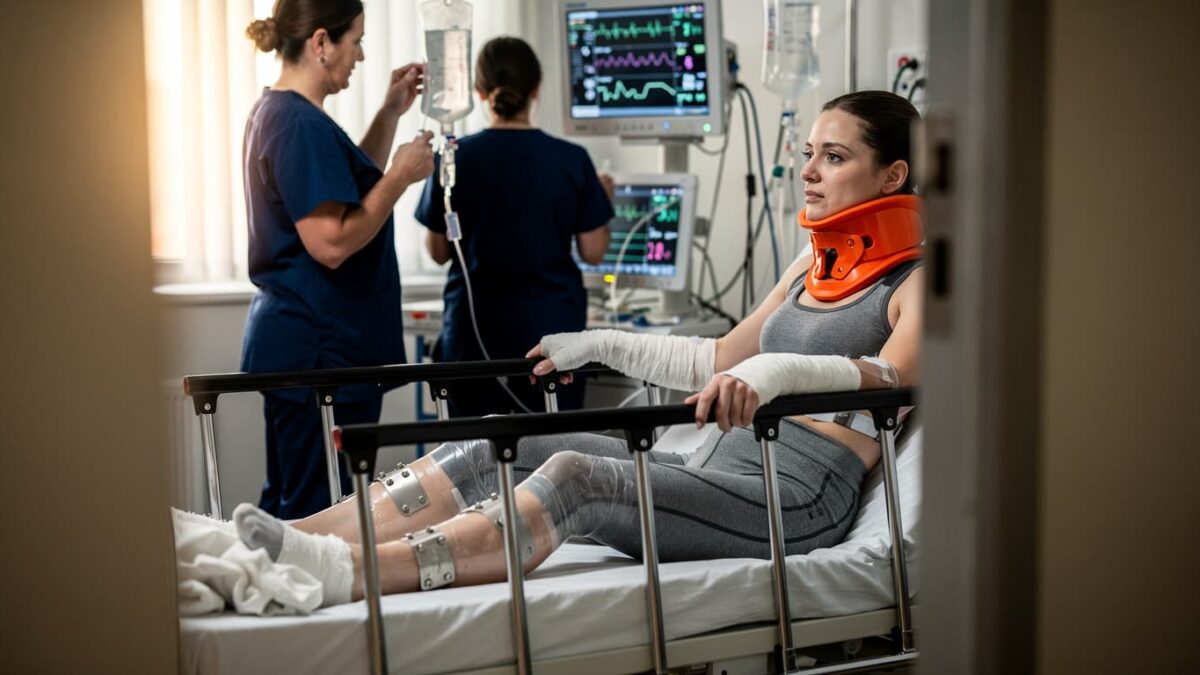
Flight attendant Solange Tremblay was ejected 320 feet from Air Canada Express Flight 8646 while still strapped to her jump seat during the March 22, 2026 LaGuardia Airport crash that killed both pilots. She remained conscious throughout the ordeal and sustained two shattered legs with open fractures, a fractured spine, and severe skin loss requiring multiple surgeries and grafts. The collision between the CRJ900 and a fire truck occurred on Runway 4 — the NTSB confirmed the truck’s lack of transponder prevented runway incursion alarms from triggering.
Over 40 people were injured in the crash. A GoFundMe for Tremblay’s recovery has raised nearly $190,000 as of March 30, covering surgeries and rehabilitation to relearn walking.
A senior Air Canada Express flight attendant survived being thrown more than three football fields from a crashing aircraft — and was awake for every second of it.
Solange Tremblay was sitting in her jump seat directly behind the cockpit when Flight 8646, a CRJ900 operated by Jazz Aviation, collided with a fire truck during landing at LaGuardia Airport on March 22. The impact ejected her 320 feet down the runway, still strapped to her seat, according to her daughter Sarah Lépine.
First responders found Tremblay conscious on the tarmac. Both pilots — Antoine Forest and Mackenzie Gunther — died on impact.
Tremblay’s injuries are catastrophic: two shattered legs with open fractures requiring metal plates, missing flesh on both legs from sliding across the runway, and a fractured spine. Doctors are still determining whether spinal surgery will be necessary. She has already received a blood transfusion due to complications from her first surgery and faces months of rehabilitation to walk again.
What the NTSB investigation has revealed so far
The fire truck involved in the collision did not have a transponder, which meant LaGuardia’s runway incursion alarm system never triggered, NTSB Chair Jennifer Homendy confirmed in preliminary findings. The truck was on Runway 4 when the Air Canada Express flight was on final approach — tower controllers instructed the vehicle to stop in the final 10 seconds before impact, but the collision could not be avoided.
The NTSB is conducting a forensic review of air traffic control communications and ground vehicle protocols. Over 40 people were injured beyond Tremblay, though she sustained the most severe documented injuries among survivors. FAA Administrator Brian Bedford described the two pilots as “young men at the start of their careers” in a statement following the crash.
No immediate operational changes have been reported for Air Canada Express flights at LaGuardia, though the FAA is reviewing vehicle tracking procedures at the airport. The preliminary investigation timeline shows the sequence of events unfolded in under 15 seconds.
| Factor | Detail | Status |
|---|---|---|
| Flight | AC8646 (CRJ900, Jazz Aviation) | Both pilots killed |
| Runway | Runway 4, LaGuardia | Under NTSB review |
| Fire truck | No transponder | Alarm system did not trigger |
| Injuries | 40+ passengers/crew | Tremblay most severe |
| Investigation | NTSB preliminary phase | Probable cause report 12–18 months |
The regulatory framework that governs jump seat safety
Jump seats in commercial aircraft must meet Federal Aviation Regulation 25.785 standards, which require restraints capable of withstanding 9g forward and 4g downward crash loads. The regulation also mandates that restraints prevent occupant projection beyond 6 inches during impact — a standard Tremblay’s seat technically met, since she remained strapped in despite being ejected from the fuselage.
The FAA certifies LaGuardia operations and oversees US-registered aircraft like Jazz Aviation’s CRJ900 fleet under 14 CFR Part 121. Transport Canada certifies Air Canada Express and Jazz for Canadian operations, with FAA IOSA audits confirming compliance. The NTSB leads crash investigations with FAA participation — standard post-accident flight restrictions remain in place until a probable cause report is released, typically 12 to 18 months after the incident.
What travelers should do now
Air Canada Express flights at LaGuardia are operating normally, but the NTSB investigation could trigger temporary disruptions if the FAA mandates immediate safety upgrades.
- Check flight status daily if you have a LaGuardia booking on Air Canada Express or Jazz Aviation routes (particularly LGA–Toronto or LGA–Montreal). Use the Air Canada status tool for real-time updates.
- Monitor FAA NOTAMs for Runway 4 restrictions at notams.aim.faa.gov — any temporary closures will appear here first.
- Build buffer time into connections if your itinerary involves LaGuardia in the next 30 days. The preliminary NTSB report is expected within that window and could prompt immediate operational changes.
- Document existing bookings — if the FAA issues flight restrictions, Air Canada must offer rebooking or refunds under DOT rules for delays exceeding 3 hours.
Watch: The NTSB’s preliminary report, expected within 30 days, will clarify whether the crash resulted from equipment failure, procedural gaps, or ATC error — each outcome carries different implications for how quickly LaGuardia operations normalize.
How did Solange Tremblay survive being ejected 320 feet from the aircraft?
She remained strapped to her jump seat throughout the ejection, which kept her body secured despite the catastrophic forces. Jump seats are designed to withstand 9g forward and 4g downward crash loads under FAR 25.785 standards. While the seat separated from the fuselage, the restraints prevented her from being thrown free — a factor that likely saved her life despite the severe injuries she sustained from sliding across the runway.
Will Air Canada Express flights at LaGuardia be canceled or delayed?
No cancellations have been reported as of March 30, 2026. Air Canada Express and Jazz Aviation flights are operating on schedule at LaGuardia. However, the NTSB investigation could lead to temporary runway restrictions or enhanced ground vehicle tracking requirements, which may cause short-term delays. Monitor the Air Canada status page and FAA NOTAMs for Runway 4 if you have a booking in the next 30 days.
What caused the runway incursion alarm to fail?
The fire truck involved in the collision did not have a transponder — the device that communicates a vehicle’s position to LaGuardia’s runway incursion alarm system. Without a transponder signal, the system had no way to detect the truck on Runway 4 or alert air traffic controllers that a collision was imminent. The NTSB is reviewing whether this represents a procedural gap or equipment failure in LaGuardia’s ground vehicle protocols.
How long will Solange Tremblay’s recovery take?
Her daughter Sarah Lépine stated that Tremblay will remain in New York for the foreseeable future and faces multiple surgeries, including metal plate installation for her shattered legs and skin grafts to repair tissue loss. She will require intensive rehabilitation to relearn how to walk. The immediate concern is infection risk, which could lead to additional complications. No specific timeline has been provided, but recovery from injuries of this severity typically spans 12 to 24 months.