Gulf airlines struggle with 20,000 flight cancellations, Asia-Europe fares up 30%

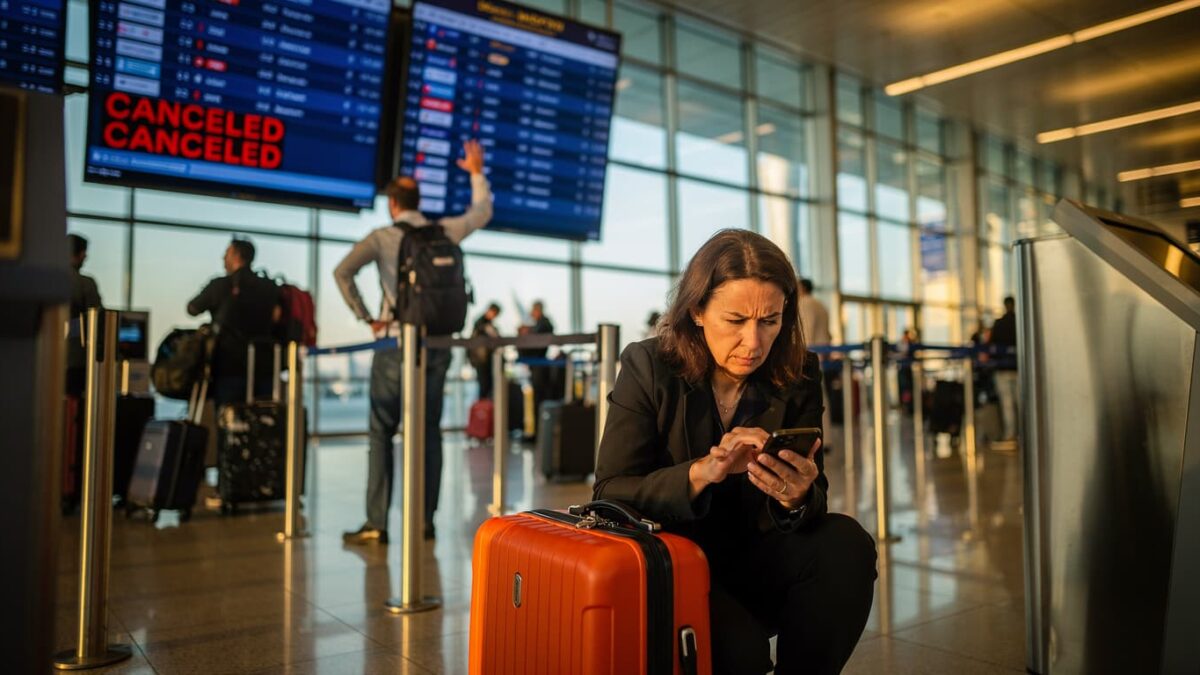
Four weeks into the Iran conflict, Gulf hub airlines remain severely disrupted: Emirates operates at 75% capacity from Dubai, Etihad at 50% from Abu Dhabi, and Qatar Airways at just 20% from Doha as of March 28, 2026. Over 20,000 flights have been canceled since February 28 strikes closed Gulf airspace. Travelers with bookings through Dubai, Abu Dhabi, or Doha to Europe, Asia, or Australia face last-minute cancellations despite extended flexible policies running through April and June.
Qatar Airways promises expansion to 33 additional destinations by April 15, but actual flight data shows only 40 daily departures — one-fifth of pre-war operations. Rerouting via Singapore or Istanbul adds 2–4 hours and $500+ to typical fares.
The Iran war that began February 28, 2026 shut down Gulf aviation entirely for 48 hours. A month later, the three major Gulf carriers are rebuilding at vastly different speeds — and travelers are paying the price in canceled connections, inflated fares, and unreliable schedules.
Emirates has restored roughly 75% of its pre-conflict schedule from Dubai and maintained that level for two weeks, according to Flightradar24 tracking data. The airline extended its Skywards tier freeze and mileage expiry pause through June 30, 2026, and offers free rebooking or refunds on flights through April 15.
Etihad sits at 50% capacity from Abu Dhabi — half the recovery rate of its Dubai rival. The carrier announced plans to add 10 destinations starting March 29, but has not published a confirmed route list. During the initial hub restart, Etihad overpromised flight resumptions that never materialized, leaving passengers stranded with bookings the airline canceled days before departure.
Qatar Airways operates just 40 daily passenger flights from Doha — roughly one-fifth of its pre-war schedule. The airline has promised service to 33 more destinations through April 15, but flight schedule data does not yet reflect these additions. Rebooking on partner airlines has been inconsistent, and the carrier’s Privilege Club tier extension policy has changed three times in two weeks.
How the disruption reshapes Asia-Europe travel
The Gulf hub model — which funneled 60% of Europe-Asia traffic through Dubai, Abu Dhabi, and Doha before the conflict — has fractured. Travelers now face a choice: risk a Gulf connection with 20–75% odds of cancellation, or reroute through Singapore or Istanbul at significantly higher cost.
Singapore Airlines operates over 50 weekly flights between Singapore and Europe on A350 and 787 aircraft, with full Star Alliance connectivity. Turkish Airlines runs 40 weekly frequencies from Istanbul to Asia on 777 and A350 equipment, often at the lowest fares in the market. Both carriers have absorbed demand from stranded Gulf passengers, but capacity constraints have pushed economy return fares from Los Angeles to Dubai from a typical $1,100 to $1,450 as of late March.
Europe-Australia routes via the Gulf show fare increases of 20–30% compared to pre-conflict pricing, driven by jet fuel price spikes of roughly 60% on air freight routes and the longer flight times required for rerouting. A London-Sydney trip that once transited Dubai in 22 hours now requires 26–28 hours via Singapore, with corresponding fare premiums.
| Airline | Hub | Capacity vs. pre-war | Daily departures | Flexible policy ends |
|---|---|---|---|---|
| Emirates | Dubai (DXB) | 75% | ~210 | April 15, 2026 |
| Etihad | Abu Dhabi (AUH) | 50% | ~80 | April 15, 2026 |
| Qatar Airways | Doha (DOH) | 20% | ~40 | June 15, 2026 |
| Gulf Air | Manama (BAH) | Hub closed | Operating from Dammam | April 30, 2026 |
What the recovery timeline reveals
The last comparable Gulf disruption occurred in March 2022, when Yemen missile threats closed Dubai and Abu Dhabi airports for several days. Emirates recovered to 80% capacity within two weeks by leveraging its flydubai subsidiary and partner airline rebooking. Full operations resumed by May 2022 with minimal long-term route losses.
The current conflict presents a more complex challenge. Airspace restrictions extend beyond the immediate Gulf region, affecting overflights and creating unpredictable cancellation patterns. Etihad has launched heavily discounted business-class fares between Europe and Asia — economy fares starting at $1,200 for routes typically priced at $2,000+ — but the airline’s operational reliability remains in question. Routes like Abu Dhabi-Taipei remain suspended four weeks into the recovery.
Qatar Airways CEO Akbar Al Baker promised Privilege Club tier extensions on March 17, then revised the policy twice in the following 10 days as the airline struggled to restore operations. The carrier’s flexible rebooking and refund policy now extends through June 15 — the longest window among Gulf carriers — suggesting internal projections for a slow recovery.
What to do if you have a Gulf booking
Gulf hub connections carry high cancellation risk through mid-April — here is the priority order for protecting your trip.
- Check flight status now: Use the airline app or website to verify your booking is still scheduled. Do not rely on the original confirmation — schedules change daily.
- Call the airline within 24 hours: Emirates 800-777-3999, Etihad 600-555-666, Qatar Airways +974-4023-0000. Request confirmation of operations or a free rebook to a non-Gulf routing under flexible policies.
- Reroute via Singapore or Istanbul: If your travel dates are fixed, request a partner airline rebook. Singapore Airlines and Turkish Airlines offer the most reliable Asia-Europe capacity. Expect 2–4 additional flight hours.
- Consider a full refund: All three carriers offer refunds for bookings through April or June. If your trip is discretionary, postponing until May avoids the current uncertainty.
- Monitor airspace restrictions: Airspace closures compound Gulf hub disruptions by forcing longer routings and reducing schedule reliability.
Watch: If Gulf airline capacity reaches 80% by April 15, it signals normalized Asia-Europe transit. If not, expect sustained reroutes via Singapore and Istanbul with fares 20%+ above pre-war levels through summer 2026.
Can I get compensation if my Gulf airline flight is canceled?
EU261 and UK261 cover cancellations over 3 hours for flights departing EU/UK airports, offering up to €600 for long-haul economy — but geopolitical airspace issues are typically classified as force majeure, exempting airlines from compensation. US and Canadian passengers are entitled to refunds within 7 days for significant schedule changes under DOT rules, but no fixed compensation amounts. Australian and New Zealand passengers can claim refunds or rebooking under consumer law, but again, no set compensation for force majeure events.
Which Gulf airline is most reliable right now?
Emirates operates at 75% of pre-war capacity and has maintained that level for two weeks, with consistent rebooking on partner airlines when cancellations occur. Etihad sits at 50% capacity with a history of overpromising flight resumptions that don’t materialize. Qatar Airways operates just 20% of its pre-war schedule and has revised its policies multiple times. For bookings through April, Emirates presents the lowest cancellation risk.
Should I avoid Gulf hubs entirely for the next few months?
Unless your origin or destination is Dubai, Abu Dhabi, or Doha, rerouting via Singapore or Istanbul eliminates the uncertainty of Gulf hub operations. Singapore Airlines and Turkish Airlines offer full Asia-Europe connectivity without the cancellation risk, though fares run 20–30% higher than pre-conflict Gulf pricing. If you have maximum flexibility and can absorb a potential last-minute cancellation, Emirates remains a viable option — but Etihad and Qatar Airways carry significant operational risk through at least mid-April.