
Solomon Islands: Unexploded ordnance remains a significant, ongoing risk

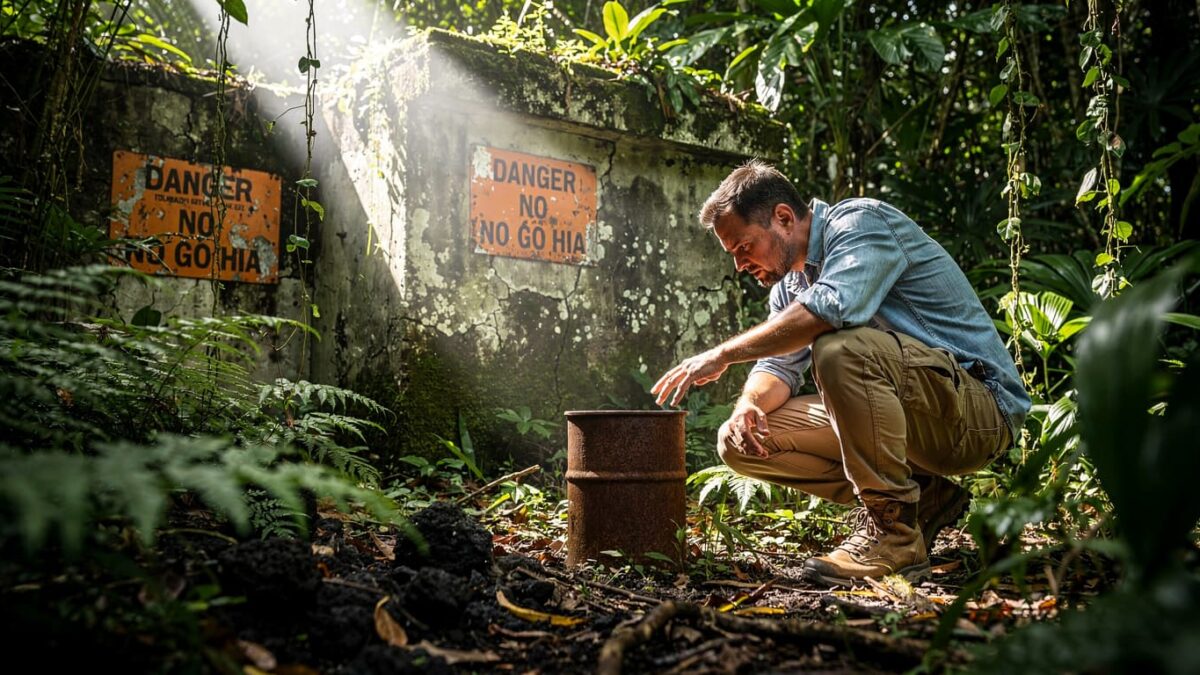
World War II munitions kill an estimated 20 Solomon Islanders annually, with the Royal Solomon Islands Police Force disposing of 6,121 unexploded ordnance items in 2024 alone — roughly 60 per week on Guadalcanal. A March 2026 University of Queensland study confirmed toxic chemicals (arsenic, lead, TNT) leaching from corroded bombs into soil and water at over half the contaminated sites, which sit within 1 kilometer of coastlines. Climate change accelerates exposure through erosion and flooding.
Travelers exploring WWII battlefields, beaches, or rural areas in Honiara, Guadalcanal, Western Province, New Georgia, and the Russell Islands face detonation risk and chemical exposure. The article explains how 80-year-old ordnance corrodes, why clearance lags behind discovery, and the four steps to verify site safety before any off-path activity.
The Solomon Islands remain one of the Pacific’s most heavily contaminated territories from World War II combat, with the Royal Solomon Islands Police Force Explosive Ordnance Disposal Unit recording 7,773 callouts between 2011 and 2025. Most involve live explosives discovered near villages, gardens, and fishing grounds.
A March 19, 2026 study by the University of Queensland and UNDP — funded by Japan — found elevated levels of arsenic, lead, cadmium, mercury, TNT, and PETN in soil and water samples at bomb sites. Over 50% of contaminated sites sit within 1 kilometer of the coast, where erosion and flooding expose buried munitions and accelerate chemical leaching into reefs and wells.
The threat is concentrated but unpredictable. Guadalcanal, Western Province, New Georgia, and the Russell Islands saw the heaviest fighting and hold the highest ordnance density. The UK Foreign Office specifically warns travelers to seek local advice before visiting Hell’s Point, the New Georgia islands, and the Russell Islands.
For travelers, the risk is twofold: physical detonation from disturbing corroded bombs, and long-term chemical exposure from contaminated seafood or water. The RSIPF EOD Unit operates 24/7 on a reactive basis, responding to public reports rather than proactive sweeps. No nationwide UXO map exists beyond Guadalcanal and Honiara.
The scale of the problem
The RSIPF EOD Unit disposed of 6,121 unexploded ordnance items in 2024, including 3,200 in Western Province during Operation Render Safe. The unit has 30 IMAS-trained officers and 13 scuba divers for underwater recoveries, clearing roughly 60 UXOs per week on Guadalcanal alone.
Between 2011 and 2020, the unit disposed of approximately 42,000 ordnance items. The pace has not slowed. Callouts spike after fatalities, when communities report previously ignored objects.
The HALO Trust launched a US-funded survey in 2023, visiting 344 communities across five provinces. The survey identified hazardous areas covering half the size of Honiara, with 70% of contaminated land used residentially or agriculturally. Since the survey began, HALO has logged 3,169 explosive remnants of war reports.
The March 2026 UNDP study confirmed what local health workers suspected: corroded bomb casings leach heavy metals and explosives into the environment. Rainwater runoff carries these toxins into soil, water supplies, and coral reefs. Communities near contaminated sites report illnesses consistent with chronic exposure.
| Period | UXOs disposed | Callouts recorded | Key operation |
|---|---|---|---|
| 2011–2020 | ~42,000 | Data pending | Reactive disposal |
| 2011–2025 | Data pending | 7,773 | Public reporting |
| 2024 | 6,121 | Data pending | Operation Render Safe (Western Province: 3,200) |
| 2023–present | Data pending | 3,169 (HALO survey) | HALO Trust mapping (5 provinces, 344 communities) |
How 80-year-old bombs become environmental hazards
Ordnance casings corrode over eight decades of exposure to tropical humidity, saltwater, and soil acidity. As the metal degrades, the explosive fill and chemical components leach into the surrounding environment. Rainwater accelerates the process, carrying arsenic, lead, cadmium, mercury, TNT, and PETN into groundwater, agricultural soil, and coastal reefs.
Climate change compounds the problem. Increased rainfall and flooding expose buried munitions, while coastal erosion shifts ordnance from stable positions into active zones. Over 50% of contaminated sites sit within 1 kilometer of the coast, where wave action and storm surges accelerate chemical release.
The health impact is cumulative. Communities near contaminated sites report illnesses consistent with heavy metal exposure — neurological symptoms, kidney damage, and developmental issues in children. Seafood from contaminated reefs carries bioaccumulated toxins. Wells near bomb sites test positive for explosive residues.
No nationwide contamination map exists. The HALO Trust survey covers five provinces, but the Solomon Islands comprise nearly 1,000 islands. Clearance prioritizes high-risk zones near population centers, leaving rural and outer-island sites uncharted. A site cleared in 2024 can become re-contaminated as erosion exposes new ordnance.
Local economic pressures worsen the risk. Fishermen repurpose UXOs as fishing bombs — one blast yields a $240 catch, more than a month’s income. Farmers clearing land with controlled burns inadvertently detonate buried ordnance. These practices drive the estimated 20 annual fatalities among Solomon Islanders.
Verify safety before any off-path activity
The RSIPF EOD Unit operates 24/7 and responds to reports within hours in high-density zones like Guadalcanal. Travelers should contact the unit before visiting WWII sites, beaches, or rural areas.
- Call the RSIPF EOD Unit at +677 23400 to report suspicious objects or request site-specific safety information. Provide GPS coordinates or a detailed location description. Do not touch or move any metal object.
- Hire IMAS-trained guides for WWII battlefield tours. Request guide credentials from tour operators and verify clearance status with the HALO Trust or RSIPF. Stick to marked paths — off-trail hiking in Guadalcanal, Western Province, and the Russell Islands is high-risk.
- Avoid seafood from unverified sources near contaminated sites. The March 2026 study confirmed toxins in coastal reefs. Request Ministry of Health advisories on safe fishing zones before consuming local catch.
- Use HALO Trust or RSIPF maps for Honiara beaches, Hell’s Point, and New Georgia. These maps are not publicly available online — request them via the RSIPF or HALO Trust offices in Honiara. Join guided tours only from operators with EOD-vetted routes.
Watch: The HALO Trust survey is ongoing through 2026. Updated hazard maps for Central Province and Malaita Province are expected by mid-2026, which will expand the list of verified safe zones for travelers.
Are UXO risks higher for divers and snorkelers?
Yes. The RSIPF has 13 scuba divers dedicated to underwater ordnance recovery, indicating significant contamination in harbors, reefs, and ports. Munitions in shallow water pose entanglement and detonation risks. Use dive operators with EOD clearance certificates for their sites. Guadalcanal’s Iron Bottom Sound — a popular wreck diving area — contains both sunken ships and unexploded ordnance. Verify site clearance before any dive.
Does travel insurance cover UXO injuries?
Most policies exclude injuries from “war relics” or classify UXO zones as high-risk activities requiring a rider. The estimated 20 annual local casualties flag insurer scrutiny. Confirm coverage explicitly for adventure travel in conflict-affected areas before departure. Medical evacuation from the Solomon Islands costs $50,000–$100,000, and not all insurers accept the mission if the injury occurred in a known hazard zone.
What is the RSIPF reporting protocol for suspicious objects?
Photograph the object from a safe distance without touching or moving it. Note the GPS coordinates or provide a detailed location description (nearest village, landmark, or road). Call the RSIPF EOD Unit at +677 23400 immediately. The unit prioritizes callouts in high-density zones like Guadalcanal and Honiara, with response times under 24 hours. Callouts spike after fatalities, so reporting even “probably harmless” objects helps prevent future incidents.
Are there any UXO-free zones in the Solomon Islands?
Urban Honiara’s hotel and airport zones are low-risk, as ordnance is concentrated in battlefields, coastal areas, and rural zones. The city center has been developed and cleared over decades. However, beaches and outlying areas within Honiara’s boundaries — such as Hell’s Point — remain contaminated. Stick to paved roads and developed areas. The airport is east of the city; if civil unrest occurs, access from western hotels can be blocked. For context on Honiara’s security environment, see ATC’s civil unrest briefing.
How do I find flights to the Solomon Islands from Europe?
No direct flights exist. Routing typically connects via Brisbane, Sydney, or Port Moresby, with Solomon Airlines operating the final leg to Honiara. Total travel time exceeds 24 hours. For current flight options to the Solomon Islands from Europe, including connection strategies and fare comparisons, see ATC’s route guide.
