Middle East airspace closures ground 27,000+ flights, stranding Asia-Europe travelers for weeks

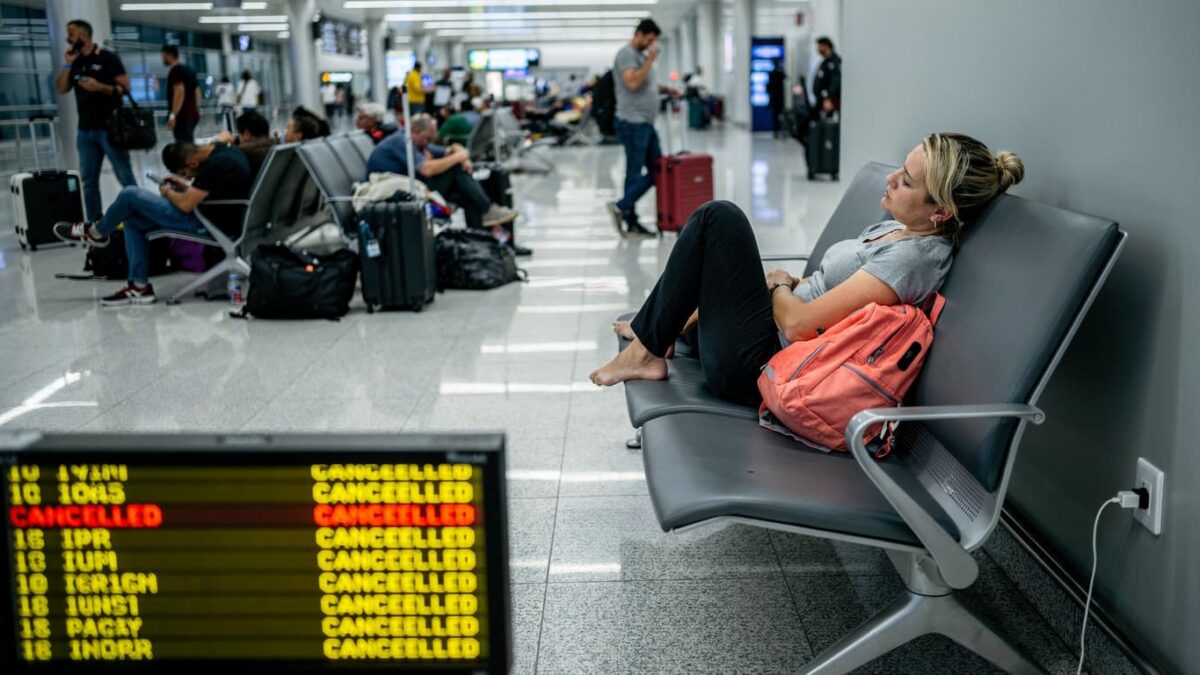
Gulf airspace closures triggered by US-Israel strikes on Iran on February 28, 2026 have grounded 27,000+ flights and stranded tens of thousands of Asia-Europe travelers. Emirates, Qatar Airways, and Etihad Airways face cancellation rates of 38–50% as Iran, Iraq, Kuwait, Syria, Bahrain, UAE, and Qatar airspace remains closed or heavily restricted through at least March 27. Passengers with bookings via Dubai, Doha, or Abu Dhabi hubs must rebook within 24 hours or face 4–6 hour reroutes via Muscat, Istanbul, or direct alternatives.
The European Union Aviation Safety Agency extended its Conflict Zone Information Bulletin through March 27 with no reopening date confirmed — missile and drone activity continues daily across the Strait of Hormuz and Saudi airspace. Travelers holding Gulf hub connections departing in the next 72 hours should contact airlines immediately for refunds or reroutes, as standby queues at affected airports now exceed 8 hours.
The Middle East’s busiest aviation corridor collapsed four weeks ago and shows no sign of recovery.
On February 28, 2026, coordinated US-Israel strikes on Iranian military sites triggered a wave of retaliatory missile and drone launches that forced the closure of airspace across Iran, Iraq, Kuwait, and Syria. Bahrain’s FIR effectively shut down. The UAE and Qatar imposed rolling restrictions with short-notice full closures. Saudi Arabia and Oman rerouted traffic through narrow contingency corridors, adding 90–120 minutes to every flight.
The result: 27,000+ cancellations region-wide since late February, with Emirates canceling 38.5% of scheduled flights, Qatar Airways 41%, and Flydubai more than half its network. Dubai, Abu Dhabi, and Doha hubs — which handle 180 million annual passengers connecting Asia to Europe — have been intermittently shut for days at a time, stranding passengers in terminals with no clear departure window.
Asia-Europe travelers face the worst of it. A Singapore–London connection via Doha that normally takes 16 hours now requires a 22-hour detour via Muscat or Istanbul — if a seat is available. Passengers report 8-hour standby queues at Gulf airports, with airlines offering hotel vouchers but no firm rebooking dates. The EASA Conflict Zone Information Bulletin remains in effect through March 27, with no indication of when normal operations will resume.
How the closures unraveled the Gulf hub model
The Gulf’s three mega-carriers built their business on geography — Dubai, Doha, and Abu Dhabi sit at the crossroads of Asia, Europe, and Africa, offering 4–6 hour connections that undercut northern routes via Helsinki or Istanbul. That advantage evaporated overnight when Iranian airspace closed.
Iran’s FIR covers the most direct path between the Gulf and Europe. With it shut, airlines must detour south through Omani airspace or north through Saudi Arabia, both of which are operating under NOTAM-defined restrictions due to ongoing missile activity. Oman Air has emerged as an unlikely staging point, with Muscat International handling evacuation and repositioning flights for stranded passengers, but capacity is limited — the airport was designed for 20 million annual passengers, not the overflow from three Gulf hubs.
The OPS Group operational picture shows daily missile and drone activity across the Strait of Hormuz, with Saudi airspace experiencing short-notice closures when threats are detected. No airline is filing flight plans through the core restricted zone. The few flights operating via Muscat or Jeddah are adding 4–6 hours to block times, burning extra fuel and requiring crew rest extensions that cascade into further delays.
| Carrier | Cancellation rate | Hub status | Primary diversion point |
|---|---|---|---|
| Emirates | 38.5% | Dubai intermittent closures | Muscat, Jeddah |
| Qatar Airways | 41% | Doha rolling restrictions | Muscat, Riyadh |
| Etihad Airways | 35% | Abu Dhabi restricted | Muscat, Dubai |
| Flydubai | >50% | Dubai intermittent closures | Sharjah, Muscat |
Why this matters for your booking
If you hold a ticket with a Gulf hub connection departing in the next 30 days, the airline may cancel it with as little as 12 hours’ notice. Emirates and Qatar Airways are prioritizing long-haul flights over regional connections, which means Asia-Europe itineraries via Dubai or Doha are first on the chopping block when airspace closes.
The rebooking queue is brutal. Passengers report 8-hour waits at airport service desks, with phone lines jammed and online rebooking tools showing “no availability” for alternative routes. Airlines are offering full refunds under force majeure clauses, but travelers who need to reach their destination face a choice: accept a 22-hour reroute via Muscat or Istanbul, or book a new ticket on Turkish Airlines, Air India, or Finnair at current fares — which have spiked 40–60% as demand shifts to northern routes.
The financial hit is real. A medical evacuation from the Gulf costs $50,000 — assuming anyone accepts the mission. Travel insurance policies are invoking war exclusions, leaving passengers to cover hotel extensions, missed connections, and rebooking fees out of pocket. EU and UK passengers departing from European airports can claim €250–600 compensation under EU261 if the airline is at fault, but force majeure clauses exempt carriers when airspace closures are government-mandated.
Rebook now or claim a refund
The EASA bulletin expires March 27, but no one expects the airspace to reopen on schedule — missile activity shows no sign of stopping.
- Check your booking status: Log into your airline account or call the carrier directly. Do not wait for an email — cancellations are being issued 12–24 hours before departure.
- Request a full refund: Gulf carriers are honoring force majeure refunds with no penalties. Process time is 7–14 days for credit card refunds, longer for third-party bookings.
- Reroute via Istanbul or Muscat: Turkish Airlines has added capacity on IST–Asia routes. Oman Air is operating limited Muscat connections but seats are scarce. Book directly through airline websites — OTAs are showing phantom availability.
- Consider northern routes: Finnair via Helsinki and Air India via Delhi avoid the Gulf entirely. Fares are 40–60% higher than pre-crisis levels, but availability is better than Gulf reroutes.
- File insurance claims immediately: Most policies require notification within 72 hours of disruption. War exclusions may apply — read your policy’s force majeure clause before assuming coverage.
Watch: The EASA Conflict Zone Information Bulletin extension beyond March 27 will confirm whether restrictions persist into April, forcing sustained Asia-Europe reroutes and fare spikes through the spring travel season.
Can I get compensation for a Gulf airspace cancellation?
EU and UK passengers departing from European airports may claim €250–600 under EU261 if the airline is at fault, but force majeure clauses exempt carriers when airspace closures are government-mandated. US and Canadian passengers are entitled to refunds within 7–14 days but no compensation. Check your travel insurance policy for trip interruption coverage, though war exclusions often apply.
Which airlines are still flying Asia-Europe routes?
Turkish Airlines via Istanbul, Air India via Delhi, and Finnair via Helsinki are operating normally. Oman Air is handling limited connections through Muscat but capacity is constrained. Gulf carriers (Emirates, Qatar Airways, Etihad) are operating reduced schedules with frequent cancellations — avoid booking new tickets on these carriers until airspace reopens.
How long will the Gulf airspace closures last?
The EASA bulletin runs through March 27, 2026, but no reopening date has been confirmed. Daily missile and drone activity across the Strait of Hormuz and Saudi airspace suggests restrictions will extend into April. Monitor the EASA Conflict Zone Information Bulletin for updates — extensions are typically announced 48–72 hours before expiration.
Should I cancel my Gulf hub booking and rebook elsewhere?
If your departure is within 30 days, yes. Request a full refund from the airline and rebook on Turkish Airlines, Air India, or Finnair. Fares are 40–60% higher than pre-crisis levels, but availability is better than waiting for Gulf carriers to resume normal operations. If your departure is 60+ days out, monitor the situation — airspace may reopen by then, but no guarantees.