

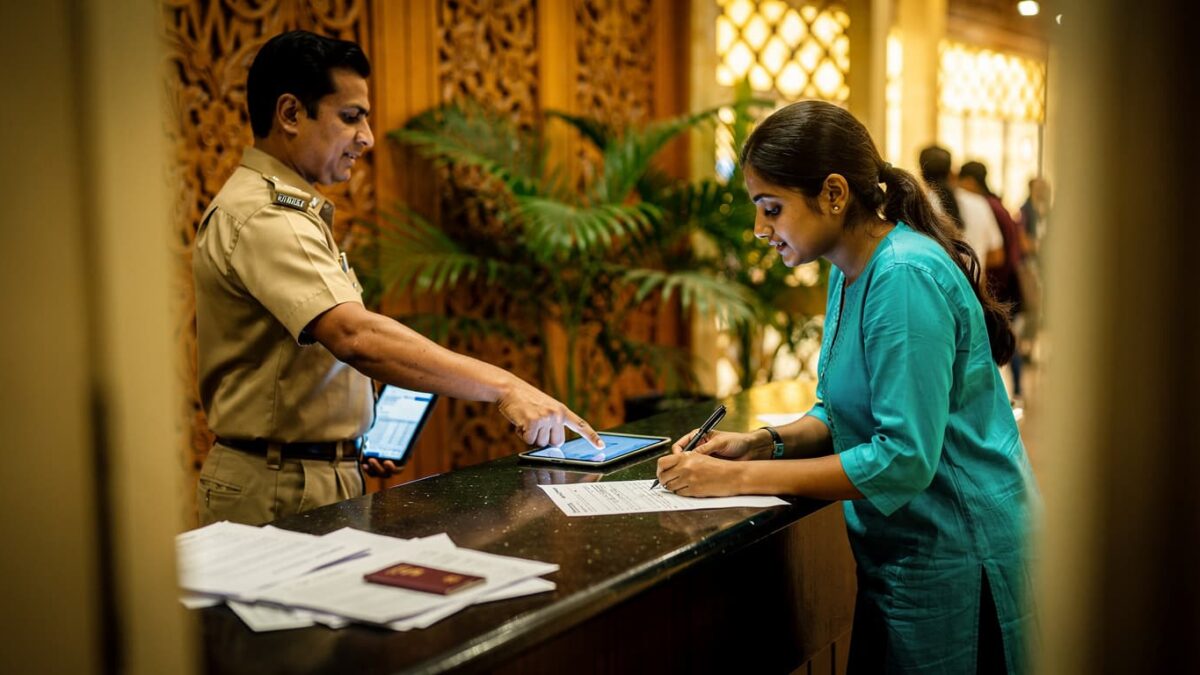
All foreign travelers entering India must submit the mandatory e-Arrival Card digitally starting April 1, 2026 — paper forms are no longer accepted after March 31, 2026. This affects US, Canadian, European, Australian, and New Zealand citizens traveling to India for any purpose. Airlines are actively auditing proof of submission at check-in and may deny boarding to passengers without confirmation.
The submission window opens 72 hours before arrival via three official channels: indianvisaonline.gov.in/earrival, boi.gov.in, or the Su-Swagatam mobile app. Travelers receive a QR code confirmation that must be presented to immigration officers — pilot tests showed a 40% reduction in clearance times.
India’s six-month transition period for digital arrival cards ends March 31, 2026. After that date, the e-Arrival Card becomes the only accepted method for foreign nationals and Overseas Citizens of India (OCI) cardholders entering the country.
The system launched October 1, 2025, giving travelers time to adapt. But the grace period is over.
Airlines have begun denying boarding to passengers unable to show proof of e-Arrival Card submission during check-in audits. Immigration officers at Delhi IGI and Bengaluru airports — where pilot testing occurred — will no longer accept handwritten paper forms. If you arrive after March 31 without digital submission, expect boarding denial or immigration delays.
The mandate applies to all foreign passport holders and OCI cardholders, regardless of visa type. Indian passport holders remain exempt.
How the e-arrival card works
The e-Arrival Card replaces the paper disembarkation form previously handed out on flights or at immigration counters. Submission opens 72 hours before arrival and closes at departure time — no earlier submissions are accepted.
Three official platforms handle submissions: the official government portal at indianvisaonline.gov.in/earrival, the Bureau of Immigration website at boi.gov.in, or the Su-Swagatam mobile app. All three require the same information: passport details, flight number, purpose of visit, and accommodation address in India. No document uploads are required.
After submission, travelers receive a QR code confirmation via email or app notification. Present this QR code — digital or printed — to the immigration officer on arrival. Families of up to five people may file a single joint submission, reducing processing time.
| Requirement | Details | Deadline |
|---|---|---|
| Submission window | 72 hours before arrival to departure time | Mandatory after March 31, 2026 |
| Who must submit | All foreign nationals + OCI cardholders | Effective October 1, 2025 |
| Confirmation method | QR code via email/app | Required at check-in + immigration |
| Paper form acceptance | Ends March 31, 2026 | No extensions announced |
| Processing benefit | 40% faster immigration clearance | Pilot data from Delhi/Bengaluru |
The system does not replace visa requirements. You must still hold a valid visa or be eligible for visa-free entry before submitting the e-Arrival Card. The form is an arrival notification only — not an entry authorization.
For travelers connecting through India to onward destinations, the e-Arrival Card is still required if you clear immigration (even for same-day connections). Transit passengers remaining airside are exempt, but verify your airline’s transit policy before assuming exemption.
Why India digitized the arrival process
India’s move aligns with Singapore, Australia, and the UAE — all of which implemented digital arrival cards between 2020 and 2024. This reflects a broader Asia-Pacific trend toward paperless borders ahead of India’s 2026 G20 tourism presidency.
For frequent travelers to the region, this standardizes the pre-arrival digital workflow across major Asia-Pacific hubs. Singapore’s SG Arrival Card, Australia’s Digital Passenger Declaration, and now India’s e-Arrival Card all follow similar submission windows and QR code confirmation systems.
The Bureau of Immigration plans to launch API access in late 2026, enabling corporate travel management companies to auto-populate forms from HR travel data. This would eliminate manual entry for business travelers — a feature already available in Australia’s system but absent from India’s current implementation.
Pilot testing at Delhi IGI and Bengaluru airports showed a 40% reduction in average immigration clearance times. That translates to roughly 15-20 minutes saved per passenger during peak arrival periods. The system also reduces paper waste — India processes over 10 million foreign arrivals annually, generating millions of handwritten forms that required manual data entry.
Travelers using DigiYatra biometric entry at select airports can combine it with the e-Arrival Card for even faster processing. DigiYatra enrollment kiosks are available before the immigration hall at Delhi and Bengaluru — once registered, you use automated e-gates instead of manual queues.
Submit 72 hours before departure — not earlier
The e-Arrival Card submission window opens exactly 72 hours before your scheduled arrival time in India. Attempting to submit earlier will result in a system error.
- Use the official portal: Go to indianvisaonline.gov.in/earrival, boi.gov.in, or download the Su-Swagatam app. Third-party visa services cannot submit the e-Arrival Card on your behalf — only the three official channels are authorized.
- Screenshot your QR code immediately: Store it in your phone’s wallet app and carry a physical printout. Airlines scan the QR code during check-in — failure to show proof may result in boarding denial.
- Verify your confirmation email: Check your spam folder if you don’t receive the QR code within 30 minutes of submission. Contact Su-Swagatam support or the Bureau of Immigration (boi.gov.in) for confirmation status before heading to the airport.
- For OCI cardholders: You are no longer exempt. Submit the e-Arrival Card like all other foreign nationals — the October 4, 2025 regulatory change made OCI holders mandatory filers.
- If your flight changes: The e-Arrival Card is valid only for the specific flight and arrival date listed. If you reschedule, resubmit with updated flight details.
Watch: The Bureau of Immigration’s planned API launch in late 2026 will allow corporate travel management companies to auto-populate forms from HR systems — eliminating manual entry for frequent business travelers.
What happens if I arrive in India after March 31, 2026 without submitting the e-Arrival Card?
You will be denied boarding by your airline during check-in — as of March 2026, airlines actively audit submissions before allowing passengers to board. If you somehow reach India without submission, you may face immigration delays or denial of entry. Paper forms are no longer accepted after March 31, 2026.
Can I submit the e-Arrival Card on behalf of my spouse or children?
Yes. Families of up to five people may file a single joint e-Arrival Card submission, reducing processing time. Each family member’s passport and arrival details must be included in the single form. You’ll receive one QR code that covers all travelers in the group.
Does the e-Arrival Card replace my visa requirement?
No. The e-Arrival Card is an arrival notification form only — it does not replace visa requirements. You must still hold a valid visa (or be eligible for visa-free entry) before submitting the e-Arrival Card. The form notifies immigration of your arrival details but does not authorize entry.
What if I don’t have a confirmed hotel address 72 hours before departure?
Use your first night’s confirmed accommodation address, your corporate office address in India, or a contact person’s address. The system requires an address field to be completed — incomplete forms may be rejected or flagged at immigration. If your plans change after submission, verify with the Bureau of Immigration whether amendments are allowed via the Su-Swagatam app.
Where can I find flight options to India from North America?
Air Traveler Club tracks routes and fares to India from North America, including nonstop options from New York, Chicago, San Francisco, and Toronto. The page covers all major carriers serving the corridor, with typical fare ranges and seasonal pricing patterns.
