

British Airways BA32 passenger dies mid-flight, body stored in heated galley for 13 hours

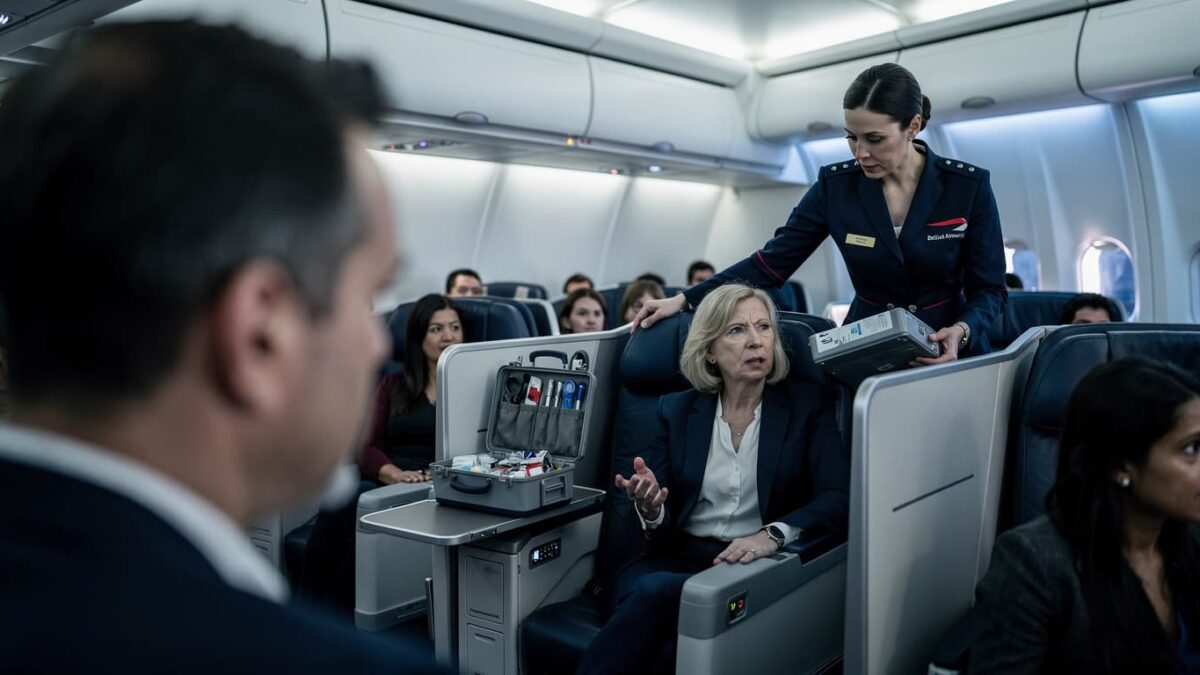
A woman in her 60s died approximately one hour after takeoff on British Airways Flight BA32 from Hong Kong to London Heathrow on March 15, 2026. The crew continued the 13-hour flight without diversion, storing the body in a rear galley with a heated floor. Passengers reported a foul smell by flight’s end, and all 331 passengers were held on board for 45 minutes after landing while UK police investigated.
British Airways states all procedures were followed — aviation protocol treats in-flight deaths as non-emergencies once medical intervention is impossible. Some passengers took time off work to recover, though no formal complaints have been filed.
Passengers on a Hong Kong-to-London flight spent 13 hours in the air after a woman died shortly after takeoff, with her body stored in a heated galley that crew say led to a “foul smell” by the time the aircraft landed at Heathrow.
British Airways Flight BA32 departed Hong Kong International Airport on March 15 carrying 331 passengers on an Airbus A350-1000. The woman, in her 60s, died approximately one hour into the flight. Pilots elected to continue to London rather than return to Hong Kong — a decision the airline defends as standard procedure when a passenger has already died and no medical emergency exists.
Crew rejected a request from the flight deck to lock the body in a lavatory. Instead, they isolated it in materials and moved it to a rear galley equipped with a heated floor — a design feature intended for meal service that became a source of distress as the flight progressed.
“Obviously, the family with the woman were distraught, and so were the crew,” a source told The Sun. “Many wanted to return to Hong Kong. But, to put it bluntly, if a passenger has already died, that is not viewed as an emergency.”
What happened on board and after landing
The A350-1000 continued its scheduled route across Asia and Europe, landing at Heathrow on schedule. Upon arrival, UK police boarded the aircraft and required all passengers to remain seated for approximately 45 minutes while they investigated the onboard death — a standard procedure when a fatality occurs in UK airspace.
British Airways confirmed the incident in a statement: “A customer sadly passed away on board and our thoughts are with their family and friends at this difficult time. We are supporting our crew and all procedures were correctly followed.”
The airline has not received a formal complaint regarding the incident, though reports indicate some passengers took time off work to recover from the experience. The UK Civil Aviation Authority has not announced an investigation as of March 22.
| Time | Event | Location |
|---|---|---|
| Departure | BA32 departs Hong Kong | HKG |
| +1 hour | Passenger death reported | Over South China Sea |
| +13 hours | Aircraft lands at Heathrow | LHR |
| +45 minutes | Police investigation, passengers held | LHR gate |
How airlines handle in-flight deaths
Aviation protocol treats passenger deaths as non-emergencies once medical personnel determine intervention is no longer possible. Diverting a widebody aircraft costs airlines $50,000–$150,000 in fuel, crew hours, and slot fees — a calculation that factors into decision-making when no life can be saved.
In 2019, a passenger died on a Qantas flight from Sydney to Los Angeles; the body was stored in the galley for 14 hours without reported odors, and the flight continued after medical clearance. A similar incident occurred on a 2022 Emirates Dubai-New York flight, leading to galley storage and a 30-minute landing delay. Both cases resulted in crew counseling but no regulatory changes.
The heated floor in the BA32 galley — designed to keep meal carts warm — became the focal point of passenger complaints. Airbus A350 galleys use radiant heating systems that maintain temperatures between 25–30°C, significantly warmer than cabin ambient temperature.
What passengers should know
In-flight deaths are not compensable disruptions under EU261, UK261, or US Department of Transportation rules, which cover delays and cancellations caused by airline operational failures. A passenger death falls under “extraordinary circumstances” — events beyond the carrier’s control.
- No refund or rebooking rights for fellow passengers unless the airline voluntarily offers compensation
- Crew counseling is standard after such incidents, though British Airways has not disclosed whether support was provided to BA32 staff
- Police investigation at the destination is mandatory when a death occurs in UK airspace, regardless of nationality or cause
- Watch: UK CAA investigation report on BA32 procedures — if violations are found, it means mandatory crew retraining and potential fines for British Airways, prompting enhanced galley protocols on A350 long-hauls
Why didn’t the pilots turn back to Hong Kong?
Aviation protocol treats passenger deaths as non-emergencies once medical intervention is no longer possible. Diverting costs $50,000–$150,000 in fuel and fees, and regulations do not require it when no life can be saved. British Airways states all procedures were followed.
Can passengers request compensation for emotional distress?
No. In-flight deaths fall under “extraordinary circumstances” in EU261, UK261, and US DOT rules, meaning airlines are not required to provide refunds or compensation. Passengers may contact the airline for voluntary wellness support, but no legal entitlement exists.
What happens to the body during a long-haul flight?
Crew isolate the body using available materials and move it to a galley or other secure area. Lavatories are typically rejected due to space constraints. The body remains on board until landing, when local authorities take custody for investigation and repatriation.
Are heated galleys standard on widebody aircraft?
Yes. Airbus A350, Boeing 787, and A380 galleys use radiant heating systems to maintain meal service temperatures between 25–30°C. These systems cannot be turned off mid-flight, as they are integrated into the aircraft’s environmental control system.