

Middle East airspace closures cancel 52,000 flights, stranding 6 million Asia-Europe travelers

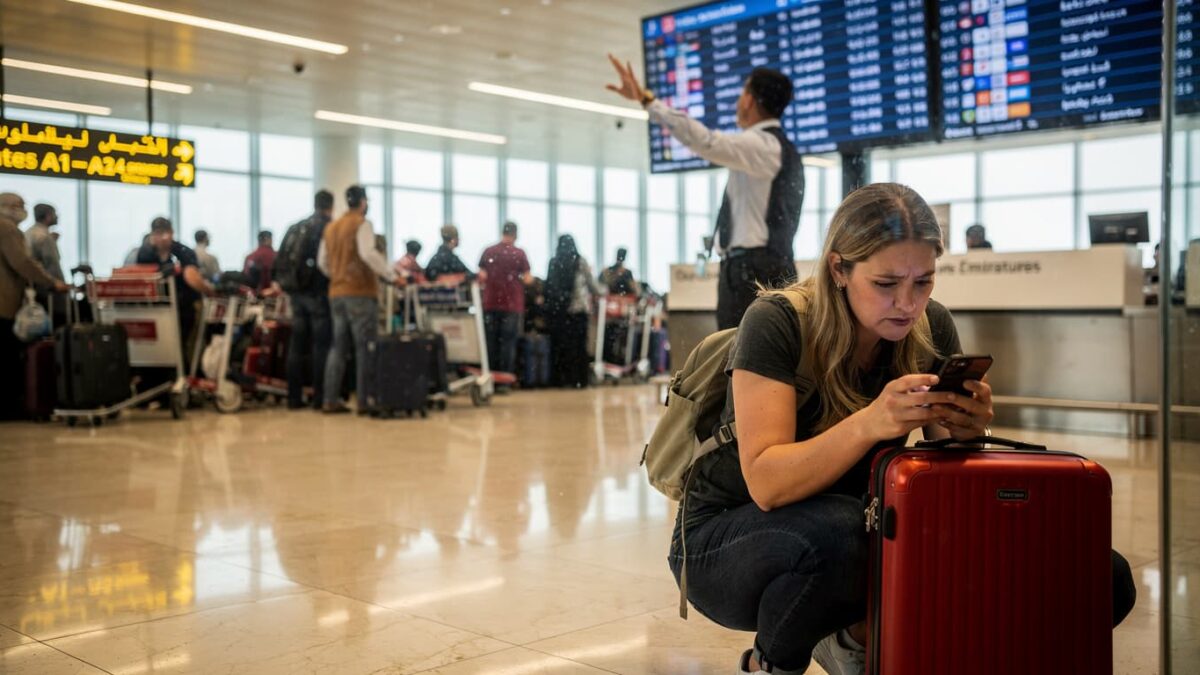
US and Israeli military operations against Iran have closed Middle East airspace since February 28, 2026, forcing Cathay Pacific, Singapore Airlines, Scoot, and Lufthansa to cancel over 52,000 flights through March 13. Cancellation rates peaked above 65% in early March and remain at 46.5% as of March 12. Over 6 million passenger trips have been disrupted, with Asia-Europe routes requiring 4–8 hour detours via Russia or India.
Airlines state normal operations are unlikely even after a ceasefire due to aircraft and crew redeployment needs. Australian authorities have issued “Do Not Travel” advisories for 11 Middle East countries including Iran, Israel, UAE, and Qatar — affecting transit connections through Dubai and Doha.
The conflict that began February 28 has shut down the primary air corridor between Asia and Europe. Cathay Pacific, Singapore Airlines, Scoot, and Lufthansa are among dozens of carriers rerouting or cancelling flights that would normally overfly Iran, Iraq, and Israel. The airspace closures affect travelers on routes from North America, Europe, and Australasia to Asia-Pacific destinations — even those not touching the Middle East.
Between February 28 and March 13, airlines cancelled 52,000 of 98,000 scheduled flights in and out of the Middle East region. The disruption extends far beyond the conflict zone: Asia-Europe flights now detour south via India or north via Russia, adding 4–6 hours to journey times and pushing fuel costs up 20–30%.
Experts warn that even after hostilities end, the aviation system will take weeks to normalize. Aircraft are out of position, crews have exhausted duty hours, and maintenance schedules are in disarray.
How the airspace closures cascade through the network
US and Israeli military operations triggered NOTAMs — official notices to airmen — closing Iranian, Iraqi, and Israeli airspace to civilian traffic. Airlines responded by cancelling flights that depend on those overflights or rerouting via longer paths. Cathay Pacific flights from Hong Kong to Europe now swing north over Central Asia or south over India. Singapore Airlines routes from Singapore to Frankfurt face similar detours.
The Australian government’s travel advisory lists Iran, Israel, UAE, and Qatar at Level 4 — “Do Not Travel.” That advisory affects not just direct flights but also connections through Dubai and Doha, two of the busiest Asia-Europe transit hubs. Travelers booked on Emirates or Qatar Airways face rebooking onto carriers avoiding the region entirely.
| Metric | Figure | Impact |
|---|---|---|
| Flights cancelled | 52,000 of 98,000 scheduled | 53% cancellation rate |
| Peak cancellation rate | 65%+ | March 1–3, 2026 |
| Current cancellation rate | 46.5% | As of March 12, 2026 |
| Passenger trips affected | 6 million+ | Includes cancellations and delays |
| Added flight time | 4–8 hours | Asia-Europe reroutes |
The geopolitical trigger and aviation fallout
The February 28 military operations escalated tensions that had been building since 2025, when proxy conflicts briefly closed Iraqi airspace. This time, the scale is larger and the duration longer. Iran, Iraq, and Israel issued NOTAMs banning civilian overflights, citing active military operations. No new bilateral aviation agreements have been signed to create safe corridors.
The practical result: Asia-Europe routes that normally cross the Middle East now detour thousands of kilometers. A Hong Kong–London flight that would take 12 hours via Iran now takes 16 hours via Russia or 17 hours via India. Fuel burn increases 20–30%, and airlines pass those costs to passengers. Economy return fares on Asia-Europe routes have risen 15–25% in the short term, though specific current fares vary by route and booking window.
Sanctions and security concerns limit Iran overflights even for carriers not directly involved in the conflict. The result is a bottleneck: too many flights trying to use too few safe corridors. Airspace closures create ripple effects across the global network, and this closure affects more traffic than any since the 2022 Ukraine conflict.
What to do if your flight is affected
The conflict shows no signs of immediate resolution, and airlines have stated that normal operations are unlikely even after a ceasefire.
- Check your booking status daily — Airlines are cancelling flights with 24–48 hours’ notice. Use the airline’s app or website, not third-party booking sites, for the fastest updates.
- Contact your airline immediately if cancelled — Rebooking queues are 24–72 hours long. Call, use the app, and try social media channels simultaneously to get through faster.
- Avoid Middle East transit hubs — Dubai, Doha, and Abu Dhabi are under Level 4 travel advisories. Reroute via Singapore, Hong Kong, Bangkok, or direct Europe–Asia routes.
- Confirm travel insurance coverage — Airspace closures due to military conflict may be excluded under some policies. Check your policy’s force majeure clause.
- Register with your embassy — US citizens use STEP, UK nationals use FCDO alerts, Australians use Smartraveller. Real-time updates can prevent stranding.
Watch: Cancellation rates dropping below 30% after March 20 would signal Asia-Europe schedules stabilizing within 7 days.
Are airlines required to refund cancelled flights due to airspace closures?
In the US and Canada, DOT rules require refunds for airline-initiated cancellations regardless of cause. In the EU and UK, EU261 and UK261 may not apply if the airline can prove force majeure, but you’re still entitled to rebooking or a refund. In Australia and New Zealand, consumer law mandates refunds or rebooking when the airline cannot provide the service.
How long will Asia-Europe flight disruptions last?
Experts state that normal operations are unlikely even after a ceasefire due to aircraft and crew redeployment needs. Historical precedent from the April 2024 Iran-Israel missile exchanges shows a 2-week delay to normalization after airspace reopened. The current conflict has lasted over 2 weeks with no clear end date, suggesting disruptions will continue into April 2026 at minimum.
Which Asia-Europe routes are least affected by the Middle East airspace closures?
Direct routes from Europe to East Asia and Southeast Asia that normally avoid Middle East airspace are least affected — examples include London–Singapore, Frankfurt–Tokyo, and Paris–Bangkok. Routes from North America to Asia via Pacific paths (San Francisco–Hong Kong, Los Angeles–Singapore) also avoid the conflict zone. Avoid any routing through Dubai, Doha, or Abu Dhabi.