

Middle East airspace closures trigger 17,100 flight delays, stranding Australian Europe travelers

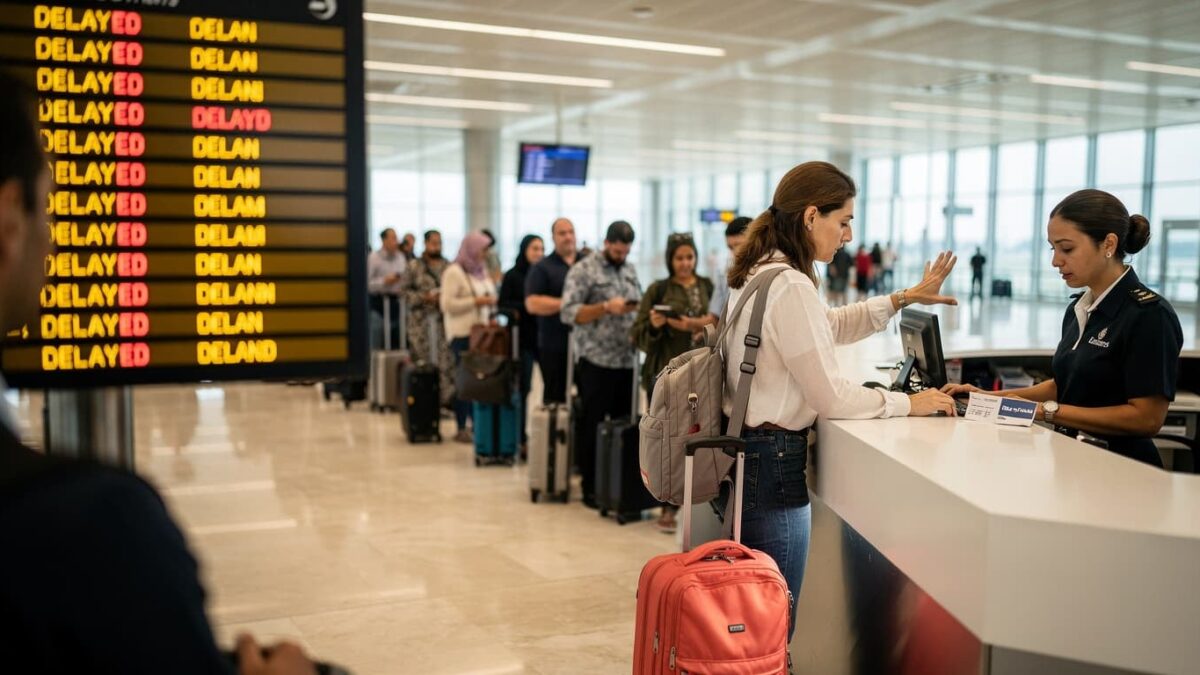
The Iran-Israel war has triggered 17,100 flight delays and 3,000 cancellations globally as of March 3, 2026, with Australian travelers to Europe facing the heaviest impact. Emirates, Qatar Airways, and Etihad — carriers handling 80% of Australia-Europe traffic — are diverting flights north over Turkey or south over Saudi Arabia, adding 30+ minutes per leg and creating passenger backlogs in Dubai and Doha that cascade delays up to 72 hours for inbound Australia departures.
Most travel insurance excludes war-related disruptions, leaving accommodation and meal costs out-of-pocket. If you’re traveling in the next 48 hours, contact your airline immediately — call centers are overwhelmed and rebooking windows close March 10–20 depending on carrier.
Middle East airspace closures forced by the Iran-Israel conflict have turned Australia’s primary corridor to Europe into a logistical minefield. Gulf carriers that normally route Sydney-London via Tehran-controlled airspace are now threading flights through congested alternate corridors, burning 10–15% more fuel per leg and stacking traffic at altitudes that slow cruise speeds.
The result: a backlog that compounds with every departure.
Qantas has responded by temporarily routing its Perth-London nonstop via Singapore to add 60 extra seats per flight, but those services are nearing capacity. Australian Foreign Minister Penny Wong urged travelers to reconsider Middle East plans entirely as the conflict escalates, though the government stopped short of issuing a blanket “do not travel” advisory for transit passengers.
Which airlines are affected and what are the rebooking windows
Emirates has extended free rebooking through March 20, Qatar Airways through March 10, and Etihad through March 18. Virgin Australia cancelled all Doha services through March 5 and has not yet announced resumption dates. The waiver periods matter because airlines are not obligated to rebook without fees once the window closes — and with call centers logging 3–5 hour wait times, travelers who delay risk missing the cutoff entirely.
Diversions are routing north over the Caspian Sea and Turkey or south over Saudi Arabia and Egypt, both of which funnel traffic into corridors already operating near capacity. The northern route adds congestion over Turkish airspace, where air traffic control has imposed flow restrictions. The southern route crosses Egyptian airspace that lacks the radar coverage density of European systems, forcing wider aircraft separation and slower throughput. Either way, flights that normally cruise at optimal fuel-burn altitudes are being assigned lower flight levels, which increases fuel consumption and reduces range — a problem for ultra-long-haul services like Perth-London that operate with minimal fuel reserves.
| Carrier | Route affected | Delays reported | Rebooking deadline |
|---|---|---|---|
| Emirates | SYD/MEL-DXB-LHR | 2,100+ delays | March 20 |
| Qatar Airways | SYD/MEL-DOH-LHR | 1,800+ delays | March 10 |
| Etihad | SYD/MEL-AUH-LHR | 900+ delays | March 18 |
| Virgin Australia | SYD/MEL-DOH | Full cancellation | March 5 (services suspended) |
The ABC confirmed via FlightAware data that the 17,100 global delays and 3,000 cancellations are concentrated on Gulf carrier networks, with knock-on effects rippling through codeshare partners. For Australian travelers, this means a Sydney-London ticket booked on Qantas but operated by Emirates falls under Emirates’ rebooking policy, not Qantas’ — a distinction that matters when navigating call center queues.
Australian travelers face a unique disadvantage: no EU261 compensation applies because flights originate outside the European Union. However, Australian Consumer Law may cover non-voluntary schedule changes if the airline fails to provide a comparable alternative within a reasonable timeframe. Document every communication, keep receipts for meals and accommodation, and note the original versus rebooked itinerary — this creates a paper trail for potential charge-back claims if the airline refuses reimbursement.
Why diversions compound delays for days
When an outbound Sydney-Dubai flight diverts north and arrives 45 minutes late, the inbound aircraft that was scheduled to operate the return leg also departs late. That delay cascades: the crew hits duty-time limits, requiring a replacement crew. The replacement crew may be positioned on another delayed flight. Within 72 hours, a single diversion can affect six rotations.
Gulf carriers prioritize resuming schedules over conservative recovery timelines, which is why Qatar Airways and Emirates are still operating limited services while European carriers like Lufthansa have suspended Middle East routes entirely until airspace reopens. The trade-off: faster resumption, but higher risk of multi-day backlogs if another closure occurs.
For context on how airspace closures ripple through flight networks, the 2022 Russia-Ukraine war forced similar diversions that added 90+ minutes to Europe-Asia routes and triggered a wave of capacity reductions that persisted for 18 months.
What the insurance gap means for out-of-pocket costs
Standard travel insurance policies exclude war, civil unrest, and government advisories — which means the Iran-Israel conflict falls outside coverage for most Australian travelers. If your flight is cancelled and you’re stranded in Dubai for three nights, the hotel bill is yours. If you’re rerouted through Singapore and miss a prepaid tour in Rome, the tour operator is not obligated to refund.
The exception: some premium policies include “cancel for any reason” riders that cover up to 75% of non-refundable costs, but these must be purchased within 14–21 days of the initial trip deposit. Policies bought after the conflict began will not cover war-related disruptions under any circumstances.
Keep every receipt. Airlines are required to provide meals and accommodation for delays they control, but “extraordinary circumstances” clauses — which include airspace closures — allow carriers to deny reimbursement. If the airline refuses, your credit card’s travel protection may cover expenses up to a certain limit, typically $500–1,500 depending on the card tier. File the claim within 90 days and include the airline’s written denial of reimbursement.
One financial wrinkle Australian travelers should know: if your itinerary involves a stopover in the UAE or Qatar, your Australian credit and debit cards will work normally. However, if you’re transiting through or visiting Iran itself, international card networks do not operate there due to sanctions — plan accordingly if your rerouted itinerary involves an unplanned Iran stop, though this is unlikely given current airspace restrictions.
What to do if you’re traveling in the next two weeks
If your departure is within 48 hours: Call your airline or travel agent immediately. Do not wait for the airline to contact you — rebooking priority goes to passengers who initiate contact first, and call centers are logging 3–5 hour waits. Have your booking reference, passport details, and alternate date preferences ready before dialing.
If your departure is 3–14 days out: Wait for the airline to contact you. Proactively cancelling or rebooking may void your right to a full refund or fee waiver, depending on the fare rules. Monitor your email and the airline’s website daily for waiver updates.
Check FlightAware for real-time status: Enter your flight number at flightaware.com to see if diversions or delays are already affecting your specific service. If the flight has been delayed 6+ hours on three consecutive days, it’s a signal the airline is struggling to stabilize the schedule.
Verify transit visa requirements: If you’re rerouted through Singapore, Turkey, or Egypt instead of Dubai or Doha, you may need a transit visa depending on your passport and layover duration. Australian passport holders can transit Singapore visa-free for up to 96 hours, but Turkey requires a visa for layovers exceeding 24 hours. Check visahq.com/australia/ before accepting a rerouted itinerary.
Watch: Emirates and Qatar Airways schedule filings for April will reveal whether Gulf carriers plan to add capacity on alternate routes or reduce frequency until airspace reopens — a signal of whether the disruption is expected to persist beyond March.
Will I get compensation if my Australia-Europe flight is delayed or cancelled due to the Iran-Israel war?
No. EU261 compensation does not apply to flights originating outside the EU, and most airlines classify airspace closures as “extraordinary circumstances” that exempt them from compensation. However, Australian Consumer Law may require the airline to provide a comparable alternative or full refund if they cannot fulfill the original contract. Document all communications and keep receipts for potential charge-back claims.
Does travel insurance cover delays or cancellations caused by the Middle East conflict?
Standard policies exclude war and civil unrest, so most travelers will not be covered. Premium policies with “cancel for any reason” riders may cover up to 75% of non-refundable costs, but only if purchased within 14–21 days of the initial trip deposit and before the conflict began. Check your policy’s exclusions section and contact your insurer to confirm coverage.
Should I cancel my trip to Europe if I’m transiting through Dubai or Doha?
Not necessarily. The Australian government has not issued a “do not travel” advisory for transit passengers, and Gulf carriers are still operating limited services with diversions. However, if your departure is within 48 hours, contact your airline immediately to confirm the flight is operating and whether rebooking to a non-Gulf route is possible. If your departure is further out, wait for the airline to contact you to avoid voiding refund rights.
What happens if I’m stranded in Dubai or Doha due to a cancellation?
Airlines are required to provide meals and accommodation for delays they control, but airspace closures qualify as “extraordinary circumstances” under most carrier policies, allowing them to deny reimbursement. Keep all receipts and request written confirmation of the denial — your credit card’s travel protection may cover expenses up to $500–1,500 depending on the card tier. File the claim within 90 days.