Middle East airspace closures ground 27,000 flights, stranding millions of passengers globally

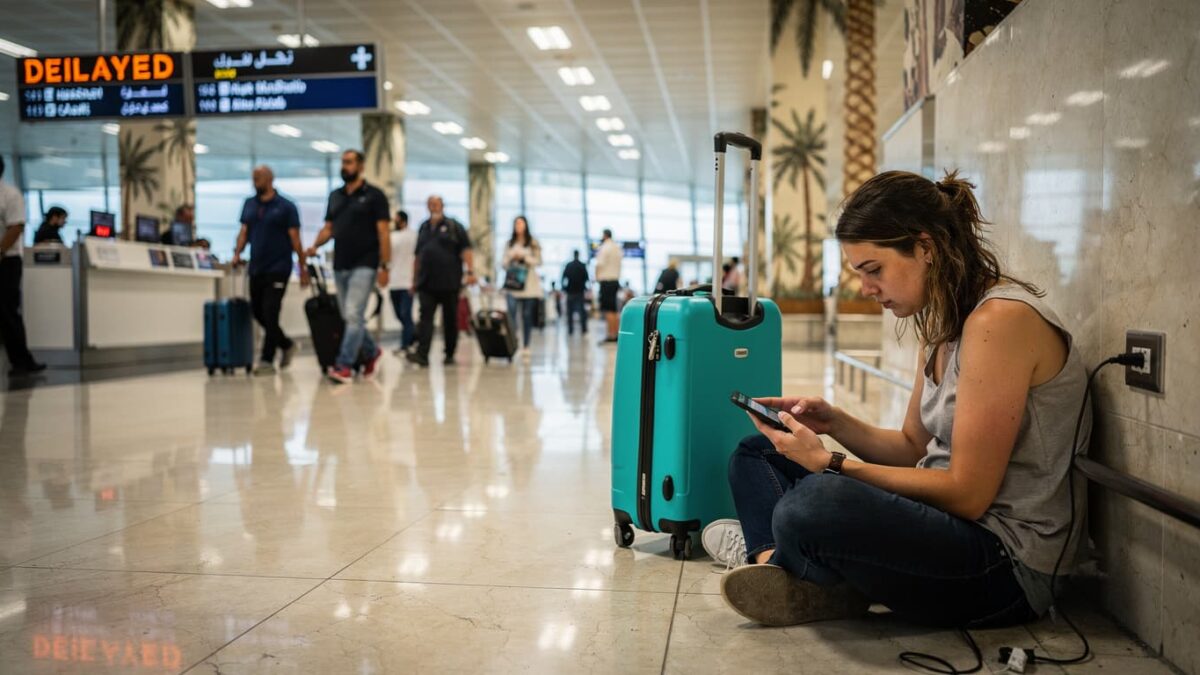
Over 27,000 flights to and from Middle East hubs have been canceled since February 28, 2026, due to Iran conflict-related airspace closures. Cathay Pacific has suspended all Dubai and Riyadh flights through March 31, Lufthansa Group halted Tel Aviv service until April 2, and Qatar Airways grounded its entire fleet pending civil aviation clearance. Travelers with bookings through Gulf hubs — Dubai, Doha, Abu Dhabi — face immediate cancellations affecting connections to Asia, Europe, and Australia.
Etihad Airways resumed limited flights to London, New York, Delhi, and Paris on March 6 with free rebooking through May 15. If your itinerary touches a Middle East hub before mid-April, verify status within 24 hours — airlines are processing rebookings on a first-come basis, and alternate routing via Singapore or Istanbul is filling fast.
The Iran conflict has triggered the largest Middle East flight disruption since the 2022 Russia-Ukraine airspace closures, stranding tens of thousands of passengers and forcing airlines to reroute or cancel services across the Gulf region. Cirium data shows 27,000 cancellations out of 51,600 scheduled flights since late February — a 52% cancellation rate that exceeds the early weeks of the Ukraine crisis.
Dubai is losing $500 million daily in tourism revenue as carriers avoid Iraqi, Iranian, Syrian, and Israeli airspace entirely.
The disruption hits hardest for travelers using Gulf hubs as connection points between Europe, North America, Australasia, and Asia. A Sydney–London booking via Dubai now requires rerouting through Singapore or Bangkok, adding 3–5 hours to total journey time. US passengers on Delta‘s New York–Tel Aviv route — canceled through March 23 — lose EU261 compensation protections but retain DOT-mandated refund rights.
Which airlines have suspended Middle East flights
More than 20 carriers have pulled back from the region, with suspension periods ranging from two weeks to six months. Cathay Pacific canceled all flights to Dubai and Riyadh through March 31, citing “operational safety concerns” — the Hong Kong carrier’s first complete Gulf withdrawal in over a decade. Lufthansa Group (including Austrian Airlines and Swiss) suspended Tel Aviv service until April 2, Beirut through March 28, and Dubai/Abu Dhabi until March 15.
Qatar Airways grounded its entire fleet pending clearance from the Qatar Civil Aviation Authority, with resumption updates expected this week. The Doha-based carrier operates over 170 destinations globally — the suspension affects connections across six continents. British Airways is running repatriation flights March 9–12 for stranded UK passengers, while Finnair and Japan Airlines rerouted Asia-Europe services via Oman and Saudi Arabia to avoid conflict zones.
The full airline list and specific suspension dates are tracked by The Independent’s live updates, which include ITA Airways (suspended through April), Wizz Air (through September for some routes), and regional carriers like Air India and Turkish Airlines operating reduced schedules.
| Airline | Suspended routes | Through date | Status |
|---|---|---|---|
| Cathay Pacific | Dubai, Riyadh | March 31 | Full suspension |
| Lufthansa Group | Tel Aviv, Dubai, Abu Dhabi | April 2 | Full suspension |
| Qatar Airways | All destinations | Pending clearance | Fleet grounded |
| Delta Air Lines | New York–Tel Aviv | March 23 | Full suspension |
| Etihad Airways | Most routes | Partial resumption March 6 | Limited service |
Between the lines
The 27,000-cancellation figure from Cirium represents scheduled departures, not passenger counts — widebody Gulf flights average 250–350 seats, suggesting 6–9 million affected bookings. Airlines are processing rebookings manually in many cases because automated systems can’t handle the volume of simultaneous reroutes, which explains why phone wait times exceed two hours at major carriers.
The rerouting via Muscat is straining Oman’s slot capacity — the airport wasn’t designed for this traffic spike, and carriers like Finnair are using long-range A350s to skip the stopover entirely on some European routes.
How airspace closures ripple across global routes
This mirrors the 2022 Russia-Ukraine crisis, when over 10,000 European flights were canceled weekly and carriers rerouted over Asia or Africa, adding 2–4 hours to transatlantic journeys. The current Iran situation has exceeded that disruption rate in under two weeks — a reflection of how central Gulf airspace is to Asia-Europe-Americas connectivity.
Airlines avoiding Iraq, Iran, Syria, and Israel entirely must fly longer southern routes over Saudi Arabia and Oman, burning 8–12% more fuel per flight. For a London–Singapore service, that translates to roughly 4,000 additional kilograms of jet fuel and 30–45 extra minutes in the air. The operational cost increase is why some carriers suspended routes outright rather than operate at a loss.
Australian travelers face the longest reroutes. A Melbourne–London booking via Dubai now requires backtracking through Singapore or Bangkok, adding a second connection and 4–6 hours to total travel time. European passengers connecting through Doha to Southeast Asia lose the one-stop advantage that made Qatar Airways competitive against direct services — the airline’s hub model depends on efficient transfers, which evaporate when the hub itself is offline.
The impact on airspace closures and Asia routing extends beyond the Middle East — carriers already avoiding Russian airspace due to Ukraine sanctions now face a second major exclusion zone, forcing some Asia-Europe flights onto polar routes that require cold-weather operational approvals and specialized crew training.
What to do if your flight is affected
Check your booking status immediately. Airlines are notifying passengers via email and SMS, but system delays mean some travelers only discover cancellations at check-in. Log into your airline’s app or website — British Airways (ba.com/manage), Etihad (etihad.com/rebook), and Cathay Pacific (cathaypacific.com/mybooking) all offer self-service rebooking tools.
Rebook before calling. Online rebooking systems process requests faster than phone agents, and you’ll see real-time availability. If no suitable options appear, then call — but expect 90+ minute wait times. Qatar Airways passengers can contact Qatar Tourism’s hotline at 106 for rebooking assistance.
Know your refund rights. EU passengers on flights departing from EU airports qualify for EU261 compensation — up to €600 for delays over three hours caused by airline decisions (ec.europa.eu/transport). US passengers get mandatory refunds under DOT rules but no compensation for delays. Australian travelers can claim refunds under consumer law if the airline can’t provide a comparable alternative within 24 hours.
Consider alternate hubs. Singapore, Istanbul, and Bangkok are absorbing rerouted traffic — check availability on alternate routings before accepting a multi-day delay. Etihad is offering free rebooking through May 15 for all affected passengers, including date changes and route modifications.
Watch: Qatar Civil Aviation Authority updates expected this week will determine whether Qatar Airways resumes partial service or extends the suspension into April — that decision affects 170+ destinations and millions of connecting passengers.
Can I get compensation if my Middle East flight is canceled?
EU passengers on flights departing from EU airports qualify for EU261 compensation up to €600 if the airline cannot prove extraordinary circumstances (though conflict-related cancellations often qualify as such). US passengers receive mandatory refunds under DOT rules but no delay compensation. Australian travelers can claim refunds under consumer law if no comparable alternative is offered within 24 hours.
Which airlines are still flying to Dubai and Doha?
Etihad Airways resumed limited flights to London, New York, Delhi, and Paris on March 6, 2026. Emirates is operating reduced schedules to select European and Asian cities. Turkish Airlines maintains some Gulf services via alternate routing. Check airline websites directly — schedules change daily as airspace restrictions evolve.
How long will Middle East flight disruptions last?
Suspension periods vary by airline: Cathay Pacific through March 31, Lufthansa Group through April 2, Wizz Air through September for some routes. Qatar Airways has no confirmed resumption date pending civil aviation clearance. The situation depends on Iran conflict developments and airspace reopenings — monitor airline notifications and government travel advisories weekly.
What if I booked through a travel agent or online platform?
Contact your booking agent first — they handle rebooking and refunds on your behalf. If the agent is unresponsive after 48 hours, contact the operating airline directly with your booking reference. Third-party platforms like Expedia and Booking.com have dedicated disruption teams, but airline-direct bookings typically process faster during mass cancellations.