
British Airways cancels all Dubai, Abu Dhabi flights as Middle East airspace shuts down

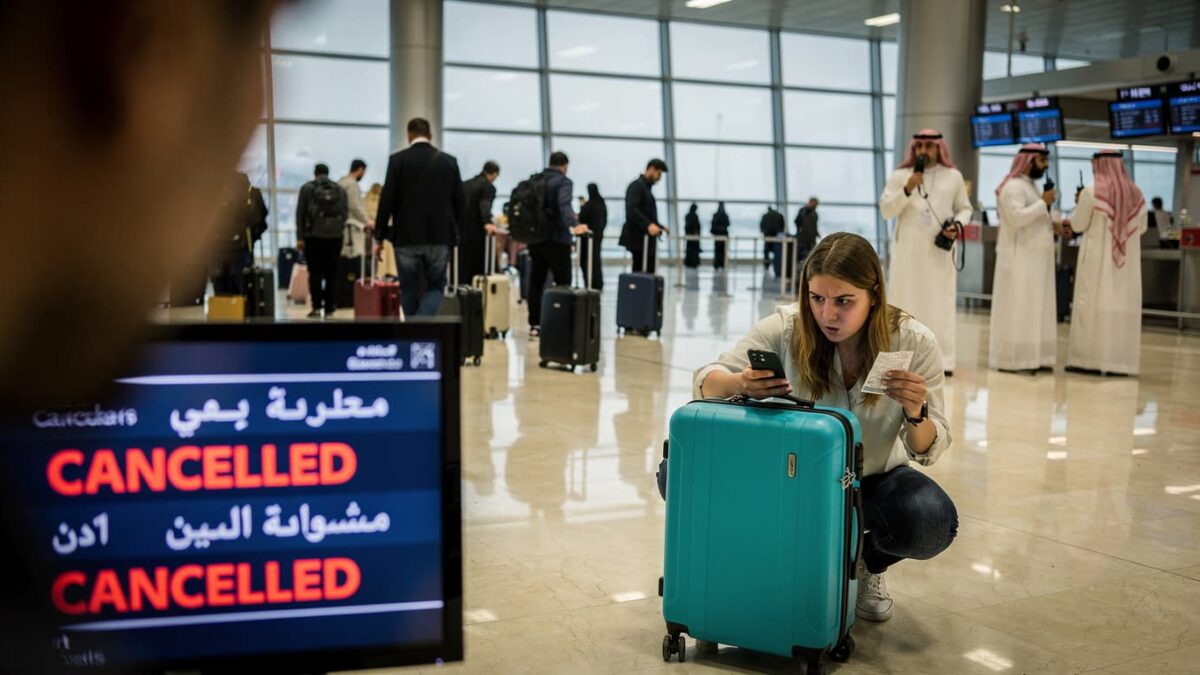
British Airways has cancelled all flights to Dubai, Abu Dhabi, Doha, Amman, Bahrain, and Tel Aviv through late March following US-Israel strikes on Iran, with Abu Dhabi services suspended until later this year. Lufthansa, Air France, Virgin Atlantic, and Oman Air have imposed similar blackouts affecting more than 200 UK-linked flight sectors since March 6, leaving thousands of travelers stranded across the Middle East with limited repatriation options.
BA is operating four emergency Muscat-Heathrow evacuation flights March 9–12 for passengers with existing bookings. Seats are nearly gone.
Multiple Gulf states closed or restricted airspace on March 6 after coordinated military strikes on Iranian targets, forcing European carriers to ground services to the region’s three largest hub airports within 48 hours. The suspensions affect travelers with bookings through mid-March at minimum, with some routes closed until April or beyond.
British Airways pulled all services to five Middle Eastern cities effective immediately, citing “regional instability” in a statement issued March 9. The carrier’s Dubai and Doha routes — which together handle over 40,000 UK passengers monthly — will remain suspended until March 28, while Abu Dhabi services face an open-ended closure extending “until later this year.”
This is the most severe Middle East airspace disruption since Russia’s invasion of Ukraine forced European carriers to reroute around Russian airspace in February 2022, but the current crisis is more acute: it affects multiple critical hub airports simultaneously rather than a single corridor.
Which airlines have cancelled Middle East flights
Lufthansa Group suspended flights to Dubai and Abu Dhabi until March 15, with Amman and Erbil services also grounded through the same date. The German carrier’s Beirut route remains closed until March 28, Tel Aviv until April 2, and Tehran until April 30 — staggered timelines that reflect airline-specific risk assessments rather than uniform regulatory closure.
Air France cancelled Dubai and Riyadh flights through March 12–13, with Tel Aviv and Beirut services suspended until March 13. The carrier is offering 120% travel credit or 100% cash refunds for affected bookings.
Oman Air imposed a regional blackout affecting nine destinations — Amman, Dubai, Bahrain, Doha, Dammam, Kuwait, Copenhagen, Baghdad, and Khasab — through March 15. The Omani flag carrier’s network collapse leaves Middle East-based passengers with almost no intra-regional options beyond emergency repatriation flights operated by European carriers.
| Airline | Suspended routes | Closure dates | Repatriation flights |
|---|---|---|---|
| British Airways | Dubai, Doha, Amman, Bahrain, Tel Aviv | Through March 28 | 4 Muscat-LHR rotations (Mar 9–12) |
| British Airways | Abu Dhabi | Until later this year | None announced |
| Lufthansa Group | Dubai, Abu Dhabi, Amman, Erbil | Through March 15 | Data pending |
| Lufthansa Group | Tel Aviv | Through April 2 | Data pending |
| Air France | Dubai, Riyadh, Tel Aviv, Beirut | Through March 12–13 | None announced |
| Oman Air | 9 regional destinations | Through March 15 | None announced |
Between the lines
British Airways’ deployment of wide-body aircraft on Muscat-Heathrow rotations signals aircraft repositioning challenges: crews and planes stranded in the region cannot easily return to UK bases via normal routing. Muscat remains accessible because Oman has not closed its airspace, making it the only viable evacuation hub for UK carriers. The staggered suspension dates across airlines — March 15 for some Dubai routes, April 30 for Tehran — indicate individual carrier risk assessments rather than blanket regulatory closure, which means some routes may reopen sooner if airspace restrictions ease.
Regional cancellation rates reached 38.5% for Emirates, over 50% for Flydubai, and 41% for Qatar Airways as of February 28, according to flight disruption data. India recorded 350 flight cancellations on March 1 alone, suggesting cascading impacts on Australia-Asia routes that transit Indian airspace.
Why airlines can’t fly through Middle East airspace right now
Multiple Gulf states imposed airspace restrictions following US and Israeli military strikes on Iranian targets on March 6, forcing airlines to cite safety concerns and regulatory directives in suspension announcements. The closures affect not just direct flights to the region but also long-haul services that overfly Middle Eastern airspace — a critical corridor for Europe-Asia and UK-Australia routes.
Recovery timelines remain uncertain. BA’s Abu Dhabi suspension extends “until later this year” with no specific reopening date, suggesting the carrier expects prolonged disruption beyond the immediate 48–72 hour window typical of weather-related closures.
How this affects connecting flights to Asia
Dubai, Abu Dhabi, and Doha collectively handle over 180 million passengers annually, with a significant portion connecting between Europe and Asia-Pacific destinations. UK travelers booked on one-stop itineraries to Bangkok, Singapore, or Sydney via these hubs now face rebooking onto less convenient two-stop routings or significantly higher fares on direct services.
European travelers transiting through Gulf hubs should check alternative routing via Istanbul, which remains operational, or consider direct flights from European cities — though availability is limited and fares have spiked on some corridors.
For Australian travelers, the disruption compounds existing challenges: Qantas and other Asia-Pacific carriers routing through Middle East hubs face significant delays, though no direct Qantas service suspensions have been confirmed in official sources. The headline claim of Qantas price hikes could not be verified through available data.
What to do if your Middle East flight is cancelled
Check flight status immediately. Visit your airline’s website (BA.com, lufthansa.com, airfrance.com) or call customer service — do not go to the airport without confirmation. Rebooking windows are tight and seats on alternative flights are limited.
Claim free rebooking or full refund. EU261 compensation (€250–€600) does not apply to airspace closures classified as extraordinary circumstances, but airlines must offer free rebooking or 100% cash refund. Air France-KLM is offering 120% travel credit as an alternative. US travelers should contact their airline’s DOT compliance team if rebooking is refused; Australian travelers should reference ACCC consumer guarantees.
Contact your airline about repatriation flights if stranded. British Airways has limited seats remaining on March 11–12 Muscat-Heathrow rotations for passengers with existing bookings. If you’re in Dubai, Abu Dhabi, or Doha, ask your airline about emergency evacuation options — these flights are prioritized for passengers already in the region, not new bookings.
Monitor alternative routing options. Istanbul remains operational and may offer viable connections for Europe-Asia travel. Direct flights from European cities to Asia-Pacific destinations are available but expect premium pricing and limited availability.
Watch: Lufthansa’s March 15 suspension end date for Dubai and Abu Dhabi will reveal whether airspace restrictions ease or extend — if the carrier pushes the date back, expect prolonged regional disruption through April.
Can I get compensation if my Middle East flight is cancelled?
EU261 compensation does not apply to airspace closures classified as extraordinary circumstances, but airlines must offer free rebooking on the next available flight or a full cash refund. Air France-KLM is offering 120% travel credit or 100% cash refund for affected bookings. US and Australian travelers should reference DOT or ACCC consumer protection rules when requesting rebooking.
Which Middle East airports are still operating normally?
Muscat (Oman) remains accessible and is serving as the primary evacuation hub for British Airways repatriation flights. Istanbul also remains operational and may offer alternative routing for Europe-Asia connections. Dubai, Abu Dhabi, Doha, Amman, Bahrain, and Tel Aviv are all affected by carrier suspensions through mid-March at minimum.
How long will Middle East flight cancellations last?
British Airways suspended Dubai and Doha flights through March 28, with Abu Dhabi closed “until later this year.” Lufthansa’s Dubai and Abu Dhabi suspensions end March 15, but Tel Aviv remains closed until April 2 and Tehran until April 30. Air France’s suspensions end March 12–13. These dates may extend if airspace restrictions continue — monitor your airline’s website for updates.
What happens if I’m already in the Middle East and my return flight is cancelled?
Contact your airline immediately about emergency repatriation flights. British Airways is operating four Muscat-Heathrow rotations March 9–12 for passengers with existing bookings, but seats are nearly gone. If you’re in Dubai, Abu Dhabi, or Doha, ask about evacuation options to Muscat or alternative routing through Istanbul. Do not go to the airport without confirmed rebooking.
