
Iranian missile attacks close UAE airspace, stranding India-Gulf travelers

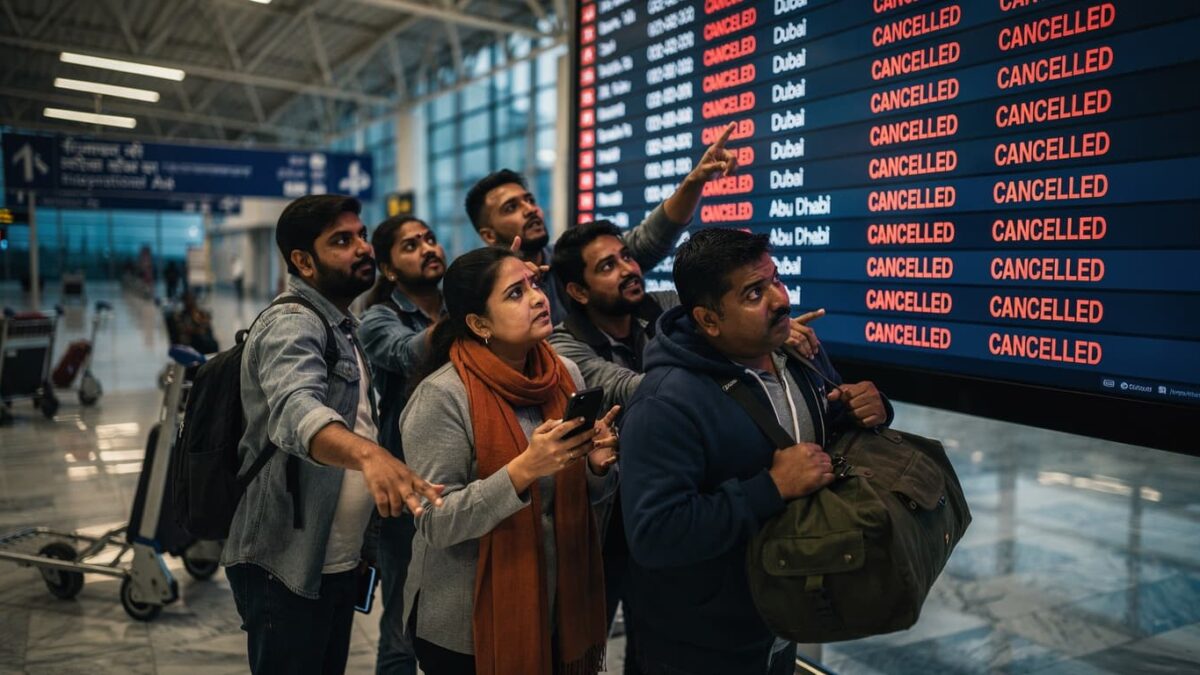
Iranian missile attacks on the UAE early March 3, 2026 forced Emirates flights from India—including Bengaluru, Mumbai, Delhi, and Chennai—to return mid-air or divert while over the Gulf of Oman. Around 42 flights were cancelled across Gulf carriers as UAE airspace partially closed, stranding approximately 100 Indian travelers and disrupting Asia-Europe connections via Dubai and Abu Dhabi hubs. Air India suspended all UAE, Saudi Arabia, Israel, and Qatar flights until at least 2359 IST March 2, with extensions likely.
The situation remains fluid as of 9 AM UTC March 3, with limited UAE flights resuming under restrictions. This article covers which airlines are affected, what travelers should do immediately, and how to rebook or claim refunds.
Emirates flight EK-501 from Mumbai to Dubai was holding over the Gulf of Oman at approximately 3 AM UAE time on March 3 when Iranian missiles struck Abu Dhabi and Dubai. The aircraft returned to Mumbai. Similar diversions hit Emirates flights from Delhi, Hyderabad, Chennai, and Bengaluru—all turned back mid-route during the missile salvo.
The attack came hours after UAE aviation authorities had approved limited flight resumptions on the evening of March 2. Etihad had operated evacuation flights to Delhi, Mumbai, Kochi, and Bengaluru between 7:40 PM and 10:10 PM IST on March 2, prioritizing stranded passengers. Those operations collapsed when the March 3 strikes closed airspace again.
Travelers on Gulf carriers from India, North America, and Europe to Asia-Pacific face immediate cancellations. Around 125 international flights were cancelled by Air India alone, with IndiGo and SpiceJet suspending all India-UAE services through at least March 7. Qatar Airways halted operations due to Qatari airspace closure. Delhi and Mumbai airports reported 100-125 cancellations combined—the worst disruption on Gulf-India routes since the 2020 pandemic.
Which airlines are affected and what they’re doing
Emirates attempted to restart Dubai operations on March 2 evening but was forced into emergency diversions during the March 3 attack. Flights from India returned to origin airports. The airline has not announced a firm resumption date as UAE airspace remains partially restricted.
Etihad Airways diverted cargo flights to Muscat, Oman and operated evacuation flights on March 2. Flight EY-604 from Jeddah was among those diverted. Passenger services remain suspended pending airspace clearance.
Air India cancelled all flights to the UAE, Saudi Arabia, Israel, and Qatar until 2359 IST March 2, with extensions expected. The carrier rerouted Europe and US flights via Rome, adding technical stops. Around 125 international flights were cancelled, affecting connections to Southeast Asia and Australia via Gulf hubs.
IndiGo suspended West Asia airspace flights until March 2 and is offering full refunds or free rescheduling to March 7. SpiceJet cancelled all India-UAE flights for March 1-2. Qatar Airways suspended operations due to Qatari airspace closure, with no restart date announced.
The UAE General Civil Aviation Authority approved limited flights on March 2 evening, prioritizing repatriation and emergency services. The March 3 missile attack forced a rollback of those approvals. As of 9 AM UTC March 3, only select flights are operating under heavy restrictions. For real-time airspace status, travelers can monitor live flight tracking showing diversions to Muscat and other regional airports.
Why this matters for Asia-Pacific travelers
Dubai and Abu Dhabi are critical connection hubs for travelers from North America, Europe, and Australia to Asia. Emirates and Etihad operate dense networks to Bangkok, Singapore, Kuala Lumpur, Jakarta, and Manila—routes that lack viable non-stop alternatives from many US and European cities.
The closure forces travelers onto longer routings. Air India’s Rome technical stops add 3-4 hours to US-India flights. European carriers like Lufthansa and British Airways can absorb some demand, but fares on non-stop Europe-Asia routes have spiked. North America-Asia travelers face the steepest disruption: Gulf carriers offered the fastest one-stop options, and alternatives via Europe or Northeast Asia add significant time.
This is the second major Middle East airspace closure in two years. The 2024 Israel-Iran escalation caused similar disruptions, but the March 2026 attacks directly targeted UAE infrastructure—a first for the conflict. Unlike previous closures that affected overflights, this one shuts down origin and destination traffic, stranding passengers at both ends.
The Gulf hub model’s vulnerability
Emirates and Etihad built their networks on geographic advantage: Dubai and Abu Dhabi sit equidistant from Europe, Asia, and Africa, making them ideal connection points. But that same geography puts them in the crossfire of regional conflicts. The 2026 attacks exposed what the 2020 pandemic hinted at—Gulf hubs are efficient until they’re not, and travelers have few backup options when airspace closes.
What to do if you’re affected
- Check your PNR immediately. Use the Emirates, Etihad, Air India, or IndiGo app or website to confirm flight status. Airlines are updating cancellations hourly as airspace restrictions shift.
- Claim a full refund or rebook. All affected carriers are offering penalty-free cancellations. IndiGo allows free rescheduling to March 7. Air India is rebooking passengers on non-stop India-US and India-Europe routes, avoiding Gulf airspace entirely.
- Stranded in the UAE? Contact the Indian embassy hotline or the Karnataka Chief Minister’s helpline for evacuation flight lists. Etihad operated evacuation flights on March 2; monitor airline announcements for additional services.
- Avoid rebooking via Gulf hubs. Until airspace fully reopens, consider direct flights or connections via Singapore, Bangkok, or European cities. Air Traveler Club’s flight search can surface non-Gulf alternatives with competitive fares.
Are flights to other Middle East countries affected?
Yes. Air India suspended flights to Saudi Arabia, Israel, and Qatar in addition to the UAE. Qatar Airways halted all operations due to Qatari airspace closure. Oman remains open and is serving as a diversion airport for flights that cannot land in the UAE.
How long will the disruptions last?
Unknown. The UAE partially reopened airspace on March 2 evening, but the March 3 missile attack forced another closure. Airlines have not announced firm restart dates. IndiGo’s free rescheduling window extends to March 7, suggesting carriers expect at least several days of disruption.
Can I get compensation for a cancelled Gulf carrier flight?
Refund policies vary by ticket type and jurisdiction. EU passengers may be entitled to compensation under EC 261 if the flight originated in Europe, but “extraordinary circumstances” clauses often apply to military conflicts. US passengers have no statutory compensation rights. All affected airlines are offering full refunds or free rebooking—claim those immediately rather than waiting for compensation rulings.
What about flights that don’t stop in the Gulf but fly over it?
Overflights are also affected. Air India rerouted Europe and US flights via Rome to avoid Gulf airspace entirely, adding technical stops. European and Asian carriers are using longer routings around the conflict zone, increasing flight times by 1-2 hours. Check your airline’s website for route changes even if your ticket doesn’t show a Gulf stopover.
